North American EV Demand to Remain Stagnant Until Next Year
ESS Demand Surges with Power Grid Expansion
Korean Batteries Emerge as the Next Growth Engine
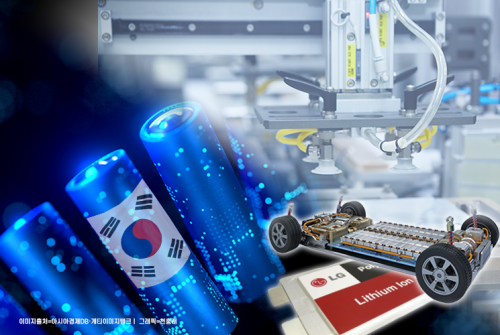
With the suspension of electric vehicle purchase subsidies in the United States expected to cause continued stagnation in EV demand, domestic battery companies are placing all their bets on the energy storage system (ESS) market. In fact, the performance gap among the three major battery companies in the third quarter is attributed to ESS. As it is unlikely that North American EV demand will recover by next year, ESS is expected to play a significant role as a revenue driver for Korean battery companies.
On October 31, with SK On's announcement, all three major battery companies-LG Energy Solution, Samsung SDI, and SK On-completed their earnings releases. LG Energy Solution posted an operating profit of 610.3 billion won, while Samsung SDI and SK On recorded operating losses of 591.3 billion won and 124.8 billion won, respectively.
During its third-quarter earnings announcement, LG Energy Solution stated, "Increased shipments in the ESS and small battery businesses, as well as company-wide cost reduction efforts, contributed to improved operating profit despite a decrease in North American production subsidies." The company highlighted ESS as the most critical factor behind its impressive results.
In North America, the rapid expansion of artificial intelligence (AI) data centers has led to a significant increase in power infrastructure, driving up demand for ESS. Additionally, the installation of ESS is expanding to address the volatility of renewable energy sources such as solar and wind power. While Chinese companies have dominated the North American ESS market, higher tariffs on Chinese products and the move to reduce reliance on China have positioned Korean battery companies as viable alternatives.
◆"ESS Market to Expand by 40-50% Next Year...More Orders Expected"
LG Energy Solution's North American ESS order backlog surged by 140% in just three months, rising from 50 gigawatt-hours (GWh) in the second quarter to 120GWh in the third quarter. LG Energy Solution projects that global annual ESS demand will grow by 19% on average until 2028, with North American ESS demand increasing by 21%.
Kim Minsu, head of ESS Planning and Management, stated during a conference call, "We expect the North American power grid ESS market to grow by about 40-50% next year," adding, "We anticipate a meaningful increase in orders going forward."
Samsung SDI expects the North American ESS market to grow rapidly from about 80GWh in 2025 to 130GW in 2030. During a conference call, Samsung SDI said, "The use of Chinese batteries will decrease to meet stricter tariffs and the Prohibited Foreign Entity (PFE) restrictions," and "the shortage of capacity (CAPA, production capacity) relative to local demand will persist for some time." Samsung SDI projected that, even with aggressive expansion of ESS capacity, supply and demand will only reach equilibrium around 2030, given the pace of demand growth.
In September, SK On signed an ESS supply contract worth 1GWh with Flatiron Energy, a U.S. renewable energy company. SK On also secured the right of first negotiation for supplying up to 6.2GWh of batteries by 2030. The company explained that it is also in discussions for additional ESS supply contracts totaling more than 10GWh. This means SK On could secure orders for up to 17.2GWh of ESS.
EV→ESS Line Conversions Accelerate
With ESS demand surging, Korean battery companies are swiftly converting existing EV production lines to ESS lines. In June, LG Energy Solution began mass production of lithium iron phosphate (LFP) ESS batteries at its Michigan Holland plant. The plant's capacity will increase from 16GWh currently to 30GWh by the end of next year. LG Energy Solution also plans to further boost ESS production capacity by converting lines at upcoming North American joint venture plants.
Samsung SDI, which established its North American ESS production system later than LG Energy Solution, is also responding quickly. Samsung SDI converted the EV production line at StarPlus Energy (SPE), its North American joint venture with Stellantis, to an ESS line and began mass production in October. Next year, the company plans to expand North American ESS production capacity to 30GWh and global capacity to 42GWh. Samsung SDI aims to highlight its unique advantage as the only non-Chinese company producing prismatic ESS in North America.
SK On plans to complete delivery of the ESS ordered by Flatiron Energy using its existing production facilities in the United States by the second half of 2026. SK On stated, "We plan to sequentially convert existing lines," adding, "We are not ruling out the possibility of utilizing joint venture plants."
North American EV Market to Remain Stagnant Until Next Year...Europe Shows Signs of Recovery
Battery companies forecast that EV demand will remain stagnant until next year. Ahn Minkyu, head of Automotive Planning and Management at LG Energy Solution, said, "Recently, major North American customers mentioned during their earnings releases that they are focusing on sales of hybrid electric vehicles (HEVs) and plug-in hybrid electric vehicles (PHEVs), which use fewer batteries," adding, "We are preparing for negative growth in the North American EV battery market compared to last year."
He further predicted, "A fundamental recovery in demand will gradually occur after 2027, when a lineup of competitively priced, value-driven mid- to low-priced EVs is introduced."
However, the European EV market is expected to recover. During its earnings conference call, Samsung SDI stated, "In the case of EV batteries, U.S. demand growth is likely to be limited due to the suspension of EV subsidies and fuel efficiency regulations, but Europe is expected to grow as major countries are reintroducing subsidies and maintaining carbon emission regulations."
© The Asia Business Daily(www.asiae.co.kr). All rights reserved.
![User Who Sold Erroneously Deposited Bitcoins to Repay Debt and Fund Entertainment... What Did the Supreme Court Decide in 2021? [Legal Issue Check]](https://cwcontent.asiae.co.kr/asiaresize/183/2026020910431234020_1770601391.png)
















