Correll's Testimony Follows Trump's Order to Resume Nuclear Testing
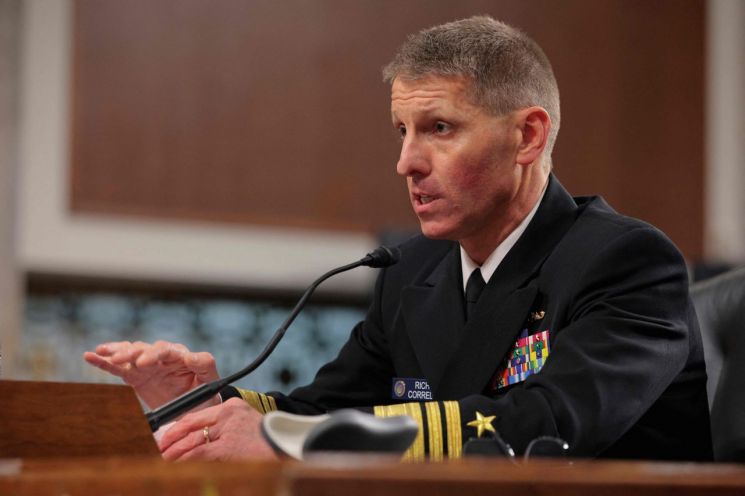
Richard Correll, the nominee for Commander of the United States Strategic Command (USSC), stated on October 30 (local time) that the expansion of nuclear capabilities by Russia, China, and North Korea poses a tangible threat to the United States and its allies. Correll emphasized that, in response to these threats, the United States must continuously assess its own nuclear capabilities and focus on nuclear force modernization.
In a policy statement submitted prior to his confirmation hearing before the U.S. Senate Armed Services Committee, Correll said, "Russia, China, and North Korea are all expanding and modernizing their nuclear forces, including intercontinental ballistic missiles (ICBMs)."
Previously, President Donald Trump stated on his social media platform, Truth Social, that "the United States possesses more nuclear weapons than any other country," but also warned that Russia and China could reach parity with the U.S. within five years. He added, "I have instructed the Department of Defense to initiate nuclear weapons testing on an equal footing with other countries."
Following President Trump's direct mention of Russia and China and his remarks about resuming nuclear testing, the nominee for commander overseeing U.S. nuclear operations has also highlighted the need for nuclear force modernization, specifically referencing Russia, China, and North Korea.
Correll stated, "Russia and China are developing or have already deployed new strategic nuclear submarines (SSBNs), submarine-launched ballistic missiles (SLBMs), strategic bombers, and new types of weapons designed to neutralize U.S. missile defense systems." He added, "All of these countries are prioritizing investments in strengthening their nuclear forces and the military-industrial capabilities that support them."
He continued, "These countries today pose a credible threat to the United States, its allies, and partners. Their ongoing efforts to modernize and expand nuclear capabilities, as well as to develop new nuclear weapons, will further elevate the threat level as advanced weapon systems are deployed operationally."
He further emphasized, "Given that the security environment has changed since the current force programs were designed, we are continuously evaluating whether our (nuclear) policies, strategies, military posture, force size, and capabilities need to be adjusted to respond to these threats." He stressed, "We must be committed to comprehensive nuclear force modernization, including nuclear command, control, and communications (NC3)."
Correll, referencing China's rapid nuclear modernization, stated, "China's ambitious expansion, modernization, and diversification of its nuclear forces have further underscored the need for a fully modernized, flexible, and all-domain strategic deterrent for the United States." He added, "China is focusing on developing capabilities to deter, prevent, or defeat third-party intervention in the Indo-Pacific region. China believes that these new capabilities can offset U.S. and allied missile defense systems, which could particularly influence China's nuclear attack calculus in scenarios where national survival is at stake."
He also stated, "The (Trump) President has repeatedly urged China to participate in arms control negotiations and has clearly articulated the importance of reducing the risk of nuclear conflict." He continued, "China's refusal to engage in arms control or risk reduction measures undermines global stability."
Correll concluded, "The United States must adapt its planning and operations, including integrating nuclear and non-nuclear capabilities across all domains of conflict. This will make it clear to China that the United States will never hesitate to defend its own interests, as well as those of its allies and partners." He added, "If deterrence fails, we must maintain forces with the combat readiness necessary to achieve the President's objectives."
© The Asia Business Daily(www.asiae.co.kr). All rights reserved.
![Clutching a Stolen Dior Bag, Saying "I Hate Being Poor but Real"... The Grotesque Con of a "Human Knockoff" [Slate]](https://cwcontent.asiae.co.kr/asiaresize/183/2026021902243444107_1771435474.jpg)
















