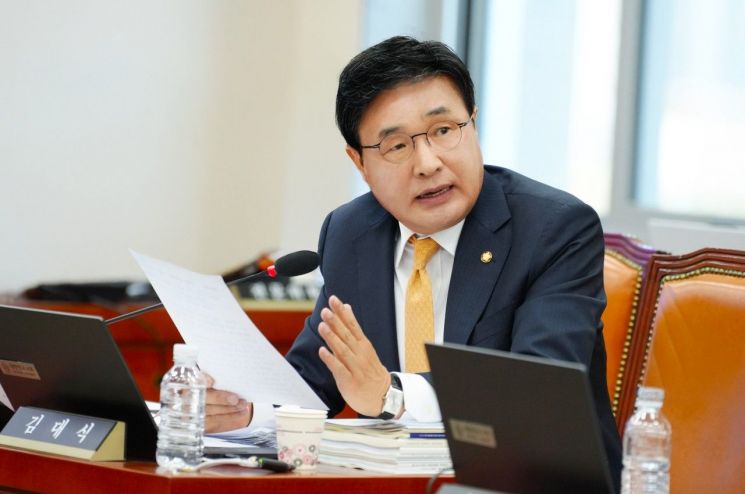
Assemblyman Kim Daesik:
"Lenient Disciplinary Actions for Teachers' Drunk Driving
Undermine Trust in Education"
In the past four years, 579 teachers were caught driving under the influence, with seven out of ten cases reaching the license revocation threshold. However, disciplinary measures have been found to be lenient.
Assemblyman Kim Daesik of the People Power Party (representing Sasang District, Busan), a member of the National Assembly's Education Committee, announced on the 29th that an analysis of the Ministry of Education's audit data, titled 'Status of Drunk Driving Cases among Education Officials Nationwide from 2022 to September 2025,' revealed that a total of 579 education officials were caught driving under the influence over the past four years.
By year, there were 150 cases in 2022, 162 in 2023, and 160 in 2024, with more than 150 cases occurring each year. As of September 2025, 107 cases had already been recorded, suggesting that the year-end figure will likely match that of previous years.
By institution, 245 cases (42.3%) involved elementary schools, 146 cases (25.2%) middle schools, 159 cases (27.5%) high schools, and 29 cases (5.0%) the main office of the education office and others.
By position, there were 531 teachers (91.7%), 18 vice principals, 11 principals, and 13 supervisors. Even among management-level staff (principals, vice principals, supervisors), nearly 40 cases were recorded over the past four years.
By blood alcohol concentration, 179 cases (30.9%) were at the license suspension level (0.03-0.08%), 333 cases (57.5%) at the license revocation level (0.08-0.2%), and 61 cases (10.5%) at 0.2% or higher or refusal to be tested (extreme intoxication). In total, about 68% of cases constituted serious violations at or above the license revocation threshold.
Despite this, disciplinary actions remained mild. For those at the license suspension level (0.03-0.08%), most received pay cuts or suspensions, with only two dismissals and no terminations. At the license revocation level (0.08-0.2%), 229 out of 333 received suspensions, with only five dismissals and five terminations.
Notably, among the 61 teachers with a blood alcohol concentration of 0.2% or higher (extreme intoxication), only three were dismissed and three terminated, meaning that most were suspended or demoted and later returned to teaching.
Assemblyman Kim stated, "Although suspension is legally a severe disciplinary action, since it allows for a return to duty after a certain period, its actual deterrent effect in the educational field is weak. A blood alcohol concentration of 0.2% or higher constitutes extreme intoxication and is considered a serious crime under criminal law, yet only 10 dismissals and 8 terminations were issued, which is a clear example of institutional leniency."
He added, "Teachers are in a position to teach students about law, morality, and responsibility, so society expects them to meet higher ethical standards. Allowing teachers caught driving under the influence to return to the classroom undermines the trust and dignity of education itself."
Assemblyman Kim emphasized, "It is necessary to apply stricter disciplinary standards for those caught driving under the influence with a blood alcohol concentration of 0.2% or higher and to establish unified guidelines to reduce discrepancies in disciplinary actions among education offices."
© The Asia Business Daily(www.asiae.co.kr). All rights reserved.

![Clutching a Stolen Dior Bag, Saying "I Hate Being Poor but Real"... The Grotesque Con of a "Human Knockoff" [Slate]](https://cwcontent.asiae.co.kr/asiaresize/183/2026021902243444107_1771435474.jpg)















