Goyang City Expresses Deep Regret as Citizen Safety Is Overshadowed by Political Logic... Fifth Consecutive Rejection of Restructuring Plan
Goyang City Council Rejects Organizational Restructuring Plan for the Fifth Time, Including 'Disaster Safety Bur
An unprecedented situation has occurred in Goyang Special City, Gyeonggi Province (Mayor Lee Donghwan), as its second organizational restructuring plan failed to pass the city council’s plenary session for the fifth consecutive time. Since the introduction of local autonomy, it is extremely rare for a local government’s restructuring plan to be repeatedly rejected in this manner.
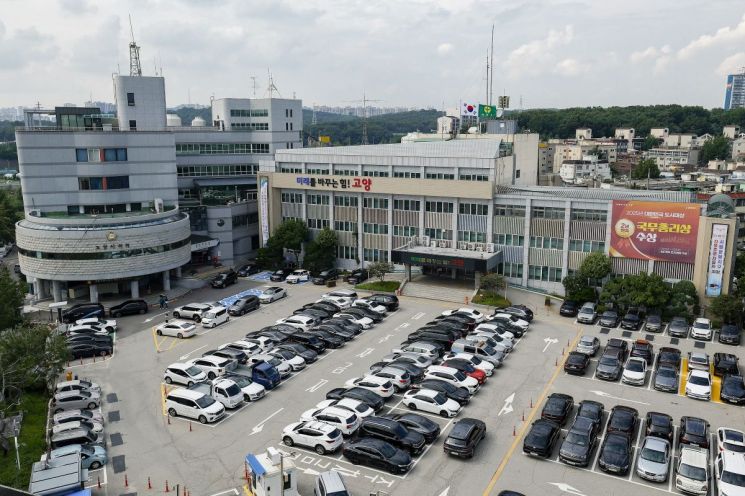
Goyang Special City announced on October 28 that the “Partial Amendment to the Ordinance on the Establishment of Goyang City Administrative Organizations” was ultimately rejected at the 298th extraordinary session held on October 27, with the vote split evenly at 17 in favor and 17 against (a tie resulting in rejection). It is analyzed that the decisive factor was the opposition from members of the Democratic Party of Korea, which holds the majority in the council.
The main points of the restructuring plan included: ▲ Strengthening the rapid disaster response system by establishing a Disaster and Safety Bureau and a Structure Management Division ▲ Promoting administrative innovation based on artificial intelligence and responding to the energy transition by creating an AI Strategy Officer and an Energy Policy Division ▲ Revamping bureaus centered on future growth industries to revitalize the local economy. The city administration has emphasized that this is an “essential restructuring plan focused on citizen safety and future preparedness.”
However, after being rejected five times in the Planning and Administration Committee, the proposal was brought to the plenary session on this day at the suggestion of Godukhee, a member of the People Power Party, but ultimately failed to pass.
The city’s first organizational restructuring plan was only implemented in July 2023, a year after the city’s launch, following a lack of review and two rejections.
Since then, the second restructuring plan has been rejected five consecutive times: twice in 2024, twice in the first half of 2025, and again at this October’s plenary session.
There are few, if any, precedents for a local government’s restructuring plan being repeatedly rejected in this way since the introduction of local autonomy.
Other special cities of similar size have already carried out at least four and as many as seven or more organizational restructurings during the eighth popularly elected term, responding quickly to changes in the policy environment.
In contrast, Goyang City has undergone only one restructuring, leading to concerns about administrative gaps, weakened momentum for policy implementation, and declining staff morale becoming a reality.
After being rejected in the standing committee review, the proposal was brought back for discussion at the plenary session on the 27th by Godukhee, a member of the People Power Party. However, the plenary vote again resulted in a tie-17 in favor and 17 against-leading to the plan’s final rejection.
Gong Soja, chair of the Planning and Administration Committee from the Democratic Party, who has opposed the restructuring, cited the following reasons for opposition: ▲ The inclusion of an AI Strategy Officer following the abolition of the Population Policy Officer, which she described as an ad hoc organizational design ▲ The exclusion of a particular political party during the operation of the Organizational Diagnosis Council ▲ The view that establishing new bureaus would not guarantee greater efficiency.
In response, the city administration argued, “Redesigning the organization to adapt to changes in the policy environment is a basic direction for all local governments,” and added, “It is difficult to accept the rejection of the restructuring plan for these reasons.”
The administration further explained, “When forming the Organizational Diagnosis Council, we sent an official letter requesting the city council’s participation and personally approached the chair and committee heads to seek their involvement, making sufficient efforts to consult.”
The administration expressed deep regret over the rejection, stating, “Even citizen safety has been overshadowed by political logic.”
A city official lamented, “Disaster response, AI-based administration, and the energy transition are all future-oriented tasks that can no longer be delayed, but it is regrettable that political reasons are holding us back. The delay in restructuring is prolonging administrative gaps and lowering staff morale.”
With local elections scheduled for June next year, organizational restructuring within the eighth popularly elected term has become virtually impossible. The city official emphasized, “To achieve administrative innovation that citizens can truly feel, we need politics of cooperation, not conflict,” and added, “Responsible discussions for the future of city administration are urgently needed.”
© The Asia Business Daily(www.asiae.co.kr). All rights reserved.
![Clutching a Stolen Dior Bag, Saying "I Hate Being Poor but Real"... The Grotesque Con of a "Human Knockoff" [Slate]](https://cwcontent.asiae.co.kr/asiaresize/183/2026021902243444107_1771435474.jpg)











