Gimpo City Opens "Sea Waterway" from Ara Waterway to Daemyeong Port,
Declares Itself a "Marine Gateway City"
Breaking a 70-Year Seal on the Waterway... First-Ever Passenger Ship Voyage Under Choji Bridge
Experts: "Gimpo, a Key Hub for Land and Sea Transportation on the Korean Peninsula and the Core of the East Asian Mediterranean"
Gimpo City in Gyeonggi Province has opened the waterway of Gimpo Sea from Gimpo Passenger Terminal to Daemyeong Port for the first time in 70 years since the Korean War, declaring a new era for Gimpo Sea. As a geographically strategic location where the Han River meets the West Sea, Gimpo is now shedding new light on its long-overlooked sea. By launching a new marine tourism route that connects history and the future, together with around 250 citizens, the city marks the beginning of a new Gimpo Marine Renaissance. Notably, this is the first time in history that a passenger ship has sailed through Yeomha and passed under the Choji Bridge.
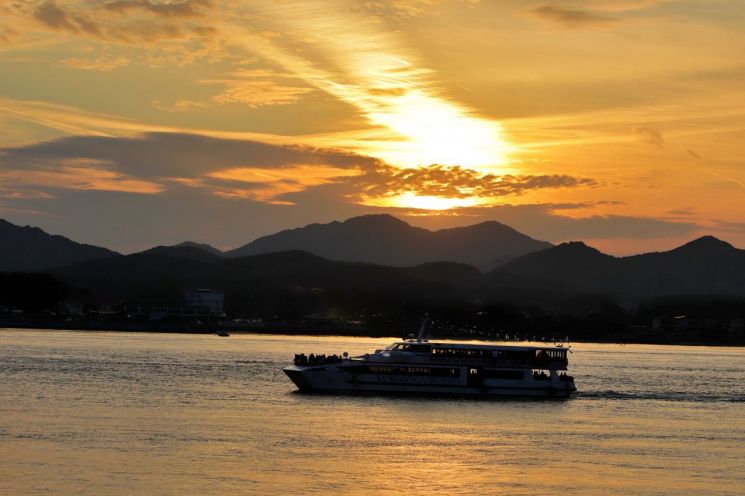 Gimpo City has opened the waterway of Gimpo Sea from Gimpo Passenger Terminal to Daemyeong Port for the first time in 70 years since the Korean War, declaring a new era for Gimpo Sea. Provided by Gimpo City
The Gimpo Cultural Foundation, as part of the '2025 Gyeonggi Sea Tourism Revitalization Boom-Up Content Project,' began a pioneering voyage on October 25, boarding Mayor Kim Byungsoo, dignitaries, and about 250 citizens on a passenger ship from Gimpo Terminal to Daemyeong Port.
Mayor Kim Byungsoo stated, "Today, we have reopened the waterway of Gimpo Sea. Gimpo is no longer an inland city. Now, Gimpo is a marine gateway city where the Han River meets the West Sea, the very first gateway to the West Sea of Korea. Gimpo Sea is a home where the Han River estuary and the West Sea meet, a symbol of exchange, growth, and hope. With the sea in its embrace, Gimpo will create a new wave of growth in marine tourism, arts, and industry."
On board, a seminar was held to commemorate the opening of the Gimpo Sea waterway and to shed light on the history of Gimpo Sea, providing a new momentum for Gimpo as a marine gateway city.
Yoon Myungchul, Professor Emeritus at Dongguk University, who delivered the keynote presentation, said, "The name Gimpo originally derives from the Chinese characters 黔浦 (Geompo), which linguistically means a sacred port, that is, a national harbor. Gyeonggi Bay is the largest bay on the Korean Peninsula, located between Hwanghae Province and Chungcheong Province, and serves as a major hub for maritime transportation, playing a vital role in politics, diplomacy, trade, and military operations. It is the most important land-sea transportation hub on the peninsula and the core of the East Asian Mediterranean."
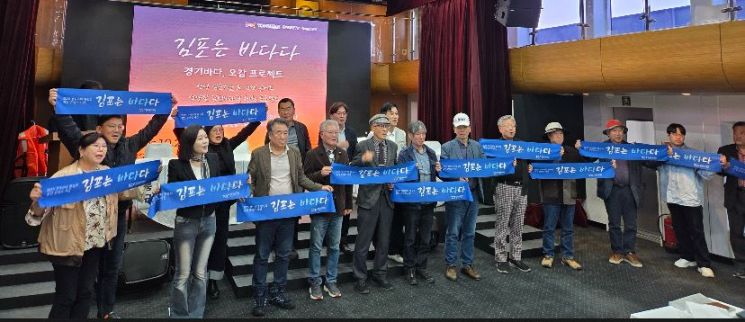 Gimpo City has opened the waterway of Gimpo Sea from Gimpo Passenger Terminal to Daemyeong Port for the first time in 70 years since the Korean War, declaring a new era for Gimpo Sea. Photo by Gimpo City
Jung Changhee, Director of the Halla Cultural Heritage Research Institute, explained, "Gimpo is a natural port city, with most of its area touching the waterways of the West Sea and the Han River. It serves as both the starting and ending point of West Sea shipping routes. Since prehistoric times, Daemyeong Port has been a major inland waterway hub on the Korean Peninsula and a key base for the grain transport system that supported the Joseon Dynasty."
Meanwhile, Gimpo City announced its ambition to use this voyage as a starting point to shed new light on Gimpo Sea and to brand Gimpo marine tourism, thereby creating distinctive tourism resources. Through these efforts, the city aims to expand the West Coast tourism network of the metropolitan area and present new possibilities for the national marine industry.
© The Asia Business Daily(www.asiae.co.kr). All rights reserved.


















