Reciprocal Tariffs Set at 19-20%
Strengthening Economic and Security Cooperation... Including Rare Earth Elements
President Donald Trump of the United States strengthened cooperation by concluding trade agreements with major Southeast Asian countries ahead of the U.S.-China summit.
On the 26th (local time), the White House announced a joint statement on trade agreements with Malaysia, Cambodia, Thailand, and Vietnam.
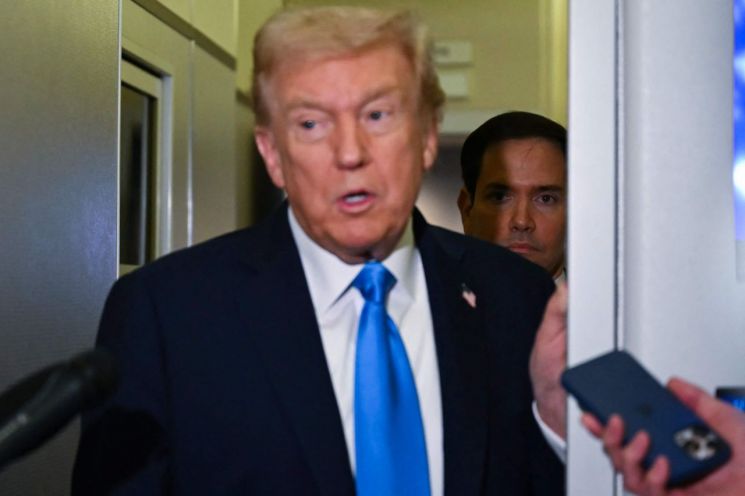
The White House stated that it had reached a "mutual trade agreement" with Malaysia and Cambodia, and a "mutual trade agreement framework" with Thailand and Vietnam.
Under the agreement, the United States will maintain a reciprocal tariff rate of 19% on products from Malaysia, Cambodia, and Thailand, and a reciprocal tariff rate of 20% on products from Vietnam.
Malaysia and Vietnam agreed to provide preferential market access for U.S. exports of manufactured goods and agricultural products. Cambodia and Thailand agreed to abolish tariffs previously imposed on U.S. manufactured goods, food, and agricultural products.
The United States and these Southeast Asian countries also agreed to lower non-tariff barriers, including standards for automobile safety and emissions, as well as approval standards for pharmaceuticals and medical devices.
Malaysia and Thailand agreed not to introduce a "digital tax" on U.S. digital services or digital products, and not to impose discriminatory measures.
The joint statement on the trade agreements between the United States and the Southeast Asian countries included commitments to "strengthen economic and security cooperation, enhance the resilience and innovation of supply chains, prevent tariff evasion, and cooperate in the fields of investment security and export controls."
In particular, Malaysia pledged not to ban or impose quotas on exports of critical minerals and rare earth elements to the United States. Malaysia also agreed to work with U.S. companies to promote the rapid development of the critical minerals and rare earth industries.
This move is interpreted as an effort to counter China by strengthening cooperation with Southeast Asian countries, especially as China has announced plans to impose export controls on rare earth elements globally.
The White House stated that the trade agreements between the United States, Malaysia, and Cambodia will take effect after completing necessary domestic procedures in the coming weeks. For Thailand and Vietnam, which agreed to the framework, the agreements will enter into force after further negotiations finalize the details, followed by signing and domestic procedures.
As President Trump embarks on his first Asian tour since beginning his second term, attention is focused on whether trade agreements can also be reached with countries such as South Korea and China, which are scheduled for summit meetings, following the conclusion of major trade deals with Southeast Asian countries in Malaysia, his first stop.
Meanwhile, President Trump also presided over the signing of a ceasefire agreement between Thailand and Cambodia, which had recently engaged in clashes along their border. President Trump, together with Thai Prime Minister Anutin Charnvirakul, Cambodian Prime Minister Hun Manet, and Malaysian Prime Minister Anwar Ibrahim, who currently chairs ASEAN, jointly signed the Thailand-Cambodia ceasefire agreement.
© The Asia Business Daily(www.asiae.co.kr). All rights reserved.
![Clutching a Stolen Dior Bag, Saying "I Hate Being Poor but Real"... The Grotesque Con of a "Human Knockoff" [Slate]](https://cwcontent.asiae.co.kr/asiaresize/183/2026021902243444107_1771435474.jpg)
















