The Era of Premium Water Pairing with Food
Taste, Mineral Content, and Source All Matter
At Gwen, a Michelin-starred restaurant in Los Angeles, guests often find themselves contemplating what to drink with their steak. Sometimes, the choice is not wine but water. Such scenes have become commonplace at Gwen recently. A single bottle of still water, recommended by a staff member and priced at $11 (approximately 15,000 KRW), can define the dining experience for guests. In this era where water is now being paired with food, the role of the water sommelier has emerged as a new and sought-after profession in the United States.
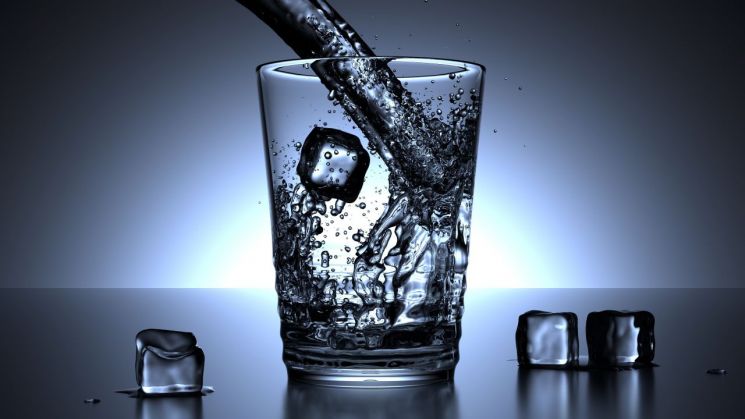 Recently in the United States, a professional occupation known as the "Water Sommelier," who recommends water to customers and assists with pairing at high-end restaurants, is gaining attention. Pixabay
Recently in the United States, a professional occupation known as the "Water Sommelier," who recommends water to customers and assists with pairing at high-end restaurants, is gaining attention. The Wall Street Journal (WSJ) reported, "As more consumers take an interest in fine water, experts who consider taste and composition to suggest the optimal bottled water have emerged."
Fine water is becoming a new choice among high-end consumers who prefer non-alcoholic beverages, going beyond simple bottled water. According to the WSJ, more consumers are now choosing fine water over traditional drinks such as soda and juice, with prices ranging from $7 (about 10,000 KRW) to $100 (about 140,000 KRW) per bottle.
In particular, "Berg Water" from Newfoundland, Canada, is gaining popularity for its low mineral content and light body. At luxury hotels such as the Inn at Little Washington in Virginia, USA, it is offered at $95 (about 130,000 KRW) per bottle, with the menu describing it as "water from a 15,000-year-old glacier, capturing the taste of ancient snow and air."
Martin Riese, the water sommelier at Gwen, stated, "Our restaurant generates annual sales of $100,000 (about 140 million KRW) from fine water alone," adding, "The fine water menu is so popular that some guests even steal it."
Currently, about 10 restaurants in the United States offer fine water menus, and similar trends are spreading in European countries such as Italy, Denmark, the United Kingdom, and Spain.
Reflecting this demand, institutions specializing in training water sommeliers are also increasing. Notable examples include the Fine Water Academy in the United States, the Doemens Academy in Germany, and The Water Sommelier Singapore in Singapore. Related educational programs are also available in South Korea. Martin Riese, founder of the Fine Water Academy, emphasized, "Water, like wine, has a diverse range of flavors, and its mineral content can influence the taste of food."
Experts explain that water-related professions are becoming more specialized. While water sommeliers focus on restaurant service, water advisors concentrate on making recommendations to customers. There are also various other titles, such as water steward, water waiter, and water manager.
The concept of the water sommelier first appeared in 2001 at the Ritz-Carlton Hotel in Manhattan, United States. In 2002, Italy established ADAM (Associazione Degustatori Acque Minerali) and launched specialized training programs. In Asia, Akiyama Sane founded JASA (Japan Aqua Sommelier Association) in 2008, beginning the training of water sommeliers in Japan. In South Korea, the water sommelier was introduced in 2007 with the opening of the No Trans Water Cafe, and today, a variety of premium bottled waters are sold in department stores, hotels, and high-end restaurants.
© The Asia Business Daily(www.asiae.co.kr). All rights reserved.

















