Echoes of 'Regime Collapse' Tactics from Six Years Ago
U.S. Steps Up Pressure on Colombia with 'Presidential Sanctions'
The Donald Trump administration has deployed an aircraft carrier to the Caribbean Sea near Venezuela, stepping up pressure on major leftist governments in South America.
On October 24 (local time), the Trump administration stationed an aircraft carrier in the Caribbean Sea near Venezuela, stating that the purpose was to block the flow of narcotics from Central and South American countries into the United States.
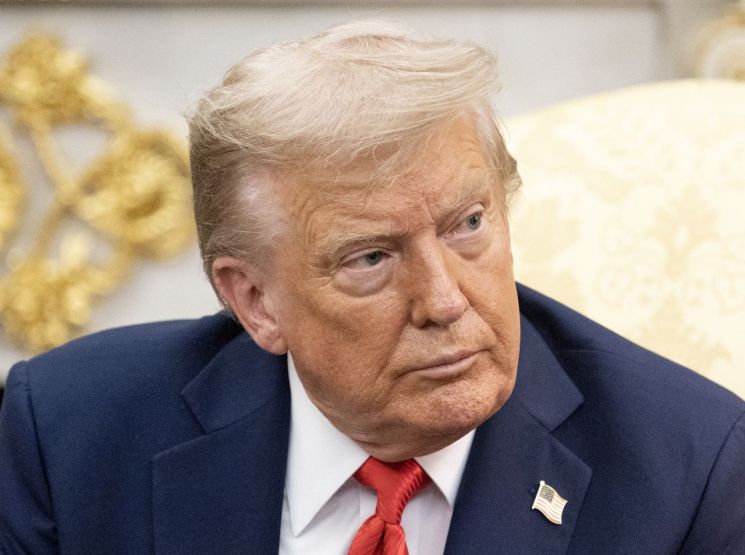
Sean Parnell, Chief Spokesperson for the U.S. Department of Defense (formerly the Department of War), said in a statement posted on his X account (formerly Twitter), "This is at the direction of the President," adding, "Secretary of War Pete Hegseth has ordered the Gerald R. Ford carrier strike group and carrier air wing to be deployed to the area under the jurisdiction of the U.S. Southern Command."
The U.S. military has increased its military presence, including warships and fighter jets, in the Caribbean, the coasts of Central and South America, and the eastern Pacific. As of this day, it is known to have sunk vessels it claims to be 'drug-running boats,' resulting in at least 43 reported deaths.
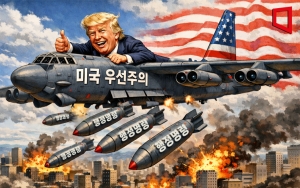
The Trump administration, which has also deployed strategic assets such as B-1B bombers over the Caribbean, is reportedly considering plans to directly strike cocaine production facilities and drug trafficking routes located within Venezuelan territory.
CNN, citing three officials, reported, "It appears that no decision has yet been made regarding whether to carry out attacks on land-based facilities," adding, "Various signs suggest the possibility of heightened military tensions in the Venezuela region."
The previous day, President Trump told local reporters at the White House in Washington, D.C., "A ground operation will soon unfold in Venezuela," and added, "We will simply kill those who smuggle drugs into our country."
The government of Nicolas Maduro in Venezuela, already cornered by sanctions on oil exports, has strongly protested, characterizing the U.S. pressure as an 'ambition for regime change.'
According to AFP, President Maduro said on state television, "The United States is attempting to engineer the outbreak of a new war," and "Ultimately, they are trying to start a war that we are capable of preventing."
These U.S. actions are reminiscent of the situation during the first Trump administration, when support for the speaker of the National Assembly as interim president led to a 'two presidents under one roof' crisis in Venezuela.
At that time, John Bolton, National Security Advisor at the White House, brought a notepad hinting at military intervention in Venezuela to a press briefing, fueling speculation about the launch of a 'regime collapse program.'
The U.S. government is also in the process of severing ties with Colombia, which had long maintained a pro-U.S. stance but has distanced itself since the inauguration of a leftist government in 2022.
On this day, the U.S. Department of the Treasury placed Colombian President Gustavo Petro, his family, and close associates on a sanctions list, explaining, "President Trump is taking strong measures to make it clear that he will protect our country and not tolerate drug trafficking."
Previously, President Trump referred to President Petro as the 'kingpin of illegal drugs' and strongly questioned the Colombian government's commitment to combating narcotics.
Since the beginning of this year, the U.S. government has been directly and indirectly keeping President Petro in check, as he has strongly criticized President Trump's core policies, such as the imposition of tariffs and the repatriation of immigrants. Recently, Colombia was designated as a non-cooperating country in drug eradication for the first time in about 30 years.
In response, President Petro, who also claims this is an attempt at 'regime destabilization,' emphasized on X, "I will not back down a single step and will never kneel."
Western media have analyzed that President Trump's foreign policy, referred to as the 'Donroe Doctrine,' may be accelerating.
The Donroe Doctrine, a term combining President Trump's name 'Donald' with former President James Monroe's 'Monroe Doctrine,' which excluded European interference and emphasized the autonomy of American continent nations, signifies the active use of military power to protect national interests, while rejecting the 'world police' role in favor of isolationism.
When President Monroe declared 'non-interference by Europe in the Americas' in 1823, the 'Americas' included 'Latin America.' Since then, the United States has been assessed as having actively intervened in the internal affairs of South American countries, using events such as Panama's independence and the Colombian civil war as pretexts.
© The Asia Business Daily(www.asiae.co.kr). All rights reserved.






![The Special Connection Between the Statue of Martyr Lee Jun in Jangchungdan Park and Mayor Oh Sehoon ③ [Current Affairs Show]](https://cwcontent.asiae.co.kr/asiaresize/319/2026012110001599450_1768957215.jpg)