Official Request Submitted to Government and National Assembly
Call to Raise National Funding Ratio from 60% to Over 70%
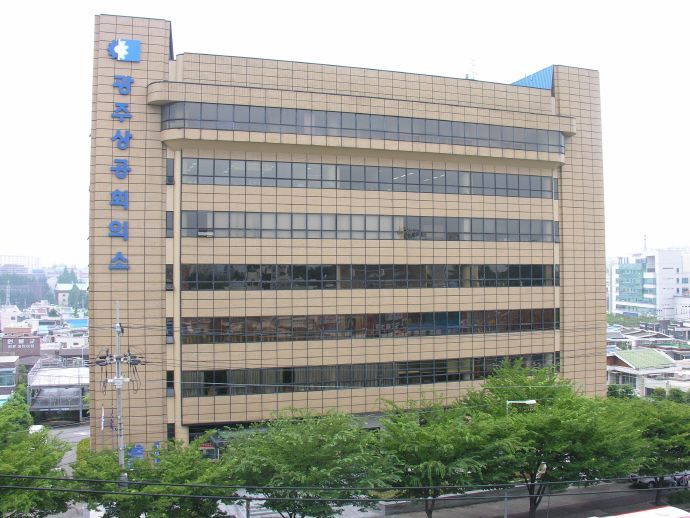
The Gwangju Chamber of Commerce and Industry announced on the 24th that it has officially requested the government and the National Assembly to increase the national funding ratio for the 'Gwangju AX Demonstration Valley (AI Phase 2)' project, scheduled to begin next year, from the current 60% to over 70%.
Since 2020, Gwangju City has established a core foundation for South Korea's AI industry by integrating data, computing, and industrial ecosystems through the first phase of the AI Cluster project, which had a total project cost of 430.6 billion won.
Based on these achievements, the government designated four regions-including Gwangju, Daegu, North Jeolla, and South Gyeongsang-as AI hubs in August and confirmed plans to implement the 'Gwangju AX Demonstration Valley (AI Phase 2)' project, with a total budget of approximately 600 billion won, over five years from 2026 to 2030.
However, concerns have been raised that the current cost-sharing structure-60% national funding and 40% local funding (including private investment)-could place an excessive financial burden on Gwangju City, given its fiscal conditions.
Currently, Gwangju City is simultaneously carrying out several large-scale national and public projects, such as the relocation of the military airport, the expansion of the Donggwangju-Gwangsan IC, and the construction of Subway Line 2, which clearly highlights the limitations of local finances.
The Gwangju AX Demonstration Valley project is a demonstration-oriented initiative centered on public infrastructure, such as data centers and testbeds, where attracting private investment is structurally limited. Therefore, the '40% local funding including private investment' is highly likely to end up being covered by the local government’s own resources.
The Gwangju Chamber of Commerce and Industry pointed out that this structure could ultimately lead to a reduction in the project's scope or delays in its schedule, and could also hinder efforts to strengthen the competitiveness of the national AI industry.
Han Sangwon, Chairman of the Gwangju Chamber of Commerce and Industry, emphasized, "The Gwangju AX Demonstration Valley project is a key strategic initiative that will drive the national digital transformation beyond just a regional project, and restructuring the financial framework is essential. The national funding ratio should be adjusted to over 70%, and the advance disbursement of national funds should be expanded during the first two years (2026-2027) to ease the financial burden on local governments."
He added, "Based on the 88PF-class AI data center and a network of over 320 AI and semiconductor partner companies established in Phase 1, we expect to cluster 1,000 AI convergence companies, create 6,000 jobs, and generate an economic ripple effect of 980 billion won. Active government support is necessary for Gwangju to emerge as the central hub of AI innovation in South Korea."
© The Asia Business Daily(www.asiae.co.kr). All rights reserved.

















