The Korea Music Copyright Association (KMCA) clarified on the 24th that "some interpretations in recent media reports and in the National Assembly's Culture, Sports and Tourism Committee audit are not consistent with the facts" regarding issues raised about its audit system and accounting operations.
Regarding the allegation of "abuse of special audits" raised during the previous day's parliamentary audit, the KMCA explained, "Headquarters audits are conducted regularly four times a year, once each quarter, in accordance with the association's audit regulations." The association added, "These regulations are properly operated following resolutions by the board of directors and the general assembly."
Concerning the controversy over the operation of center audits, the KMCA explained, "Until the COVID-19 pandemic, regular audits of centers (branches) were conducted twice a year. However, during the pandemic, due to the suspension of performances and the implementation of remote work, center operations were temporarily halted, and internal audits by the headquarters' center management team were conducted as a substitute."
After the establishment of new centers, the need for audits was raised. However, because the current regulations had removed provisions for center audits, it was unavoidable to conduct audits in the form of special audits until the regulations could be revised. The association stated that it is currently pursuing amendments to the audit regulations to reinstate the regular center audit system.
The KMCA also refuted claims that external accounting audits concealed deficits, stating that these claims are not true. The association explained that it previously prepared financial statements in four categories: general accounting, member accounting, building accounting, and trust accounting. However, in August 2020, following the Ministry of Culture, Sports and Tourism's guidelines for preparing standard settlement forms for copyright trust management, the audit method was changed to consolidated financial statements.
According to the KMCA, it has recorded a surplus every year based on consolidated financial statements, achieving a net profit of approximately 5.3 billion won as of the end of 2024. As a result, retained earnings turned positive to 2.9 billion won, improving the association's financial structure. In addition, the shortfall in cash assets compared to retirement benefit provisions decreased to about 4.8 billion won by year-end, indicating a gradual recovery in the association's financial soundness.
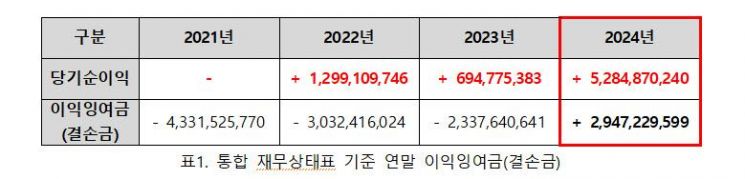
The association also responded to media reports that cited a "general accounting deficit of -9.9 billion won as of June 2024," stating that "the deficit was overestimated by arbitrarily combining year-end accounting items with the mid-year settlement." The KMCA emphasized that the actual general accounting result for the end of 2024 was a surplus of 2.79 billion won.
Regarding the claim made during the parliamentary audit that "the association president holds audit authority," the KMCA clarified, "According to the audit regulations, the audit period and audit subjects are specified to be coordinated with the president for practical scheduling purposes only. The president does not have the authority to direct or control the content of audits."
President Choo Gayul stated, "Whenever there has been a request for an audit, all such requests have been accepted, and there has not been a single case where the president intervened in or restricted the audit process." He added, "To dispel misunderstandings about the independence of audits, we plan to pursue amendments to the relevant regulations."
© The Asia Business Daily(www.asiae.co.kr). All rights reserved.


















