"Understanding the history and realities of indigenous peoples,
diplomatic efforts for cooperation are crucial"
"We are the stewards and gatekeepers of this land. The development of minerals and rare earth elements in our region must be approached with caution, and cooperation with local residents is a fundamental principle. This can no longer be ignored."
At the "2025 Arctic Circle Assembly" held in Reykjavik, Iceland, from June 16 to 18 (local time), George Berthe, the finance officer of the Inuit self-government from Nunavik in northern Quebec, declared in a determined tone that "Arctic indigenous peoples have the right to participate in the resource development process."
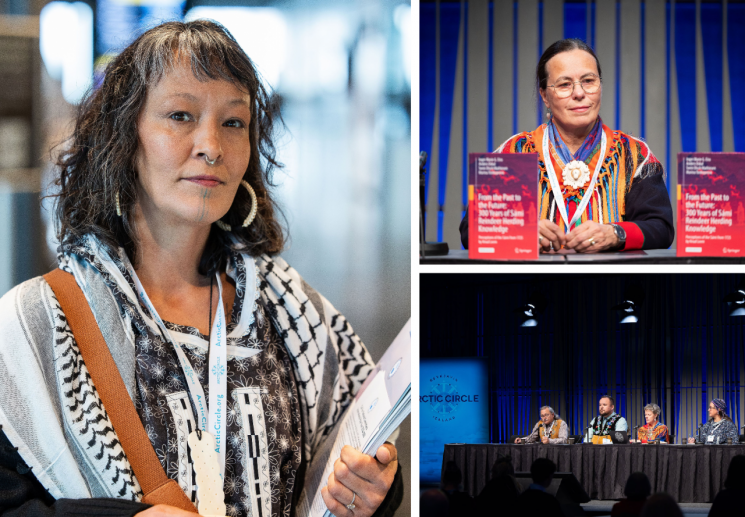 From June 16 to 18 (local time), various Arctic indigenous peoples of different nationalities participated in the "2025 Arctic Circle Assembly" held in Reykjavik, Iceland. Arctic Circle
The Arctic is often known only for its glaciers and white polar bears, creating the perception that it is an uninhabited, mysterious land. However, according to the Korea Polar Research Institute, about 540,000 Arctic indigenous people live in Canada, Greenland, Norway, and the United States (Alaska). In the past, these communities suffered land dispossession, forced relocation, sterilization, and colonization at the hands of European explorers from the 16th to 19th centuries-a phenomenon now referred to as "Arctic colonialism." Indigenous peoples, who have preserved their unique cultures in the Arctic for thousands of years, are a crucial pillar of Arctic cooperation. Every year, they participate in the Arctic Circle Assembly as significant attendees, actively voicing their perspectives.
Moreover, as global powers have shown increasing interest in Arctic shipping routes and mineral resources, indigenous peoples are uniting across borders. While they maintain an open attitude toward scientific research and economic cooperation, their experiences of past oppression have made them particularly resolute in protecting their rights. Berthe, who was born in 1974 in the northernmost region of Canada and is of indigenous descent, stated, "We are open for business," but also warned, "In the past, people approached the Arctic through the 'backdoor,' but now they must come through the 'front door.'" He is calling for recognition of Arctic indigenous peoples as economic cooperation partners, rather than as subjects of exploitative practices.
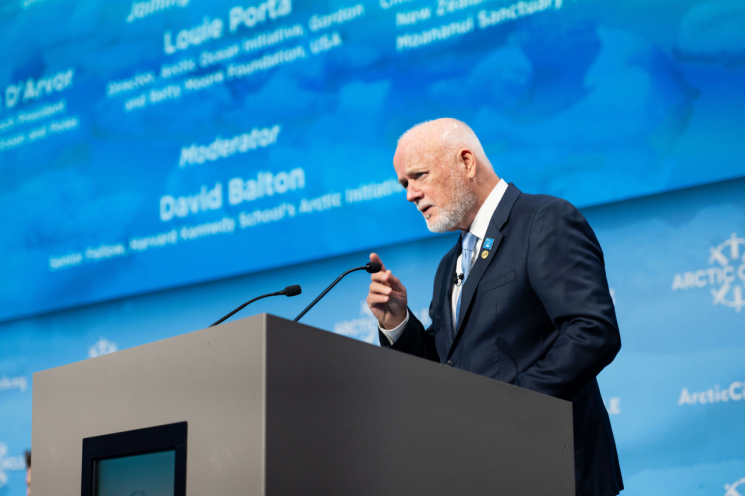 Peter Thomson, United Nations Special Envoy for the Ocean, is delivering a speech at the plenary session of the 2025 Arctic Circle Assembly held on the 17th (local time) at Harpa Hall in Reykjavik, Iceland. Arctic Circle
For countries seeking economic opportunities in the Arctic, it is essential to understand the history and current realities of indigenous peoples and to make diplomatic efforts to cooperate with them. Peter Thomson, United Nations Special Envoy for the Ocean, emphasized the need for mutually beneficial cooperation in his speech at the Arctic Circle Assembly, stating, "The Central Arctic Ocean has sustained Arctic indigenous communities for thousands of years," and "the greatest values are a sustainable environment and the continuity of culture." Louie Porta, Director of the Arctic Ocean Initiative at the Gordon and Betty Moore Foundation, also stressed, "To explore new frontiers, we must recognize the contributions and experiences of those who have called this place home for centuries."
This article (content) was produced with the support of the Korea Press Foundation.
© The Asia Business Daily(www.asiae.co.kr). All rights reserved.


















