Per Capita Alcohol Consumption Drops to 7.84 Liters,
Lowest in 26 Years
Health Awareness and Tax Hikes
Contribute to Decline in Alcohol Consumption
Alcohol consumption in Russia, often referred to as the "country of vodka," has dropped to its lowest level in 26 years. The main reasons cited are the growing health consciousness and interest in abstinence among the younger generation, as well as price increases and higher tax burdens.
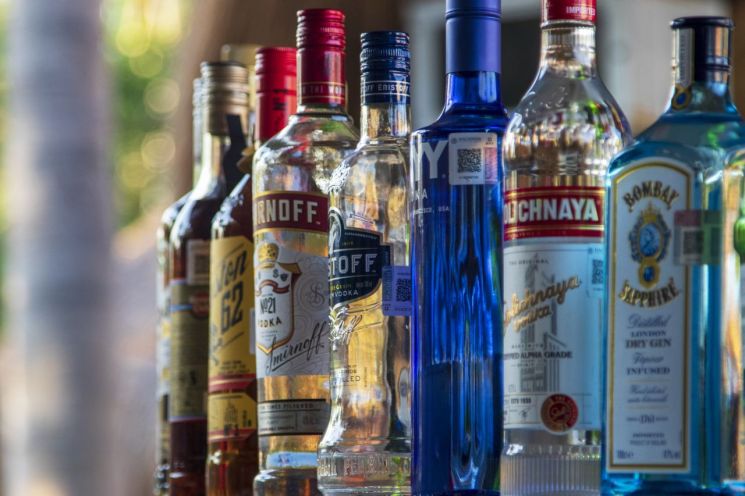
According to Russian media outlets such as Izvestia on October 23 (local time), Russia's per capita alcohol consumption in September was 7.84 liters, marking the lowest figure since 1999.
Alcohol consumption in Russia has been steadily declining this year. It dropped from 8.41 liters in March to 8.32 liters in April, 8.22 liters in May, 8.12 liters in June, 8.01 liters in July, and 7.93 liters in August, showing a decrease every month. The average monthly consumption from January to September was calculated at 8.18 liters.
The regions with the lowest alcohol consumption were Chechnya (0.13 liters) and Ingushetia (0.62 liters) in the North Caucasus, where the Muslim population is high. In contrast, Sverdlovsk Oblast near the Ural Mountains recorded the highest per capita consumption nationwide at 10.49 liters. In Russia's northern regions, there is a tradition and belief that strong alcohol is necessary to withstand the cold weather, leading to higher consumption. In Moscow, the capital, the figure was 4.91 liters, and experts explained that, as a business hub, the region enforces relatively strict controls on drinking.
Vladimir Kosenko, head of the wine portfolio at Luding Group, and addiction specialist Andrey Ivanov pointed out, "Statistics from the 1990s did not include low-alcohol beverages, and there were also many illegal vodka transactions," adding, "The actual statistical difference is likely even greater."
Experts believe that the recent decline is not solely due to tax and price factors, but is also related to lifestyle changes focused on health. Nutritionist Maria Nichegopskaya said, "Among the younger generation, there is a growing culture of healthy living, mental health management, and abstinence from alcohol."
However, this trend is not uniform across all generations. While alcohol consumption has decreased among urban residents, young people, and high-income groups, it remains at similar levels among the elderly and socially vulnerable populations. Instead, the alternative market for non-alcoholic beer and wine is rapidly growing, creating new consumption trends.
Meanwhile, Maksim Chernigovsky, Associate Professor at the Russian Presidential Academy of National Economy and Public Administration, noted, "Recently, due to higher liquor excise taxes, the minimum retail price of vodka has risen from 299 rubles to 349 rubles," and pointed out that "price increases and higher tax burdens are leading to a decline in the legal production of alcoholic beverages."
© The Asia Business Daily(www.asiae.co.kr). All rights reserved.
![Clutching a Stolen Dior Bag, Saying "I Hate Being Poor but Real"... The Grotesque Con of a "Human Knockoff" [Slate]](https://cwcontent.asiae.co.kr/asiaresize/183/2026021902243444107_1771435474.jpg)
















