Two-Day Official Visit to South Korea Announced
Focus on Finalizing South Korea-U.S. Tariff Negotiations and U.S.-China Trade Agreement
The White House has announced that U.S. President Donald Trump will visit South Korea on October 29 to hold a summit with President Lee Jaemyung. The following day, October 30, he is scheduled to meet with Chinese President Xi Jinping before returning to the United States on the same day. These consecutive summits are being held on the occasion of the Asia-Pacific Economic Cooperation (APEC) Summit in Gyeongju, South Korea. Attention is focused on whether the United States, which has been demanding the resolution of trade imbalances worldwide, will be able to reach separate trade agreements with both South Korea and China.
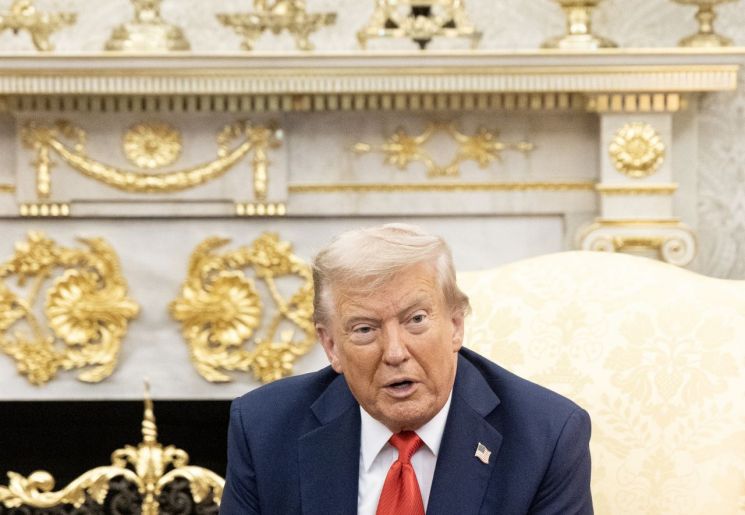
White House spokesperson Karoline Leavitt made the announcement during a briefing on the 23rd (local time).
President Trump is scheduled to depart Washington, D.C. on the night of the 24th, travel through Malaysia and Japan, and arrive in Busan on the 29th (Korea Standard Time). After the summit with President Lee, he will deliver a keynote speech at the Asia-Pacific Economic Cooperation (APEC) CEO luncheon and attend the official summit working dinner that evening.
The South Korea-U.S. summit will take place in Gyeongju, where the APEC summit is being held. This will mark the second face-to-face meeting between the two leaders, following their first summit in Washington, D.C. in August. While there was initial speculation that President Trump’s visit to South Korea might be a one-day trip, it has been confirmed as a two-day, one-night schedule.
There is keen interest in whether the two leaders will be able to conclude the tariff negotiations that have remained unresolved since the broad trade agreement reached at the end of July.
The two countries are currently coordinating the details of a $350 billion investment package that South Korea has pledged to the United States. Discussions are reportedly underway to reduce the cash investment portion to $200 billion, with the remainder to be invested in installments over several years. Initially, the United States had requested the full amount in cash, but South Korea proposed investing up to 5% in cash, with the rest in the form of loans or guarantees. Since then, both sides have made concessions and are seeking a compromise. In relation to this, Presidential Chief Policy Secretary Kim Yongbeom and Minister of Trade, Industry and Energy Kim Jeonggwan visited Washington, D.C. on the 16th and again on the 22nd to negotiate with U.S. Secretary of Commerce Howard Lutnick.
However, concerns have been raised in South Korea that the U.S. demands remain excessive, leading to speculation that the conclusion of the South Korea-U.S. trade agreement may come after the leaders’ summit during the APEC meetings. In an interview with CNN conducted on the 22nd and released the previous day, President Lee stated regarding the tariff negotiations, "It will take a little more time," adding, "I trust in the rationality of the United States. Ultimately, I believe the two countries will be able to reach a reasonable agreement."
The summit between President Trump and President Xi, scheduled for the day after the South Korea-U.S. summit, is also drawing significant attention. This will be the first meeting between the two leaders in six years, since Trump’s first term in 2019.
During his first term, President Trump engaged in a trade war with China, and even after beginning his second term, conflicts have continued over a range of issues, including agricultural purchases, fentanyl control, export controls, and tariffs. While both countries have moved toward a "tariff truce" by reducing tariffs on each other by up to 115 percentage points through several rounds of high-level trade negotiations, tensions have escalated again ahead of the summit. China has strengthened export controls on rare earth elements targeting the United States, and in response, the U.S. is considering software export restrictions against China.
Amid these tensions, attention is focused on whether the U.S. and Chinese leaders will be able to find common ground and reach a dramatic trade agreement during their meeting in Gyeongju.
Meanwhile, as President Trump is scheduled to return to the United States following the U.S.-China summit on the 30th, he will not attend the main APEC summit events in Gyeongju, which will be held over two days starting on the 31st.
© The Asia Business Daily(www.asiae.co.kr). All rights reserved.

















