Professor Nam Wonil's Team at Pukyong National University
Double Recognition in Government Startup Support Programs
The research team led by Professor Nam Wonil, Department of Electronic Engineering at Pukyong National University, has been consecutively selected for government startup support programs thanks to its advanced technological capabilities in the bio sector.
Professor Nam Wonil's team recently announced that it had been selected for both the "Laboratory-Based Startup Leading University (Strategic Type)" program, organized by the Ministry of Science and ICT, the Ministry of SMEs and Startups, and the Ministry of Education, as well as the "Preliminary Startup Package (Deep Tech)" program by the Ministry of SMEs and Startups.
 Professor Nam Wonil, Pukyong National University.
Notably, in the bio and health sector of the deep tech program, where only 12 individuals were selected nationwide, Professor Nam Wonil was recognized for the potential of his innovative bio technology startup.
Professor Nam Wonil's team operates the Nanoplasmonics Laboratory and is at the forefront of developing surface-enhanced Raman spectroscopy (SERS) technology, which is gaining attention as a next-generation analytical technique.
SERS is an ultra-sensitive analytical method that leverages the phenomenon where the unique molecular fingerprint (Raman scattering) is enhanced on the surface of a metallic nanostructure, enabling detection of molecules at extremely low concentrations, down to the single-molecule level.
This technology allows for both qualitative and quantitative analysis in a non-destructive and label-free manner. Based on the low Raman signal of water molecules, it can also be applied to aqueous-based biological samples and bio-specimens, making it a focus of attention in the fields of bioanalysis and diagnostics.
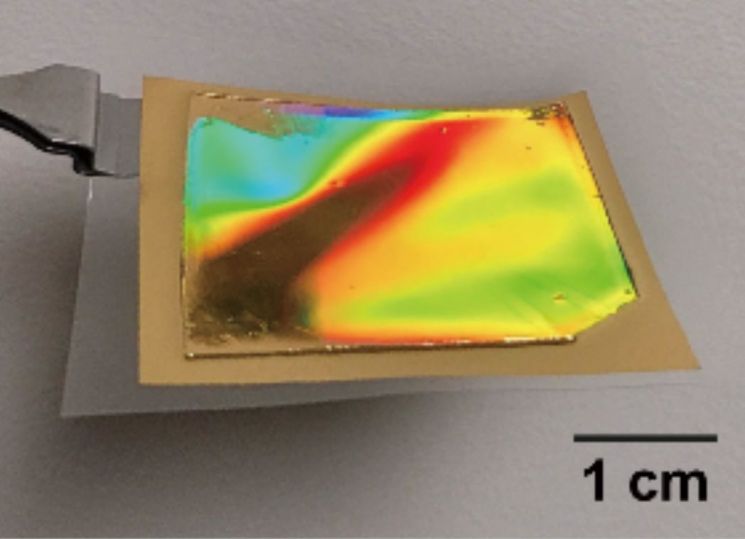
The core technology of Professor Nam Wonil’s team, the "high-performance large-area SERS biochip," which was selected this time, is notable for simultaneously overcoming the chronic limitations of conventional SERS sensors-reproducibility and sensitivity.
The research team has combined a three-dimensional nanoantenna structure with a soft lithography process to realize a SERS biochip that enables large-area, mass production. As a result, the technology has been highly evaluated for its potential commercialization in the rapidly growing precision bio-diagnostics market.
Professor Nam Wonil stated, "SERS chips can be expanded not only to the diagnosis and monitoring of cancer or diseases, but also to various fields such as water pollution, food safety, and environmental analysis," adding, "We plan to actively pursue not only basic research but also deep-tech-based technology startups."
© The Asia Business Daily(www.asiae.co.kr). All rights reserved.

















