Surge in Interest Burden Raises Concerns Over Sustainability of Personal Consumption
Fed Rate Cuts Expected to Restore Consumer Sentiment
Hana Securities: "Fed Likely to Cut Rates Three Times This Year"
The total household assets in the United States reached a record high of approximately 197 trillion dollars in the second quarter. This was driven by the rise in U.S. stock indices, which led to a sharp increase in the proportion of stocks held by households to 21%. In contrast, the proportion of real estate, bonds, and cash all decreased. Looking at the contribution to the U.S. gross domestic product (GDP) growth rate, personal consumption in the second quarter increased significantly to 1.7%, compared to 0.4% in the first quarter. The total outstanding balance on credit cards also hit an all-time high, continuing the trend of expanding credit utilization.
On October 22, Hana Securities released a report titled “Growth in U.S. Household Assets and Consumption Polarization,” diagnosing that when considering inflation-adjusted real consumption, a clear polarization trend is evident, with consumption by low-credit borrowers shrinking. The report pointed out that the sustainability of personal consumption, a key component of GDP, has decreased, and analyzed that a rate cut by the Federal Reserve (Fed) would help restore consumer sentiment in the United States.
The Illusion of Inflation in Nominal Consumption Expenditure
On a nominal basis, it appears that U.S. consumers are spending actively. In fact, nominal credit card spending in the second quarter increased across all credit score groups compared to the first quarter. However, when looking at real spending adjusted for inflation, the results are quite different. As of the end of the second quarter, real credit card spending-calculated based on headline inflation-remained at the 2023 level for consumers with high credit scores, indicating stagnant consumption.

Heo Seongwoo, an analyst at Hana Securities, commented, “What is more concerning is that consumers with relatively low credit scores (below 720) actually saw their spending decrease.” He analyzed that “the weakening of household finances due to high interest rates, as well as the rising burden of credit card loan interest rates, contributed to the decline in real spending.” Even when compared to the fourth quarter of 2019, just before the COVID-19 pandemic, real spending by high-credit consumers (credit score of 720 or above) increased by more than 10%, but spending by subprime consumers (credit score below 660) decreased. This highlights a distinct polarization phenomenon, with consumption contracting especially among consumers with lower credit scores.
Rising Debt Burden for Low-Credit Borrowers Due to High Interest Rates → Surge in Credit Card Delinquency Rates
U.S. consumers with low credit scores are more likely to revolve their credit card balances rather than pay them off in full each month. As high interest rates persist, the debt servicing cost for these revolving balances has surged. As of August, the credit card loan interest rate at commercial banks rose to 21.4%, approaching its highest level since 1995.
With the increased debt burden on low-credit borrowers, credit card delinquency rates have also risen. According to the Federal Reserve Bank of New York (FRBNY), the 90-day-plus credit card delinquency rate in the second quarter stood at 12.2%, the highest since the first quarter of 2011. Delinquency rates at U.S. banks outside the top 100 also reached 7.1%, nearing the highest level since 1991.
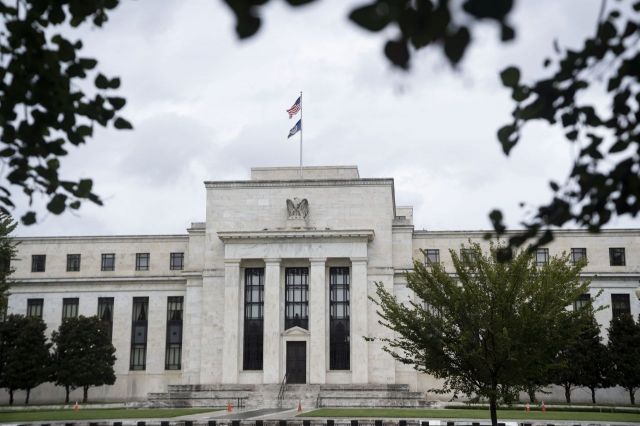
As a result, the increase in interest expenses due to high interest rates has left consumers with lower credit scores with no choice but to cut back on discretionary spending because of the growing repayment burden. Analyst Heo Seongwoo stated, “The decline in real spending, especially among consumers with low credit scores, raises questions about the sustainability of U.S. personal consumption.” He added, “With the Federal Reserve expected to implement three consecutive rate cuts starting from the September Federal Open Market Committee (FOMC) meeting, a full-fledged rate cut by the Fed will lower the prime rate, reduce credit card annual percentage rates (APRs), and substantially relieve the interest cost burden on financially vulnerable groups, serving as a catalyst to revive subdued consumer sentiment.”
© The Asia Business Daily(www.asiae.co.kr). All rights reserved.


















