Arriving at 9 a.m., Leaving at 9 p.m.
The Spread of Extreme Six-Day Workweek Culture
Success-Rewarded Employment Structure Fuels This Trend
Palo Alto, the heart of Silicon Valley in San Francisco, USA. Amidst the headquarters of Hewlett-Packard (HP) and the Ford Research Center, there is an office that remains brightly lit even on weekend nights. This is the headquarters of xAI, led by Tesla CEO Elon Musk.
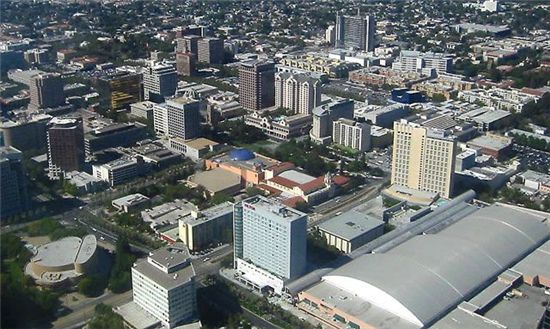 Silicon Valley, San Francisco, USA.
On October 21, Nikkei reported on the case of xAI, where an "extreme work culture" has become the norm, and noted that a "six-day work week" culture, running from Monday to Saturday, is spreading among artificial intelligence (AI) startups in Silicon Valley. This is known as the "996" system-a term originating from China, referring to working from 9 a.m. to 9 p.m., six days a week. This work style became widespread in the Chinese IT industry in the late 2010s, and Jack Ma, founder of Alibaba, once called it a "blessing," which sparked strong criticism. Although this culture was eventually banned in China as "illegal labor," it has resurfaced in Silicon Valley, a place long seen as a symbol of welfare and a free atmosphere.
The Washington Post noted that the extreme work culture that fostered big tech companies such as Google and Amazon is making a comeback, stating, "As AI competition intensifies, startups in Silicon Valley and New York are embracing the '996' system as a virtue and racing at a breakneck pace."
This practice of long working hours is not unique to Musk's companies. Many generative AI startups in Silicon Valley are adopting this work culture. In fact, an analysis by fintech company Ramp of corporate card transactions from January to August this year showed a significant increase in Saturday afternoon transactions in San Francisco, where many AI companies are concentrated, compared to the previous year. Nikkei cited this as a clear example of the spread of weekend work.
Some companies openly encourage long working hours. Pylon CEO Matti Kausa said, "You can't build a great company without working hard," adding, "My co-founder and I work even longer hours. While we don't force it, many of our employees also follow the '996' schedule."
Behind this valorization of the "996" work culture among executives lies a sense of crisis that the United States could fall behind China in the race for AI supremacy. American tech executives are increasingly referring to the "996" system as a symbol of competition, warning that "if we let our guard down, China will take the lead in AI development."
Jensen Huang, CEO of Nvidia, remarked, "China's culture is 996, and our competitors are greedy, fast, and extremely powerful." Former Google CEO Eric Schmidt also said, "In China, everyone works 996, whether it's legal or not," and argued, "To win the competition, we must sacrifice work-life balance."
There are also claims that the success-rewarded labor structure is fueling this culture. Tech companies in Silicon Valley are leveraging AI to pursue rapid growth with small teams, inevitably increasing the workload per person. Nikkei pointed out, "With trillions of dollars being invested in AI development and the enormous financial rewards at stake for success, the intensity of work is only increasing."
Ultimately, there are warnings that such extreme labor practices will lead to burnout. Didi Das, an investor at Menlo Ventures, said, "Long working hours actually reduce productivity, and the more experienced the talent, the more they avoid such cultures," adding, "Most founders who glorify this culture are young. More mature founders know that working 40 to 50 hours a week can achieve far more than working 80 hours."
© The Asia Business Daily(www.asiae.co.kr). All rights reserved.
















