35% Decrease After Food Labeling and Advertising Act Revision in July Last Year
142 Establishments Still Using "Drug" in Names
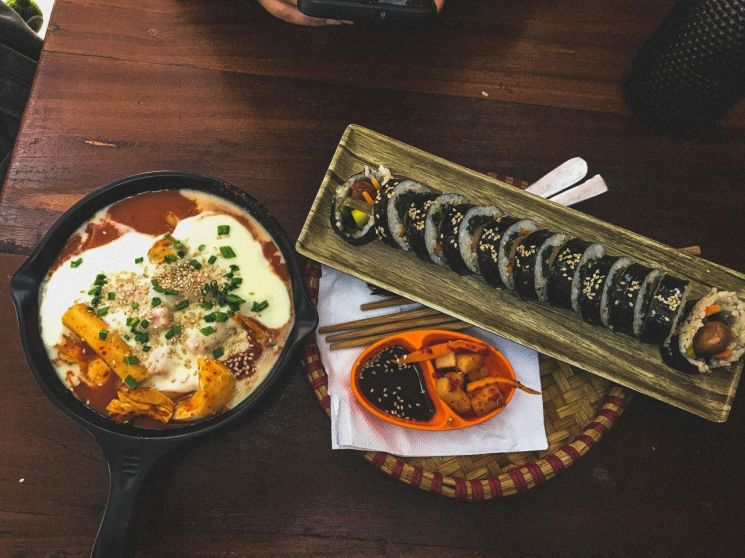
It has been found that the use of the word "drug" in restaurant names or as product names remains prevalent. Despite the revision of the Food Labeling and Advertising Act in July of this year, which prohibits such usage, there has been no significant decrease, raising concerns that public awareness may be weakening.
According to data on "business names containing drug-related terms" submitted by the Ministry of Food and Drug Safety to Assemblywoman Nam Insoon of the National Assembly Health and Welfare Committee on October 20, there are 142 restaurants using "drug" in their names, such as "Mayak Tteokbokki" and "Mayak Chicken."
By region, Gyeonggi Province had the highest number with 34 establishments, followed by Seoul with 15, North Gyeongsang Province with 12, South Gyeongsang Province with 11, and North Chungcheong Province with 11.
Although the Food Labeling and Advertising Act was revised in July of last year to recommend that drug-related and similar expressions not be used in food labeling or advertising, the number of restaurants with "drug" in their names only decreased by 35%, from 217 in August of last year (immediately after the law took effect) to 142 in June of this year. During the same period, the number of food products with "drug" in their names dropped by 40%, from 20 to 12.
In addition, although local governments are now able to subsidize the cost of replacing signs and menus, or support them through the Food Promotion Fund, only 17 establishments in six local governments, including Seoul, Gyeonggi, and Incheon, have received such support.

Assemblywoman Nam Insoon pointed out, "Drug-related expressions are indiscriminately used in foods popular among teenagers and children, such as Mayak Tteokbokki and Mayak Chicken," and added, "Repeated exposure to drug-related expressions in everyday life can stimulate children's curiosity and weaken public awareness."
She went on to say, "The government and local governments need to develop more proactive support measures so that small business owners can voluntarily replace their signs and menus."
© The Asia Business Daily(www.asiae.co.kr). All rights reserved.


















