113 in 2021 → 3,248 in 2024
Indirect Entry via Thailand, Vietnam, and Others
Significant Number Not Reflected in Official Statistics
The government has estimated that there are just over 1,000 Koreans working in Cambodia's scam industry, but new statistics suggest that the actual number of Koreans involved may be much higher. As it is also believed that more Koreans have fallen victim to criminal organizations, there are calls to accurately determine the scale of Koreans associated with Cambodia's crime zones.
The Number of Koreans Involved in Crimes or Victimized Likely Far Exceeds Government Estimates
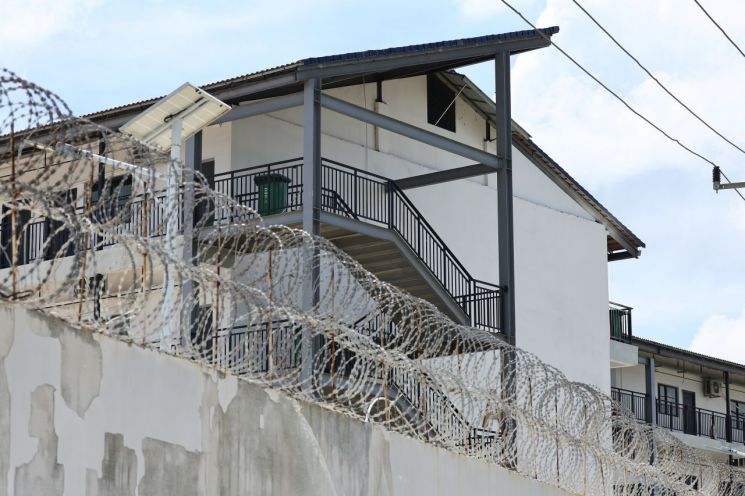 On the 16th (local time), barbed wire was laid on the outer wall of the Prince Complex, known as a crime zone near Phnom Penh, Cambodia. Photo by Yonhap News Agency
According to data received by Assemblyman Park Chan-dae of the Democratic Party of Korea from the Ministry of Justice on October 20, the gap between the number of Koreans departing for Cambodia and those returning to Korea was only 113 in 2021, but surged to 3,209 in 2022, 2,662 in 2023, and 3,248 in 2024, indicating an annual increase to the 2,000-3,000 range. This means thousands of people have remained as "non-returnees" each year. It is estimated that 864 people had not returned as of August this year.
The number of Koreans traveling from Korea to Cambodia has also steadily increased: 5,476 in 2021, 35,606 in 2022, 84,378 in 2023, and 100,820 last year. During the same period, the number of Koreans entering Korea from Cambodia was 5,363, 32,397, 81,716, and 97,572, respectively. In 2024, from January to August, 67,609 people traveled to Cambodia, but only 66,745 returned.
It is also presumed that a significant number of Koreans entered Cambodia via neighboring countries such as Thailand and Vietnam and did not return. According to the Cambodian Immigration Department, the number of Koreans entering Cambodia was 6,074 in 2021, 64,040 in 2022, 170,171 in 2023, 192,305 in 2024, and 106,686 from January to July 2025. Depending on the year, this is nearly double the figures in Korean statistics.
Possible Underreporting of Kidnappings, Detentions, and Deaths
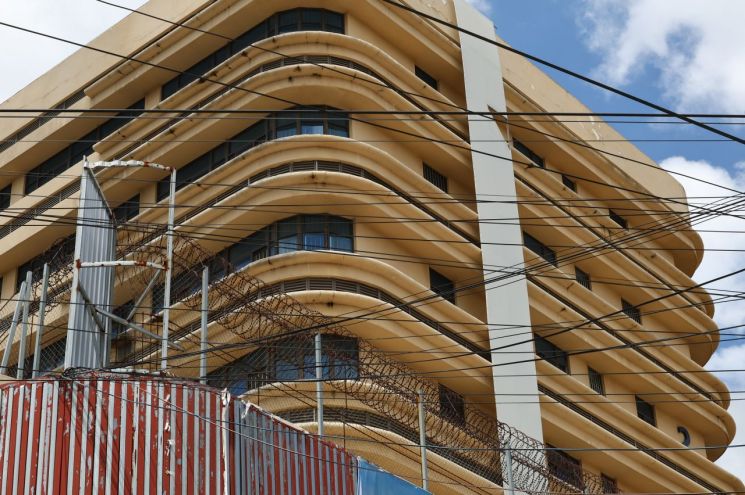 On the 16th (local time), barbed wire was laid on the outer wall of the 'Mango Complex,' known as a crime zone near Phnom Penh, Cambodia. Photo by Yonhap News
Local sources in Cambodia also agree that "the scale is much larger than government estimates." An acquaintance of an employee working in a crime zone told Yonhap News Agency, "There are at least 2,000 to 3,000 Koreans," adding, "Not everyone leaves by plane; some people enter illegally via China and other countries." A man in his twenties, Mr. B, who worked in a crime zone, said, "There were about 50 Koreans in the complex where I worked. Some of them left for other regions to start new companies after making money."
In particular, the number of Koreans who have been detained by local criminal organizations or have died from assault or torture may be far higher than reported.Mr. A claimed that some crime zones have their own incinerators, stating, "Organ trafficking also takes place in crime zones near the border. There are likely more than a few Koreans who have died in Wenchi."
Experts emphasize that accurately determining the "number of Koreans linked to criminal activities" is a priority in order to rescue victims.Assemblyman Park Chan-dae stated, "If local testimonies are true, there seem to be many victims who have not yet been identified," adding, "It is essential for the government to thoroughly cross-check individual immigration records with consular and police data to re-examine the status of non-returnees."
© The Asia Business Daily(www.asiae.co.kr). All rights reserved.


















