North Korea has once again released water from the Hwanggang Dam, located upstream on the Imjingang River, a cross-border river shared by North and South Korea, without prior notification to the South.
According to the Ministry of Climate, Energy and Environment and other authorities on October 19, the government has been monitoring the border area with satellite imagery to confirm whether water was being released from the Hwanggang Dam. At around 3:00 p.m. on the same day, it was confirmed that North Korea had discharged water from the dam.
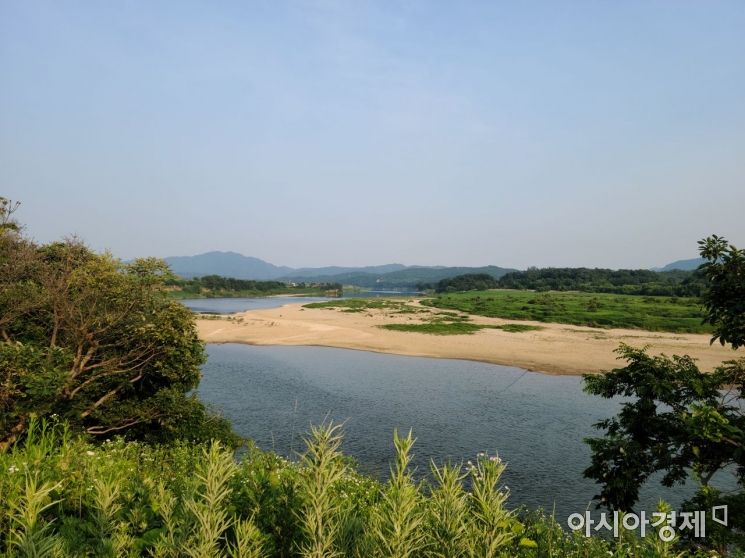
It is presumed that North Korea emptied the Hwanggang Dam to secure flood control capacity, as rainfall has continued since October 10 and heavy rain persisted on October 17 and 18. According to the Han River Flood Control Office, the water level at Pilseunggyo Bridge in Yeoncheon County-the northernmost point of the Imjingang River on the South Korean side-exceeded 1 meter, the threshold for evacuating river visitors, at around 7:00 p.m. on the same day.
Once again, North Korea failed to notify the South in advance of the water release. In September 2009, North Korea discharged water from the Hwanggang Dam without prior notice, resulting in casualties downstream on the Imjingang River. In response, the two Koreas agreed in October of the same year to provide advance notification of water releases from the Hwanggang Dam. However, North Korea has not complied with this agreement since 2013.
The government manages the Imjingang River Basin in four stages according to the water level at Pilseunggyo Bridge. When the water level exceeds 1 meter, evacuation of river visitors is initiated; at 2 meters, evacuation of residents is ordered during the non-flood season; at 7.5 meters, a crisis alert for the border area is issued at the attention level; and at 12 meters, the alert is raised to the caution level.
Lee Seunghwan, Director of Water Resources Policy at the Ministry of Climate, stated, "Since detecting signs of water release from the Hwanggang Dam on October 12, North Korea has repeatedly opened and closed the dam’s sluice gates. We will continue to closely monitor the water level at Pilseunggyo Bridge and respond thoroughly in cooperation with relevant agencies to prevent any damage downstream."
© The Asia Business Daily(www.asiae.co.kr). All rights reserved.

















