British Library Reissues Access Card After 130 Years
The British Library reissued an access card for the renowned Irish writer Oscar Wilde (1854-1900) on October 16 (local time). This comes 130 years after his original card was revoked following his conviction for homosexuality during his lifetime.
On October 17, Yonhap News Agency, citing the BBC, reported that Merlin Holland (79), Wilde’s grandson and a writer, is scheduled to collect the new access card from the British Library. The expiration date on the card is marked as November 30, 1900, the date of Wilde’s death.
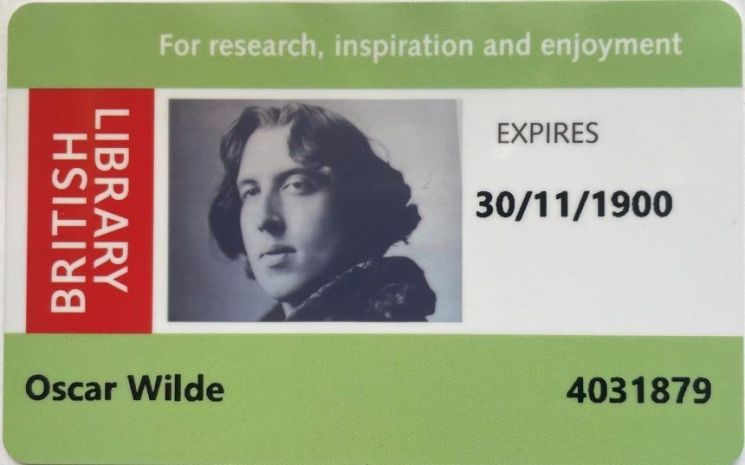 Newly issued Oscar Wilde British Library access card. Provided by the British Library Yonhap News Agency
Oscar Wilde is a leading figure of the aesthetic movement, which places beauty above all other values. His 1888 collection of fairy tales, "The Happy Prince," is a representative work that showcases his warmth and lyrical sensibility. His only novel, "The Picture of Dorian Gray," published in 1891, delves deeply into the themes of aestheticism and moral corruption, earning both controversy and acclaim.
In the 1890s, Wilde wrote plays satirizing Victorian London’s high society. Works such as "Lady Windermere’s Fan" (1892), "A Woman of No Importance" (1893), and "An Ideal Husband" (1895) captivated the theater world of the time.
Prosecuted for Homosexuality in 1895
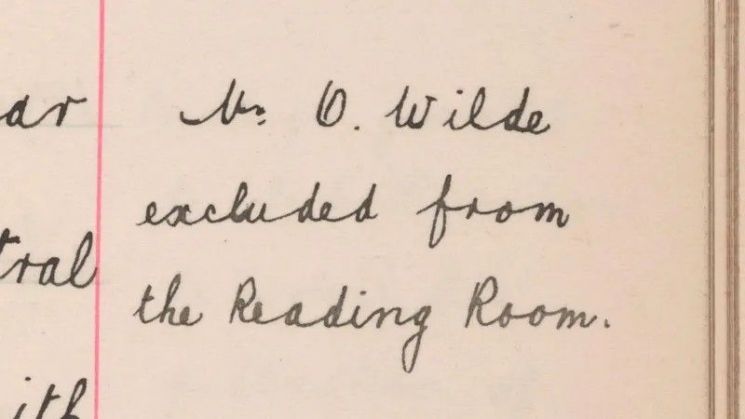 Record of Oscar Wilde's ban from the British Library reading room. Provided by the British Library, Yonhap News Agency.
In 1895, Wilde was prosecuted on charges of homosexuality. While in a relationship with a male lover 16 years his junior, Wilde filed a libel suit against the lover’s father, the 9th Marquess of Queensberry, who had demanded that the relationship end. Wilde lost the case, evidence of homosexual acts emerged, and he was sentenced to imprisonment. He subsequently spent two years in prison.
At the time, British law defined homosexuality as "gross indecency." The board of the British Museum Library, the predecessor to the British Library, banned Wilde from entry after his imprisonment. According to the regulations in effect at the time, anyone convicted of a crime was stripped of their right to access the library.
After his release, Wilde moved to Paris, where he lived out his final years under the pseudonym Sebastian Melmoth. He died on November 30, 1900, in Paris at the age of 46, impoverished and in poor health.
Holland, Wilde’s only grandchild, described the new access card as "a beautiful gesture of forgiveness," adding, "I am sure his soul would be deeply moved and delighted."
Carol Black, chair of the British Library, described Wilde as "one of the most important literary figures of the 19th century." She explained that the reissuance of the access card serves both as a tribute to Wilde and as an acknowledgment that "he suffered injustice and immense pain."
© The Asia Business Daily(www.asiae.co.kr). All rights reserved.


















