39,000 Low-Income Citizens Miss Out on 30.3 Billion Won in Refunds
Lee Gaeho: "Move Beyond Administrative Convenience... Switch to Automatic Payments"
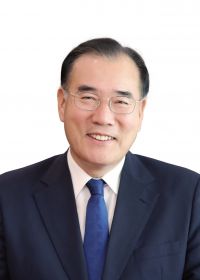 Lee Gaeho, member of the Democratic Party of Korea.
The refund for the Out-of-Pocket Payment Ceiling Program, operated by the National Health Insurance Service, continues to be managed under an "application-based" system. As a result, contrary to the program's intended purpose, low-income citizens are not fully benefiting from it. Although the system was designed to alleviate the burden on citizens suffering from high medical expenses, critics argue that administrative convenience is being prioritized, resulting in harm to vulnerable groups.
According to data submitted by Lee Gaeho, a member of the Democratic Party of Korea representing Damyang, Hampyeong, Yeonggwang, and Jangseong in South Jeolla Province, the total amount of refunds not claimed through the Out-of-Pocket Payment Ceiling Program over the past ten years (from 2015 to September 2025) reached 51.067 billion won, with 65,255 citizens missing out on these benefits.
In particular, 39,814 people-61% of those who did not receive refunds-were from the lowest three income brackets. The amount of unclaimed refunds for these low-income groups alone totaled 30.352 billion won, accounting for 59.4% of the overall unclaimed amount, highlighting the severity of the impact on low-income citizens.
Currently, the refund process for the Out-of-Pocket Payment Ceiling Program requires the National Health Insurance Service to send out three notifications, after which individuals must apply directly to receive their refund. Typically, the agency sends out refund notifications in August of the following year, and if a refund is not claimed within three years, it is automatically forfeited and reverts to the agency's finances. Due to the complexity of these procedures, many information-vulnerable groups, such as the elderly who may be unaware of the program, forgo applying. As a result, the intended purpose of "alleviating medical expenses" is not being properly delivered to low-income citizens.
Lee Gaeho criticized, "In an era where people are highly cautious about voice phishing and tend to avoid unfamiliar messages or calls, simply sending out notifications to encourage refunds is highly ineffective. This is a classic example of administrative convenience taking precedence."
He continued, "It goes against the intent of the Out-of-Pocket Payment Ceiling Program, which was introduced to reduce the burden of medical expenses, for the system to operate in such a way that refunds are only available upon application. The system should be improved so that excess medical expense refunds can be automatically deposited using account information held by the majority of citizens."
Meanwhile, Lee Gaeho added, "Since President Lee Jaemyung has also emphasized moving away from the 'application-based' approach in administration, the refund process for the Out-of-Pocket Payment Ceiling Program should likewise be converted to an automatic payment system. Fundamental government reforms are urgently needed to ensure that the elderly and other vulnerable groups are not disadvantaged due to limited access to the system."
© The Asia Business Daily(www.asiae.co.kr). All rights reserved.
![Clutching a Stolen Dior Bag, Saying "I Hate Being Poor but Real"... The Grotesque Con of a "Human Knockoff" [Slate]](https://cwcontent.asiae.co.kr/asiaresize/183/2026021902243444107_1771435474.jpg)















