Minister Jung Eun-kyung: "Serious" Public Health Alert Lifted
Central Disaster Headquarters Disbanded; Telemedicine and Other Measures to Be Institutionalized
The "Severe" level of the health and medical disaster crisis alert, which was issued after the mass resignation of medical residents last year, along with the corresponding emergency medical system, will be lifted. The so-called "medical crisis," which erupted due to conflicts between the government and the medical community, is officially coming to an end after one year and eight months.
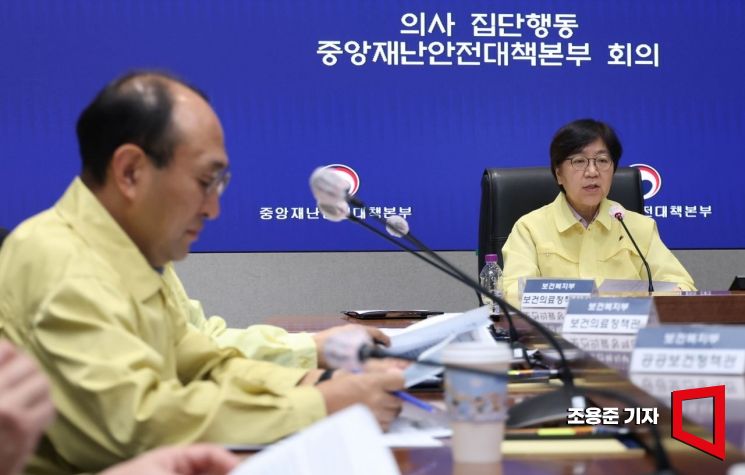 Jung Eun-kyung, Minister of Health and Welfare, attended the Central Disaster and Safety Countermeasures Headquarters meeting on medical professionals' collective action held at the Government Seoul Office in Jongno-gu, Seoul on October 1st, 2025, and made remarks regarding the medical system during the Chuseok holiday. Photo by Jo Yongjun
Jung Eun-kyung, Minister of Health and Welfare, held a Central Disaster and Safety Countermeasures Headquarters meeting on collective action by doctors at the Government Seoul Office on the 17th and stated, "Since the return of the medical residents, the medical system has been operating relatively stably," adding, "The severe crisis level will be lifted as of 00:00 on the 20th."
Previously, the Ministry of Health and Welfare raised the health and medical crisis alert to the highest "severe" level for the first time ever on February 23 last year, after medical residents collectively resigned in protest against the increase in medical school admissions. The ministry also activated the emergency medical system in response.
Minister Jung explained, "After the new administration took office, we resumed communication with the medical community and cooperated with each other, resulting in the return of a significant number of medical residents." She reported that both the volume of medical services and the emergency medical system's capacity have nearly returned to normal levels seen before the conflict.
According to the Ministry of Health and Welfare, 7,984 medical residents have returned to training through recruitment in the second half of this year, restoring the workforce to 76.2% of the level before the conflict. Currently, there are a total of 10,305 medical residents at training hospitals nationwide.
At present, the volume of care provided by tertiary and general hospitals has recovered to 95% of pre-emergency levels, and emergency rooms have restored 99.8% of their normal bed capacity. The number of emergency medicine specialists has increased by 209 compared to normal times, indicating that the emergency medical system has also nearly regained its usual capacity.
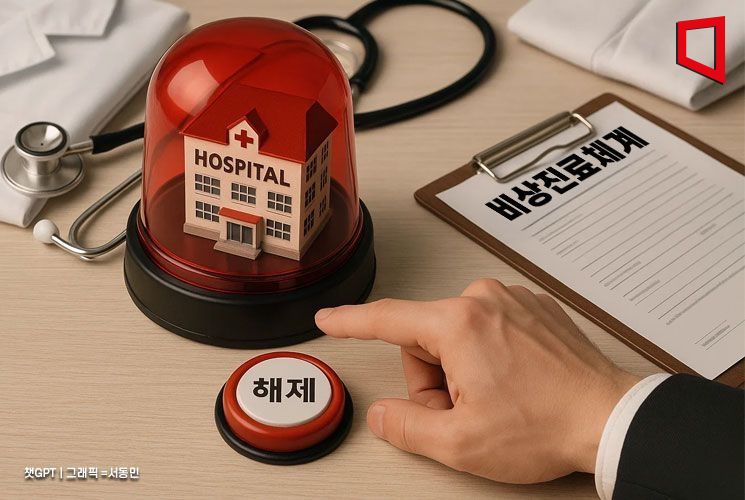
With the lifting of the crisis alert, the operation of the Central Disaster and Safety Countermeasures Headquarters will also end. As the emergency medical system is deactivated, support payments and temporary fee measures that were implemented to maintain emergency care will be discontinued, while some measures will become permanent. Fees related to emergency medical care will be adjusted at the end of this month following a decision by the Health Insurance Policy Review Committee.
Minister Jung stated, "Temporary fees will be terminated, but certain items that proved effective in maintaining the emergency medical system will be converted to regular fees." She added, "Measures that require a grace period, such as those for regional hub centers, will be maintained until the end of the year before being discontinued." She continued, "We will work to institutionalize measures that have been evaluated as helpful for the efficient operation of resources, such as physician assistants, telemedicine, and hospitalist specialists."
Meanwhile, in her opening remarks at the meeting, Minister Jung said, "I would like to express my condolences and apologies to the patients and families who experienced inconvenience in the medical field due to the conflict over the past one year and eight months." She also expressed her gratitude to medical staff, 119 emergency responders, and other public officials who have protected lives at patients' sides under difficult circumstances.
The government also announced that it will continue efforts to overcome crises in regional, essential, and public healthcare even after the emergency medical system is lifted.
Minister Jung stated, "To promote medical reform that resonates with both the public and the medical community, we will promptly establish a 'National Participatory Medical Innovation Committee' to address the current crises in regional and essential healthcare, and to enhance the public nature and sustainability of the medical system." She added, "Under the new medical reform framework, we will focus on finding practical solutions to fill gaps in areas such as pediatrics and obstetrics, minimize emergency room rejections, and improve the phenomenon of patients traveling to the Seoul metropolitan area for treatment."
© The Asia Business Daily(www.asiae.co.kr). All rights reserved.


















