Since 2017, Roteco Has Exclusively Secured All High-Speed Rail Manufacturing Supervision Contracts
"Past Performance Scores Play a Decisive Role in Bidding"
It has been revealed that a particular company has monopolized the mandatory supervisory work required for the production of high-speed trains. This situation has arisen because the bidding standards applied by high-speed rail operators such as Korea Railroad Corporation (KORAIL) are structured in a way that favors a specific company. Since production supervision directly affects train safety, there are calls for the establishment of a competitive system.
According to industry sources as of October 17, 2025, since 2017, Korea Railroad Corporation (KTX) and SR, the operator of Suseo High-Speed Railway (SRT), have awarded all contracts for the production supervision of high-speed rail vehicles (EMU-260 and EMU-320) to the Korea Railway Rolling Stock Engineering Association (Roteco). Each contract ranges from 2 billion to 3 billion KRW, and the total contract amount, including additional quantities, has reached 25 billion KRW. KORAIL put four contracts and SR put one contract up for bid, totaling five contracts, all of which were awarded to Roteco. The most recent bid, held last month, was also won by Roteco.
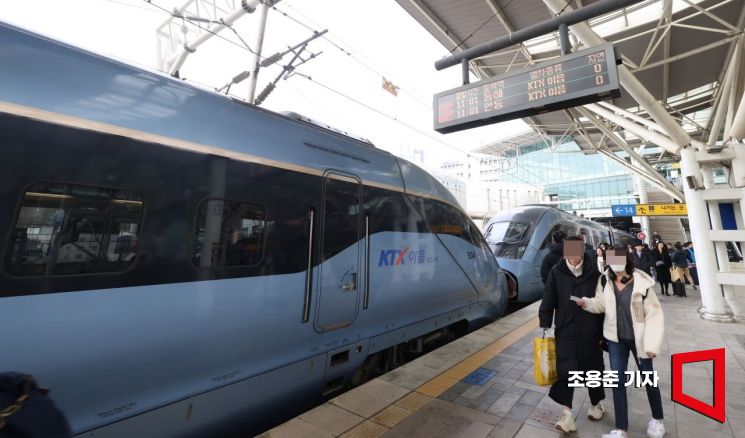 Citizens are moving to board the Jungang Line KTX Eum train extended to Seoul Station in Jung-gu, Seoul. Photo by Jo Yongjun jun21@
The inspection of railway vehicles is a form of supervision that checks whether train manufacturers such as Hyundai Rotem or Woojin Industrial Systems have produced vehicles in accordance with the type approval, and it is mandatory under the Railway Safety Act. In Korea, Roteco and KR Engineering & Consulting (KR) are designated as specialized inspection agencies. Roteco was established as an incorporated association in the 1960s and has continued to conduct railway vehicle inspections and safety assessments. It is known that the main executives have traditionally been composed mainly of former KORAIL retirees.
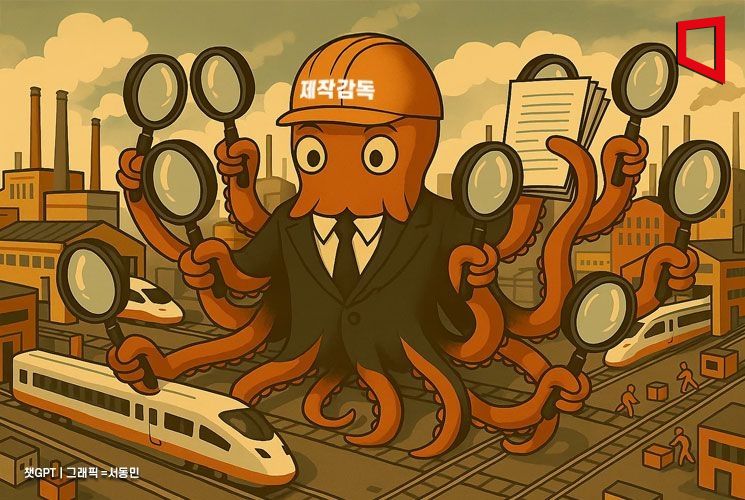
The reason Roteco has continuously secured contracts for high-speed train production supervision is due to KORAIL's bidding standards. KORAIL places significant emphasis on past performance. Since only Roteco has the relevant experience, insisting on this criterion prevents the formation of meaningful competition. According to KORAIL's evaluation standards, for large contracts worth more than 1 billion KRW, past performance (10 points), technical capability (25 points), financial status (30 points), and work overlap (5 points) are considered.
In this process, Roteco receives an additional 4 points for its past performance. According to competing companies, this point difference is a major factor in Roteco winning every bid. The gap has narrowed after KR, which competes with Roteco, actively pointed out to KORAIL and the Korea Fair Trade Commission that the current evaluation standards are unfair. Originally, the gap was 6 points.
For general train production supervision work ordered by KORAIL and regional transportation corporations, Roteco and KR share the work based on the bidding results. If one company monopolizes the mandatory production supervision during the train manufacturing process, it could not only increase costs but also adversely affect train safety. The Ministry of Land, Infrastructure and Transport specifies detailed criteria for designating specialized inspection agencies, including specific requirements for inspector career experience and personnel. For high-speed rail vehicles, at least three chief inspectors and more than thirty senior inspectors and inspectors are required. KORAIL also includes the overlap of inspectors' work in its evaluation standards to minimize duplicate assignments. Although the difficulty of production supervision work is not considered high, it is important to conduct inspections thoroughly.
KORAIL explained that it strengthened qualification requirements in the high-speed vehicle sector in response to a 2012 audit by the Board of Audit and Inspection, and later revised them last year in line with recommendations from the Fair Trade Commission, ensuring a level that guarantees safety. In response to criticism that the evaluation standards are not reasonable, KORAIL stated, "We are conducting a service with an external professional organization to supplement the evaluation criteria for technical service provider capability," adding, "We plan to review the results of this service and reflect them in our policies and standards."
© The Asia Business Daily(www.asiae.co.kr). All rights reserved.



















