Ministry of Commerce: "Ongoing Communication Between the Two Countries"
Besant Hints at U.S.-China Summit
Renewed Expectations for a U.S.-China Leaders' Meeting
The Chinese government has urged the United States to demonstrate a "sincere willingness to engage in dialogue" rather than introducing new sanctions against China, emphasizing that trade talks between the two countries are ongoing.
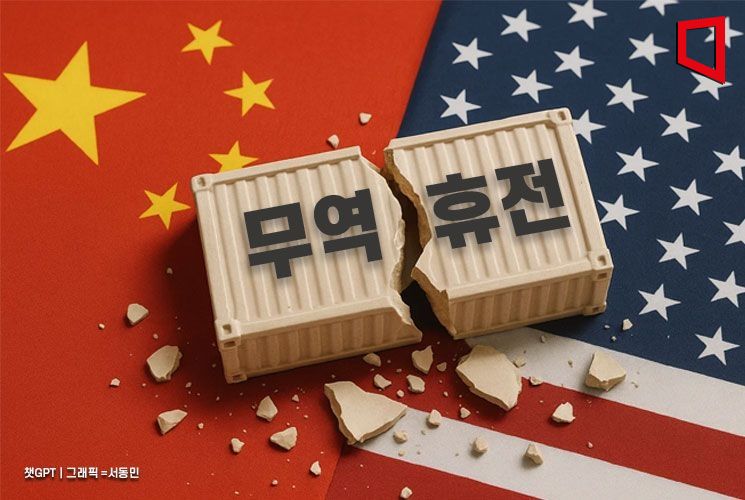
On October 14, a spokesperson for the Chinese Ministry of Commerce stated on its official website that, in response to a reporter's question-"After learning about China's export control measures on rare earths and other materials, U.S. officials proposed a call with China, but China postponed it. The U.S. side said both countries should find a way to stabilize the situation. What is China's position?"-the spokesperson provided the following comments.
The spokesperson explained, "The export control measures on rare earths and other materials are legitimate actions taken by the Chinese government to establish a comprehensive export control system in accordance with the law," adding, "Before announcing these measures, China notified the United States through the bilateral export control dialogue mechanism."
The spokesperson continued, "The past four rounds of economic and trade talks have fully demonstrated that China and the United States can find ways to resolve issues based on mutual respect and equal negotiations," and further explained, "The two countries continue to maintain communication within the framework of the China-U.S. economic and trade negotiation mechanism, and working-level meetings were also held yesterday."
Recently, as China tightened export controls on rare earths, the United States responded on October 10 (local time) by announcing plans to impose an additional 100% tariff on Chinese products starting November 1, further escalating tensions between the two countries. This move came at a time when there was speculation that the leaders of the U.S. and China, who had refrained from retaliatory actions since the tariff truce, might hold a face-to-face meeting at the end of the month. Following this escalation, the U.S. stock market declined and asset markets became volatile. On October 12, President Donald Trump sought to calm the situation, stating, "Do not worry about China. Everything will be fine," in an effort to de-escalate the conflict.
Both countries have left the door open for dialogue. On October 13, U.S. Treasury Secretary Scott Besant said in a media interview that there had been significant communication between the U.S. and China over the weekend, and that President Trump and Chinese President Xi Jinping are scheduled to meet in South Korea at the end of the month.
Meanwhile, expectations are rising within China that a U.S.-China summit will be held soon, according to a report by the South China Morning Post (SCMP) on the same day. The SCMP reported that, as the U.S. has softened its stance following China's unprecedentedly strong response, public opinion is building in favor of a meeting between President Trump and President Xi.
If this atmosphere continues, there is a strong possibility that the leaders of the U.S. and China will hold a separate meeting during the Asia-Pacific Economic Cooperation (APEC) summit, which will take place in Gyeongju from October 31 for two days.
© The Asia Business Daily(www.asiae.co.kr). All rights reserved.

















