A 'High-Efficiency Policy' Delivering Dozens of Times the Benefits, Yet Ignored by the Government
Ministries Out of Sync Despite President Lee's Emphasis
Lee Gaeho: "Reactive Administration...A Forward-Looking Attitude Is Needed"
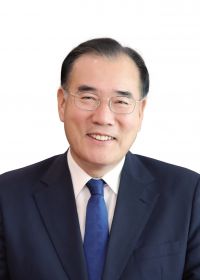 Lee Gaeho, member of the Democratic Party of Korea.
The value-added tax refund system (tax refund), a key driver for revitalizing 'K-Medical Tourism,' is at risk of expiring at the end of this year. Despite President Lee Jaemyung personally emphasizing the importance of 'foreign medical tourism,' criticism has arisen that this situation is due to the passive stance of the relevant ministries, namely the Ministry of Economy and Finance and the Ministry of Health and Welfare.
According to data submitted by Lee Gaeho, a member of the Democratic Party of Korea representing Damyang, Jangseong, Hampyeong, and Yeonggwang in South Jeolla Province, to the National Assembly's audit of government affairs on the 14th, the Ministry of Health and Welfare expressed a lukewarm position on extending the tax refund system, stating that it would "monitor the impact and consider reintroducing it if necessary."
The tax refund system, introduced in 2016 to attract foreign medical tourists, achieved remarkable results in a short period. The number of foreign medical tourists, which stood at 300,000 in the first year of implementation, soared to 1.17 million in 2024.
According to an analysis by the Korea Institute for Industrial Economics and Trade, as of last year, the production inducement effect generated by foreign patients in Korea reached 13.8569 trillion won, while the value-added inducement effect amounted to 6.2078 trillion won. Given that the annual refund amount is 95.5 billion won, this policy has proven to be a 'high-efficiency policy' that brings economic benefits dozens of times greater than its cost.
Additionally, data from the Korea Health Industry Development Institute show that the average spending per foreign medical tourist has reached 6.41 million won, a 2.5-fold increase compared to 2019, indicating a strong incentive for high spending.
Despite these positive outcomes, the Ministry of Economy and Finance decided to sunset the system during its tax reform discussions in July, citing "insufficient economic effect" as the reason.
In response, Assemblyman Lee criticized, "Even after President Lee Jaemyung emphasized its importance, the government's lukewarm attitude of only considering reintroduction after monitoring is a textbook example of 'locking the stable door after the horse has bolted.'"
With the global medical tourism market growing rapidly at an average annual rate of 21.6%, competing countries such as China, Thailand, and T?rkiye are making aggressive national-level investments to secure a lead in the market. Assemblyman Lee pointed out that, in contrast to this global trend, the government's decision is causing deep concern in the industry, with stakeholders warning that "the K-Medical Tourism ecosystem could collapse."
Assemblyman Lee urged, "While countries like China and Thailand are expanding through competitive, state-led support policies, only Korea is regressing in its policies. As extending the system is essential to revitalize K-Medical Tourism, the National Assembly must provide full support, and the Ministry of Health and Welfare should also make active efforts with a forward-looking attitude."
© The Asia Business Daily(www.asiae.co.kr). All rights reserved.
















