Counterargument to Study on 'Vaccine and Cancer Risk'
"Difficult to Draw Conclusions from One-Year Observation... Academic Community Also Points Out Limitations"
"Vaccination Still Necessary for High-Risk Groups"
In response to the recent publication of a domestic medical team's research claiming that "COVID-19 vaccines increase cancer incidence," the Korea Disease Control and Prevention Agency (KDCA) stated that "it is difficult to prove causality."
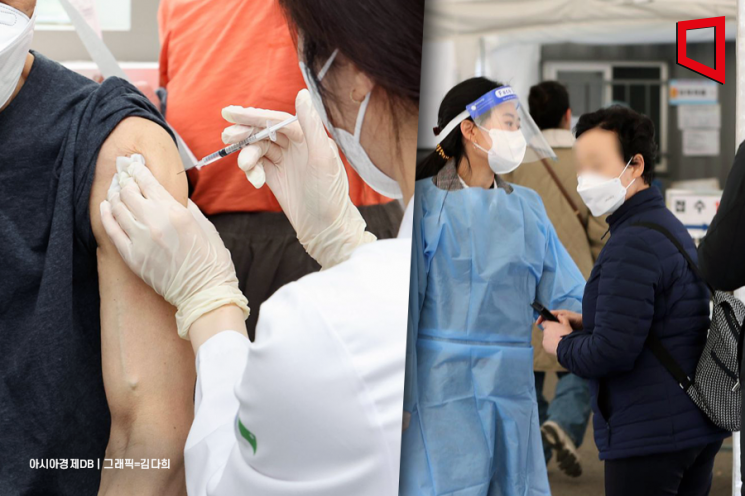
During a regular briefing on October 13, the KDCA explained, "Given that it takes years to determine the mechanisms behind cancer development, it is difficult to conclude that vaccination causes cancer based solely on a study that observed subjects for one year after vaccination." The agency also noted, "This study has been criticized within the academic community for several limitations."
The KDCA continued, "The effectiveness of COVID-19 vaccination in preventing severe illness and death has been demonstrated over several years," adding, "From 2024 to 2025, the rate of abnormal cases following vaccination dropped to 5 per 100,000 people, and most cases were mild. This rate has decreased over the past three years." The agency emphasized, "COVID-19 vaccination remains necessary for high-risk groups."
Previously, on September 26, a research team led by Professor Chun Eunmi of the Department of Pulmonology at Ewha Womans University Mokdong Hospital published a paper in the international journal Biomarker Research titled "One-Year Risk of Cancer Associated with COVID-19 Vaccination: A Large-Scale Population-Based Cohort Study in Korea."
In this paper, the research team analyzed data from the National Health Insurance Service, comparing the vaccination history and cancer incidence of approximately 8.4 million people between 2021 and 2023. They reported that the risk of developing major cancers was higher among vaccine recipients during the year following vaccination. Specifically, the risk of prostate cancer was 69% higher and lung cancer 53% higher among vaccinated individuals compared to non-vaccinated individuals. The incidence rates of stomach, colorectal, and breast cancers were also higher among those who had been vaccinated.
However, within the medical community, there has been considerable criticism, including concerns that "the observation period is excessively short" and "the characteristics of the vaccinated and non-vaccinated groups differ, making fair comparison impossible."
Professor Jung Jaehoon of the Department of Preventive Medicine at Korea University pointed out on social media that "to compare new cancer incidence, both groups must be cancer-free at the start of the study." He noted, "The vaccinated group excluded 500,000 people with a history of cancer in the past year, but there was no mention of applying the same exclusion criteria to the non-vaccinated group." He further criticized, "It is possible that the non-vaccinated group included individuals who already had cancer or a history of cancer, meaning the starting conditions were fundamentally different." Professor Jung warned, "If insufficiently verified research is spread as if 'vaccines cause cancer,' it can lead to unnecessary anxiety and distrust."
The research team also acknowledged in their paper that "while an association between vaccination and cancer incidence was observed, further research is needed to establish causality," admitting the study's limitations.
Meanwhile, starting on October 15, free COVID-19 vaccinations for the 2025-2026 season will be offered to those aged 75 and older and other high-risk groups. Ko Jaeyoung, spokesperson for the KDCA, stated, "COVID-19 remains a threat, so vaccination is necessary for the elderly and high-risk populations," and announced that "COVID-19 and influenza vaccinations will be administered simultaneously."
© The Asia Business Daily(www.asiae.co.kr). All rights reserved.

















