Ministry of Justice: "Committed to Reclaiming All Pro-Japanese Collaborators' Assets for the State"
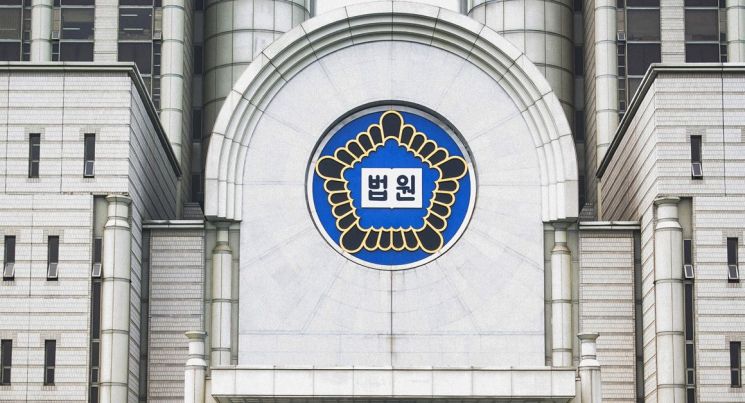
The government has initiated legal proceedings to recover 7.8 billion won in proceeds from the sale of land by descendants of pro-Japanese collaborators who accumulated wealth through collaboration during the Japanese colonial period.
The Ministry of Justice announced on October 12 that it had filed a lawsuit with the Seoul Central District Court on October 10, seeking the return of unjust enrichment totaling approximately 7.8 billion won, which was gained by the descendants of Lee Haeseung from the sale of 31 parcels of land in Howon-dong, Uijeongbu, Gyeonggi Province.
The Act on the Return of Property of Pro-Japanese Collaborators stipulates that property acquired through cooperation with the Japanese from the signing of the Japan-Korea Protocol in 1904 until liberation in 1945 shall be reverted to the state. Lee Haeseung was granted the title of marquis and enjoyed noble status from Japan in 1910. In 2009, the Investigative Commission on Pro-Japanese Collaborators designated him as a pro-Japanese collaborator.
Previously, in 2020, the Ministry of Justice filed and won a lawsuit against the descendants of Lee Haeseung to recover 13 parcels of land in Uijeongbu. The 31 parcels involved in the newly filed lawsuit had been put on hold at that time due to a review of the statute of limitations.
Re-examination and Resumption of Litigation Following Supreme Court Ruling
The Ministry of Justice re-examined the possibility of recovery after the Supreme Court ruled in December last year that "claims of statute of limitations by descendants of pro-Japanese collaborators constitute an abuse of rights." As a result, the ministry determined that legal action was possible and proceeded with the lawsuit.
The legal battle between the government and the descendants of Lee Haeseung has been ongoing since 2007. At that time, the government confiscated 192 parcels of land inherited by the descendants, asserting that Lee Haeseung had received his noble title for his contributions to the Japan-Korea Annexation. However, the descendants argued that the title was granted not for his role in the annexation but due to his imperial family status. They filed a lawsuit and ultimately won a partial victory in the Supreme Court, regaining some of the land.
Subsequently, in 2011, the National Assembly amended the Act on the Return of Property of Pro-Japanese Collaborators by deleting the problematic provision. Nevertheless, even in the retrial, the court ruled that only one parcel of land (4 square meters), which was not included in the first lawsuit, had to be returned.
Justice Minister Jeong Seongho stated, "We will continue to ensure that property accumulated through pro-Japanese and anti-national acts is reverted to the state, upholding justice and realizing the constitutional ideals of the March 1st Movement, which resisted Japanese colonial rule."
© The Asia Business Daily(www.asiae.co.kr). All rights reserved.
![Clutching a Stolen Dior Bag, Saying "I Hate Being Poor but Real"... The Grotesque Con of a "Human Knockoff" [Slate]](https://cwcontent.asiae.co.kr/asiaresize/183/2026021902243444107_1771435474.jpg)
















