Trump Announces 100% Tariffs,
China Vows "Firm Response"
Tensions Escalate Ahead of Gyeongju Summit
The trade conflict between the United States and China is intensifying into a "tariff and rare earth standoff." As the trade truce agreed upon in Geneva last May is effectively unraveling, concerns are mounting over the uncertainty caused by heightened tensions between the two countries. With the battle for dominance over rare earth elements reigniting, the upcoming meeting between U.S. President Donald Trump and Chinese President Xi Jinping, scheduled to take place in South Korea at the end of this month, is expected to be a critical turning point in bilateral relations.
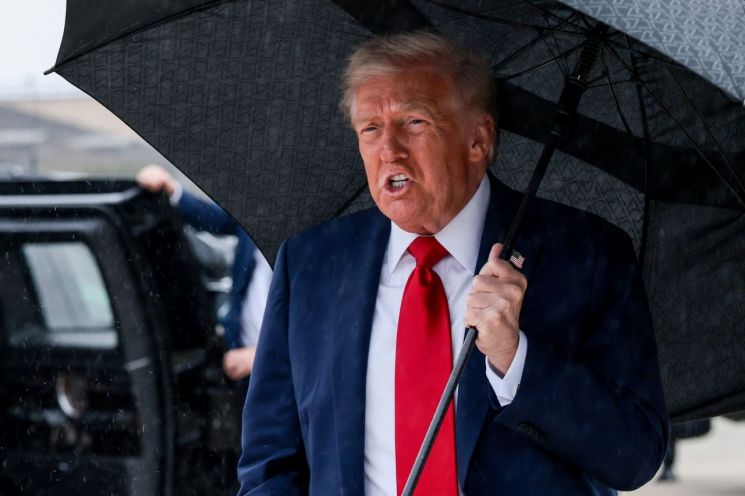
After President Trump announced that he would impose a 100% tariff on Chinese products in response to China's strengthened controls on rare earth exports, China retaliated on the 12th, declaring, "We will respond resolutely." The Chinese Ministry of Commerce specifically pointed out that, even after the high-level U.S.-China trade talks in Madrid last month, the Trump administration placed additional Chinese companies on a new blacklist and tightened export restrictions.
The ministry further warned, "The United States has been abusing export controls and excessively expanding the concept of national security," adding, "If necessary, we will take corresponding measures to defend our legitimate rights and interests." While the ministry indicated a willingness to continue dialogue, it also asserted, "We do not want a tariff war, but we are not afraid of one either."
Previously, on the 10th, President Trump stated, "We will impose export controls on a large scale on almost all products and all key software produced by China." He added, "I have just learned that China has taken an extremely aggressive stance regarding trade."
Recently, China not only suspended imports of U.S. soybeans but also announced on the 9th its plan to strengthen export controls on rare earth alloys. On this day, China also revealed that, starting from the 14th, it would impose a "special port service fee" of 400 yuan (approximately 80,000 won) per net ton on U.S.-related vessels.
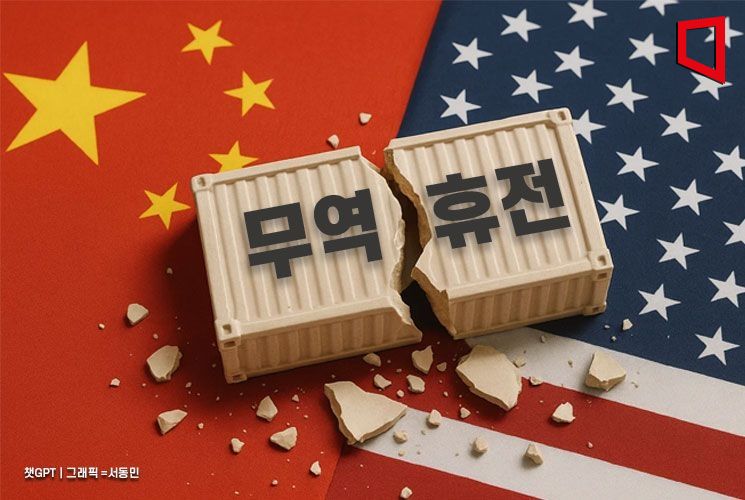
As the United States and China resume retaliatory measures with rare earths and tariffs, analysts say the trade truce reached in Geneva last May has effectively lost its effect. Peng Chucheng of Beijing-based think tank Hutong Research commented, "Both sides sought to ease tensions after the Madrid talks, but the situation changed rapidly in September when the United States tightened export controls on Chinese companies."
Some observers note that the clash between the two countries is taking on the character of a power struggle ahead of the U.S.-China summit originally scheduled to be held in South Korea this month. President Trump's "tariff bomb" and President Xi's "rare earth card" are seen not merely as acts of retaliation, but as preliminary moves to gain the upper hand in negotiations. Reuters reported, "China is building up its 'bargaining chips' to strengthen its negotiating power ahead of the summit between President Trump and President Xi in Gyeongju."
There are also suggestions that the U.S.-China summit could be canceled. The Associated Press reported, "This round of confrontation risks derailing the Trump-Xi summit and could end the truce in the tariff war that had been temporarily halted last April."
The South China Morning Post also pointed out, "This clash has put the Asia-Pacific Economic Cooperation (APEC) summit in a state of uncertainty," adding, "It is not even clear whether either side is willing to ease tensions to keep the summit on track."
Ultimately, whether the Trump-Xi summit takes place at the APEC summit at the end of this month is expected to be a watershed moment for the future trajectory of U.S.-China relations. If the summit proceeds as planned, it could be interpreted as a signal that both countries intend to at least maintain communication channels. However, if the summit is canceled, the "expectations for tariff relief" that have persisted since the Geneva truce in May would effectively disappear.
The Washington Post reported that while President Trump has not officially canceled his planned meeting with President Xi during the APEC summit, he stated that nothing is certain.
© The Asia Business Daily(www.asiae.co.kr). All rights reserved.
![Clutching a Stolen Dior Bag, Saying "I Hate Being Poor but Real"... The Grotesque Con of a "Human Knockoff" [Slate]](https://cwcontent.asiae.co.kr/asiaresize/183/2026021902243444107_1771435474.jpg)











