Foreign Currency Exchange at ATMs, QR Code Purchases Now Possible
Available at Department Stores, Hotels, and Markets
Some Say the Move Aims to Strengthen Resident Surveillance
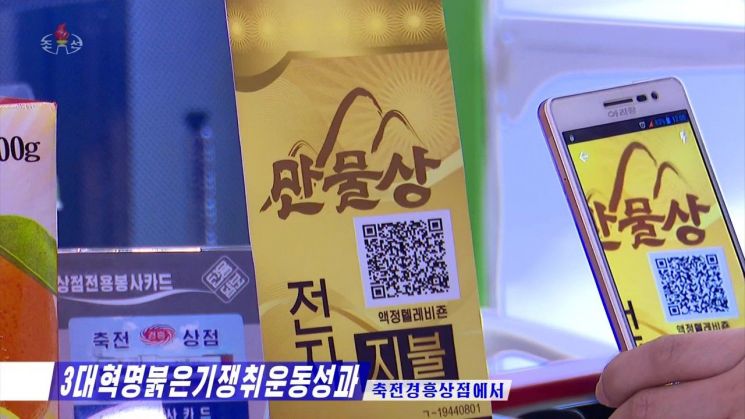 A scene of purchasing a television using a QR code at a home appliance store in North Korea. Chosun Central TV 38 North
Recent analysis suggests that electronic payments using smartphones are gaining popularity in North Korea. Utilizing QR code-based payment methods, which have become widespread in China, these systems can now be used not only in stores but also for movie tickets, sports events, transportation fares, and most aspects of daily life.
On October 9, 38 North, a media outlet specializing in North Korea, reported that multiple electronic payment wallets are currently being operated in Pyongyang, based on a comprehensive analysis of recent videos posted by tourists and North Korean smartphone users. The Workers' Party is actively promoting the introduction and establishment of these services. In fact, the process has been accelerated to the extent that, following a recent amendment to the electronic payment law, companies refusing to accept electronic payments are now subject to fines.
The media also reported that the popularity of electronic payments is partly due to North Korean residents' distrust of banks. After the failed currency reform in 2009, people have preferred to keep their savings in cash rather than in bank deposits. The Choson Trade Bank launched the Narae debit card in 2011, and the Central Bank attempted to provide the Jeonseong card in 2015, but both failed to gain traction because users were required to deposit their money in banks.
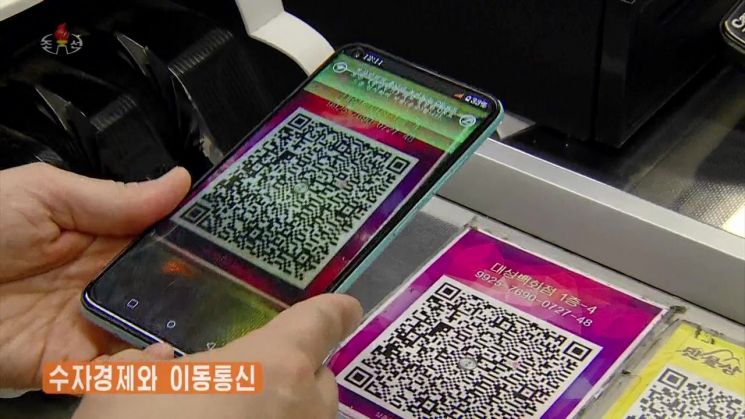 A scene of scanning a QR code using the Samheung Electronic Wallet app at the Daesong Department Store in North Korea. Photo by Chosun Central TV 38 North
Instead, the spread of mobile phones and evolving market practices have created new forms of cashless transactions. Mobile phone users receive 150 won in credit as part of their monthly service fee, and this credit can be saved or transferred to other users. Traders have begun using these electronic transfers as a micro-payment system for market transactions.
In addition to smartphone electronic payment apps, new ATMs are being installed throughout Pyongyang. According to a guide to the Flower ATM obtained by NK Tech Lab, the Flower ATM allows users to make cash deposits, withdrawals, transfers, and currency exchanges using bank cards such as the Jeonseong card, Narae card, and the Samheung Electronics Wallet, as well as smartphone apps.
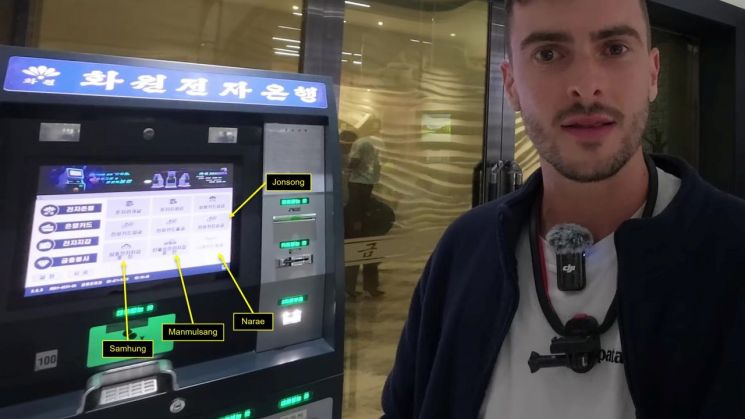 A foreign tourist is taking a photo in front of a Flower ATM installed at the Taesong Department Store in North Korea. YouTube capture 38 North
These ATMs also support foreign currency transactions, including deposits. According to the guide, if a user has a 100-dollar bill but does not want to exchange the entire amount into won, they can exchange only part of it and receive the remaining change in US dollars. The guide lists 15 locations where these ATMs are installed, including department stores and major hotels. Videos posted by foreign tourists visiting North Korea have confirmed the installation of these ATMs at the Taesong Department Store.
Some analysts believe that the Workers' Party is introducing this technology to strengthen surveillance of residents. The recent growth of unofficial markets has weakened state control in certain sectors, allowing some individuals to accumulate excessive wealth. There are suspicions that the state aims to reclaim these funds and facilitate the use of foreign currency for its own purposes.
© The Asia Business Daily(www.asiae.co.kr). All rights reserved.



















