There are growing predictions that a new front is opening in the US-China semiconductor war, as the Chinese government has strengthened export controls by announcing that it will separately review exports of rare earth elements used for advanced semiconductors and artificial intelligence (AI). It is believed that China has already resolved most of its semiconductor bottlenecks, and that export controls will create difficulties for major semiconductor companies such as Samsung Electronics, TSMC, Intel, and ASML.
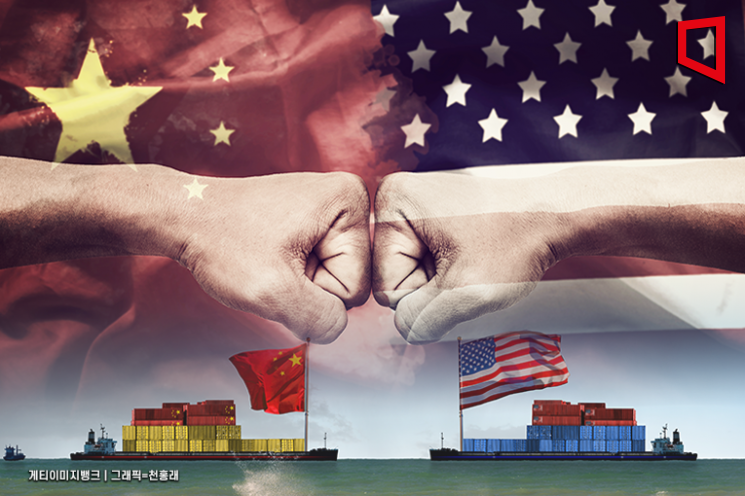
On October 9, the Chinese Ministry of Commerce announced strengthened rare earth export control measures, which include adding overseas products made using Chinese rare earths and related processing technologies to the list of controlled exports. The ministry also stated that it would individually review export applications for rare earths intended for use in 14nm (nanometer) or below system semiconductors (logic chips) and memory semiconductors with 256 layers or more.
Specifically, the ministry explained, "Export applications for items with an end use in logic chips of 14nm or below, memory semiconductors with 256 layers or more, production and testing equipment or materials used in manufacturing such semiconductors, and AI research and development with potential military applications will be reviewed and approved on a case-by-case basis."
The South China Morning Post (SCMP) in Hong Kong reported on October 11, citing expert analysis, that this provision indicates China has largely resolved its semiconductor equipment bottleneck, and that this could open a new front in the US-China semiconductor war. Since 2019, the United States has restricted China's access to advanced chip manufacturing equipment, making it difficult for China to procure the foreign-made core equipment needed for mass production of state-of-the-art semiconductors. However, with years of accelerated efforts toward semiconductor self-sufficiency, China's reliance on overseas suppliers has decreased, enabling it to implement sanctions targeting related foreign companies.
Chinese IT expert Xiang Ligang commented on social media, "This provision suggests that China has mostly resolved its semiconductor equipment bottleneck," adding, "I'm an optimist, but I didn't expect the bottleneck to be resolved so quickly."
Rare earth elements are essential materials for advanced technology sectors and the defense industry. For example, dysprosium, a heavy rare earth element added to China's export control list in April, is used in the precision motors inside lithography equipment, which forms circuit patterns on silicon wafers. China accounts for about 70% of global rare earth production and more than 80% of refining and processing, effectively holding a monopoly as a supplier.
If China tightens rare earth export controls, foreign companies seeking to produce and maintain advanced semiconductor manufacturing equipment will face difficulties. In fact, Bloomberg reported that ASML, the world's leading semiconductor manufacturing equipment company based in the Netherlands, could see product shipments delayed by several weeks. If ASML's equipment shipments are delayed, the impact is expected to be felt throughout the global semiconductor industry. Major semiconductor manufacturers such as Samsung Electronics, TSMC, and Intel all rely on ASML equipment.
Gracelin Baskaran, head of the Mineral Security Program at the Center for Strategic and International Studies (CSIS), a US think tank, described the measure as "the strictest export control measure China has ever implemented," adding, "It is clear that they have the means to make not only US companies but companies around the world comply with these controls."
© The Asia Business Daily(www.asiae.co.kr). All rights reserved.
!["The Woman Who Threw Herself into the Water Clutching a Stolen Dior Bag"...A Grotesque Success Story That Shakes the Korean Psyche [Slate]](https://cwcontent.asiae.co.kr/asiaresize/183/2026021902243444107_1771435474.jpg)
















