From 359 Cases in 2020 to 4,224 in 2022:
Park Suhyun Urges "Real-Time Monitoring and Stronger Penalties"
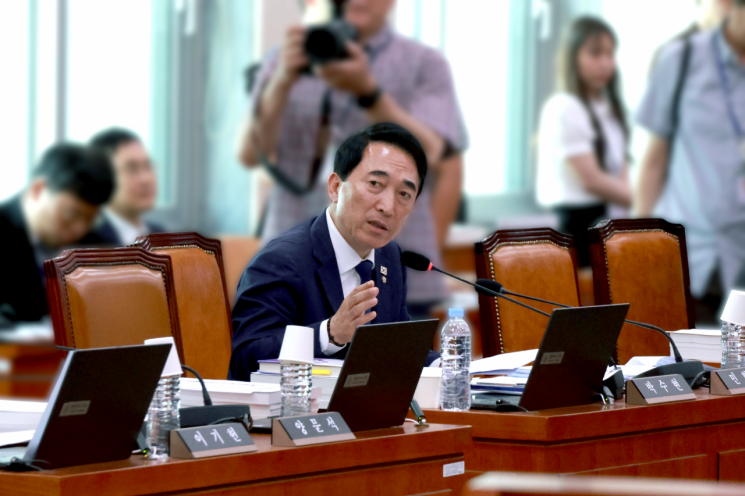
While the number of illegal ticket scalping transactions for performances has surged explosively, especially online, the government's response system for monitoring and enforcement is virtually "open but not operating."
Park Suhyun, a member of the National Assembly's Culture, Sports and Tourism Committee (Democratic Party of Korea, Gongju, Buyeo, Cheongyang), criticized the government's passive response, stating, "Although reports of ticket scalping have increased more than tenfold over the past five years, there is only one dedicated staff member handling these cases."
According to Assemblyman Park on October 9, data submitted by the Ministry of Culture, Sports and Tourism shows that the number of reported ticket scalping cases in the performance sector jumped from 359 in 2020 to 4,224 in 2022, representing an increase of more than tenfold.
In both 2023 and 2024, the figures remained high at 2,161 and 2,224 cases respectively, compared to pre-COVID-19 levels. As of August this year, 1,020 cases have already been reported.
The reality of scalping is evident in specific performances. According to the Integrated Ticketing System for Performing Arts, for the "NCT WISH" concert scheduled at Incheon Inspire Arena from October 31 to November 2, restricted-view seats originally priced at 154,000 won were traded for as much as 360,000 won, while VIP seats priced at 198,000 won soared to an astonishing 8 million won.
The problem is that, despite Article 4-2 of the current "Performance Act," effective enforcement remains difficult.
To impose penalties under the law, it must be proven that the tickets were purchased using illicit methods such as macros and then resold at a premium. However, for ticketing companies, providing such proof is virtually impossible. As a result, authorities have no choice but to rely on reports from informants, and the rate of actual enforcement remains low.
In fact, out of more than 5,400 reports filed from 2023 through August this year, only 306 cases (5.6%) were classified as "valid reports," and among these, substantive action was taken in just 206 cases. Even then, the action was limited to canceling tickets with the cooperation of ticketing agencies.
An even more serious issue is the government's response infrastructure. The "Online Ticket Scalping Reporting Center for Popular Culture and Arts," operated by the Fairness and Coexistence Center at the Korea Creative Content Agency, has only one dedicated staff member, who is also responsible for other duties besides scalping-related work.
Assemblyman Park Suhyun emphasized, "Ticket scalping is rapidly spreading, especially on online secondhand trading platforms, yet the government continues to take a bystander approach. There is an urgent need to monitor illicit ticket purchases and resales in real time and to establish stronger penalties."
He added, "To protect the trust and fairness of the performance industry, it is essential to strengthen the cooperation system among the Ministry of Culture, Sports and Tourism, ticketing agencies, and online platforms."
© The Asia Business Daily(www.asiae.co.kr). All rights reserved.
![User Who Sold Erroneously Deposited Bitcoins to Repay Debt and Fund Entertainment... What Did the Supreme Court Decide in 2021? [Legal Issue Check]](https://cwcontent.asiae.co.kr/asiaresize/183/2026020910431234020_1770601391.png)















