Number of National Forensic Service Evaluations Drops by More Than Half
Zero Genuine Sudden Acceleration Cases Found Among 396 Evaluations Over Five Years
 Scenes of vehicle ramming accidents. Some drivers claimed sudden unintended acceleration. Photo by Asia Economy Database
It has been found that the number of forensic evaluations related to sudden unintended acceleration, which had been increasing every year, has seen a clear decline this year. This trend can be interpreted as a shift in drivers’ attitudes, with more people acknowledging the possibility of their own mistakes rather than automatically attributing accidents to vehicle defects.
According to data submitted by Assemblyman Jeong Chun-saeng of the National Assembly’s Public Administration and Security Committee, which was obtained from the National Forensic Service on October 9, only 40 cases of suspected sudden acceleration were submitted for evaluation to the National Forensic Service between January and August this year. This is less than half the number recorded during the same period last year (96 cases).
The number of evaluations by the National Forensic Service had increased annually, with 51 cases in 2021, 67 cases in 2022, and 105 cases in 2023, reaching as high as 133 cases for the entire year last year. However, this upward trend has reversed this year, showing a marked decrease.
This change is believed to be the result of accumulated scientific analyses and media reports on sudden acceleration incidents over the past few years, which have increased public awareness of the possibility of pedal misapplication.
An official from the National Forensic Service explained, “After a suspected sudden acceleration accident in Gangneung in 2022 attracted significant public attention, requests for evaluations surged for a while. However, as most cases were later determined to be due to driver error, the overall perception has changed.”
A traffic police official in Seoul also commented, “In the past, many drivers would immediately blame vehicle defects right after an accident, but recently, as relevant information has become more widely available, there has been a noticeable change in attitudes.”
In fact, out of the total 396 cases evaluated by the National Forensic Service over the past five years, from 2021 to August this year, not a single case was concluded to be genuine sudden acceleration. Among these, 340 cases (about 86%) were confirmed to be ‘pedal misapplication,’ where the driver pressed the accelerator instead of the brake. The remaining cases involved vehicles that were too severely damaged or lacked EDR (event data recorder) data, making cause analysis impossible.
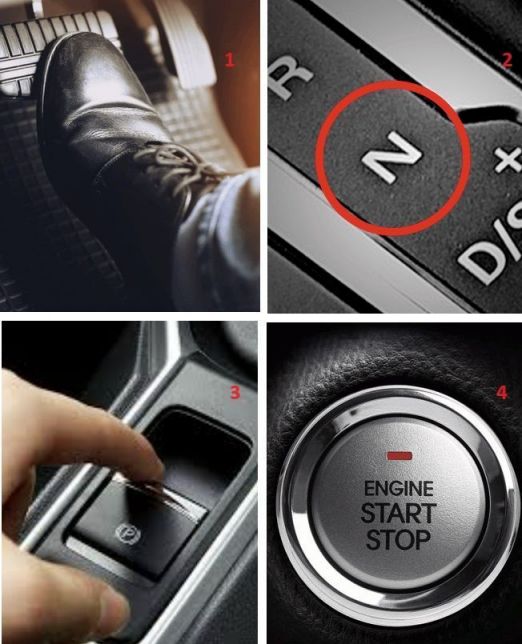
In line with this trend, the government and related agencies are moving forward with the introduction of pedal misapplication prevention devices, particularly targeting elderly drivers. These devices use front and rear sensors and cameras to detect obstacles and prevent the vehicle from making a sudden start, even if the accelerator pedal is pressed excessively.
From October last year, the Korea Transportation Safety Authority conducted a two-month pilot program, installing these devices in the vehicles of 60 taxi drivers aged 65 or older in Cheonan and Jeongeup. During this period, there were nine cases of pedal misapplication by three drivers, but the devices activated immediately in each instance, successfully preventing accidents.
Having confirmed the effectiveness of the program, the Authority has expanded the pilot project this year in cooperation with the National Police Agency, increasing the number of participants to 141. The results of the related analysis are expected to be released as early as the end of this month.
© The Asia Business Daily(www.asiae.co.kr). All rights reserved.
![User Who Sold Erroneously Deposited Bitcoins to Repay Debt and Fund Entertainment... What Did the Supreme Court Decide in 2021? [Legal Issue Check]](https://cwcontent.asiae.co.kr/asiaresize/183/2026020910431234020_1770601391.png)

















