Sharp Increase in Female Student Proportion at Regional Medical Schools
Over 80% of Freshmen at Inje University College of Pharmacy Are Women
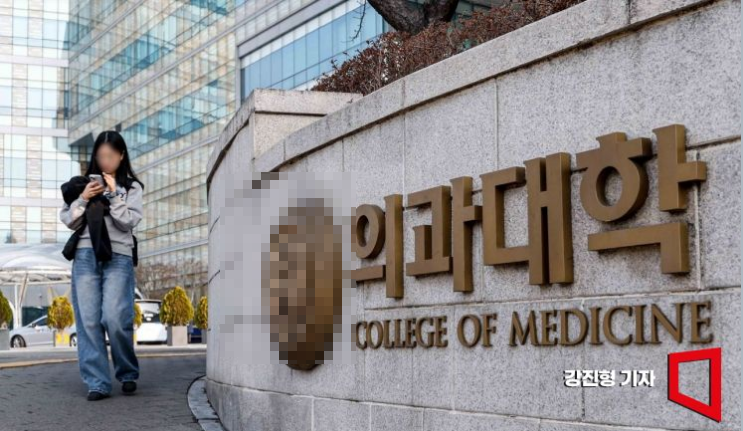
Over the past five years, the proportion of female students in medical and science-related university admissions has been steadily increasing, and this year, the percentage of female freshmen in various departments within the medical and pharmaceutical fields, including medical schools, has reached an all-time high.
According to an analysis by Jongro Academy of nationwide medical and pharmaceutical department admissions data published on University Alimi, as of October 9, 2025, the proportion of female freshmen at medical schools for the 2025 academic year stands at 38.4%, the highest level in the past five years. This figure, which was 34.1% in the 2021 academic year, has shown a steady annual increase.
In particular, the increase in the proportion of female students was most notable at regional flagship universities. In the Gangwon region, the percentage rose from 29.1% in the 2021 academic year to 40.9% this year. The Daegu and North Gyeongsang region also saw a jump to 38.6%, an increase of more than 10 percentage points. Busan, Ulsan, and South Gyeongsang (39.7%), Jeju (44.3%), the Chungcheong region (38.9%), and the Honam region (40.9%) all surpassed the national average, reflecting this changing trend.
By individual university, Dankook University Cheonan Campus recorded a female student proportion of 51.3%, comprising the majority, while the University of Ulsan College of Medicine reported an exact 50:50 gender ratio. In the Seoul metropolitan area, Hanyang University College of Medicine had the highest proportion of female freshmen at 35.5%.
The strong presence of female students was also evident in colleges of pharmacy and veterinary medicine. In colleges of pharmacy, the proportion of female students, which was 54.9% in the first year of undergraduate transition in the 2022 academic year, rose to 58.1% this year. At Inje University, more than eight out of ten freshmen were female, and other institutions such as Wonkwang University (73.8%), Woosuk University (65.0%), and Jeju National University (63.3%) also recorded high percentages.
 Female medical staff are providing free flu vaccinations to homeless people and residents of small rooms. This is unrelated to the article content. Photo by Asia Economy DB
For the first time this year, the number of female freshmen in veterinary schools surpassed that of male students. The percentage increased gradually from 42.5% in the 2021 academic year to 50.4% in the 2025 academic year, exceeding half for the first time. While colleges of dentistry saw some fluctuations, the overall proportion of female students has also slightly increased compared to five years ago.
On the other hand, in contract-based departments focused on science and engineering, such as electronics and semiconductors, the proportion of female students remains low. At major universities such as Seoul National University, Yonsei University, and Korea University, the proportion of female freshmen in advanced science and engineering departments was 13.3% in the 2023 academic year, 17.7% in 2024, and 15.8% in 2025.
Experts attribute this disparity to differences in subject preferences for science exploration courses. Jongro Academy explained, "In advanced science and engineering departments, physics is often designated as a required or recommended subject. Since female students tend to prefer life sciences, there is a noticeable trend of avoiding physics."
In fact, for the 2025 College Scholastic Ability Test, only 18.0% of the students taking Physics II and 21.6% of those taking Physics I were female. In contrast, nearly half of the students taking Life Science I (50.8%) and Life Science II (48.3%) were female.
Jongro Academy stated, "The structure of internal grades and the College Scholastic Ability Test, which is centered on physics, works to the disadvantage of female students. As a result, the proportion of male students is relatively high in admissions to advanced technology and contract-based departments."
© The Asia Business Daily(www.asiae.co.kr). All rights reserved.
![Clutching a Stolen Dior Bag, Saying "I Hate Being Poor but Real"... The Grotesque Con of a "Human Knockoff" [Slate]](https://cwcontent.asiae.co.kr/asiaresize/183/2026021902243444107_1771435474.jpg)












