Smoking Rate Also Rises Among Women
Fortunately, More Women Are Engaging in Physical Activity
Over the past four years, both the alcohol consumption rate and the prevalence of depression among Seoul residents have been on the rise.
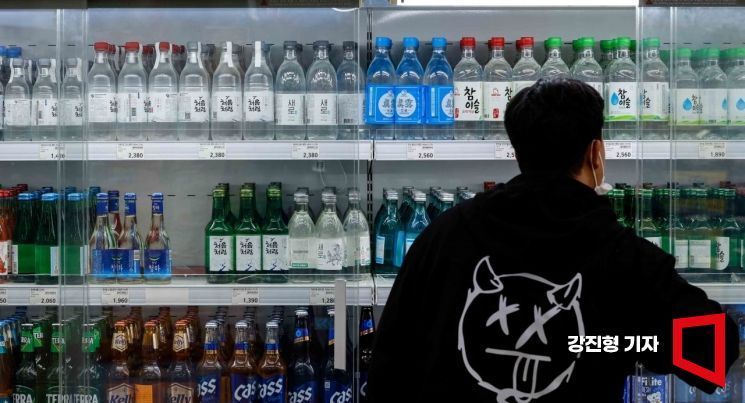
According to the "Health Status of Seoul Citizens and the Need for Gender-Sensitive Health Policies" report recently published by the Seoul Foundation of Women and Family on October 6, the alcohol consumption rate among women in Seoul increased by 5.3 percentage points, rising from 40.3% in 2020 to 45.6% in 2024. For men, the rate increased from 66.5% to 67.7% during the same period, showing a smaller increase than women but remaining at a higher overall level. The alcohol consumption rate refers to the proportion of people who have consumed alcohol at least once a month in the past year.
The proportion of individuals engaging in what is considered "high-risk drinking" also showed an upward trend. Among women, the rate of high-risk drinkers increased from 7.1% in 2020 to 8.2% in 2024, while among men, it rose from 18.0% to 19.6% over the same period. This means that one in five men drinks to a level that could harm their health.
The rate of people experiencing depression also showed an upward trend for both women and men. For women, the rate rose from 6.4% in 2018 to 8.8% in 2024, while for men, it nearly doubled from 3.6% to 6.0% over six years.
In terms of smoking rates, women saw a slight increase from 3.0% in 2020 to 3.9% in 2024. While this remains significantly lower than the rate for men, it contrasts with the decrease among men, whose smoking rate fell from 28.9% to 26.6% during the same period. The smoking rate refers to the proportion of people who have smoked at least five packs in their lifetime and are currently smoking.
This report is based on an analysis of Seoul-specific responses (about 20,000 annually) from the Korea Disease Control and Prevention Agency's "Community Health Survey" results and raw data. The report emphasized, "It is necessary to manage health risk groups with consideration for gender differences," and recommended, "For women, there should be stress management programs and early intervention systems for depression, while for men, measures should be developed to raise awareness of health risks such as smoking and drinking."
Meanwhile, it is a positive sign that the rate of physical activity (exercise) has also increased. Among women, the rate of engaging in moderate or higher intensity physical activity rose from 13.8% in 2020 to 20.3% in 2024, and for men, it increased from 23.1% to 30.4%. During the same period, the rate of walking also increased for both women (from 49.9% to 67.2%) and men (from 56.7% to 68.1%). However, the obesity rate for men reached 40.0%, nearly double that of women (21.0%).
© The Asia Business Daily(www.asiae.co.kr). All rights reserved.
![Clutching a Stolen Dior Bag, Saying "I Hate Being Poor but Real"... The Grotesque Con of a "Human Knockoff" [Slate]](https://cwcontent.asiae.co.kr/asiaresize/183/2026021902243444107_1771435474.jpg)
















