Regular Visits to Yasukuni Shrine
Potential Changes in Japan-South Korea Relations in Focus
Sanae Takaichi, a hardline conservative and far-right politician often referred to as the "female Abe," was elected on October 4 as the ruling Liberal Democratic Party's first female president.
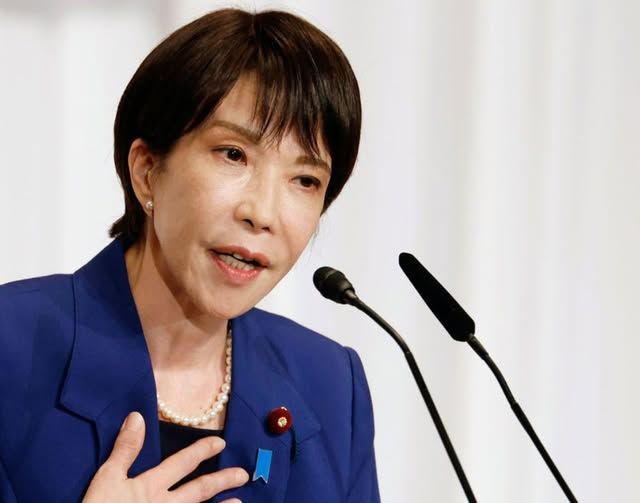
She is expected to become Japan's first-ever female prime minister after the National Diet's prime ministerial nomination election, which is anticipated to take place in about ten days.
Former Economic Security Minister Takaichi secured 185 votes in the runoff for the 29th party presidency held at the Liberal Democratic Party headquarters in Tokyo, defeating Agriculture, Forestry and Fisheries Minister Shinjiro Koizumi, who received 156 votes, by a margin of 29 votes.
In the first round of voting, which featured five candidates, Takaichi came in first with 183 votes. Minister Koizumi advanced to the runoff with 164 votes as the runner-up.
In last September's party leadership election, Takaichi led in the first round but was overtaken by Prime Minister Shigeru Ishiba in the runoff. This time, however, she maintained her momentum from the first round through to the final vote.
In the first round of this election, each of the 295 Liberal Democratic Party lawmakers cast one vote, and the votes from party members (Japanese nationals who pay party dues) and party supporters (members of supporting political organizations) were converted to 295 votes, equal to the lawmakers' total, and then added together to determine the result.
In the runoff, the outcome was decided by a total of 295 votes from party lawmakers and 47 votes from the prefectural chapters representing Japan's 47 prefectures. However, the number of valid lawmaker votes was 294 in both the first round and the runoff.
Takaichi received the most support from party members in this election and also performed strongly in the lawmaker vote, which had been seen as her weak point, by rallying support from conservative lawmakers.
Additionally, it appears that she gained the backing of former Prime Minister Taro Aso, the only leader of a party faction, in the runoff. Although former Prime Minister Aso had received overtures from both Takaichi and Koizumi, he reportedly indicated that he would support the candidate who came first in the party member vote.
As a result, it is believed that a significant number of the 43 lawmakers from the Aso faction, as well as lawmakers who had supported former Economic Security Minister Takayuki Kobayashi and former party secretary-general Toshimitsu Motegi, who finished fourth and fifth in the first round, cast their votes for Takaichi in the runoff.
Although the current Japanese parliament is controlled by opposition parties, the divided opposition means the Liberal Democratic Party president, as the leader of the largest party, is highly likely to win the prime ministerial nomination election.
After securing the party leadership on her third attempt, Takaichi made efforts to soften her conservative image during this election. However, she has also stated her intention to continue the policies of former Prime Minister Shinzo Abe, which is why she is often called the "female Abe." Given her conservative support base, it is expected that she will take their views into account in governing the country.
In particular, as Takaichi has regularly visited Yasukuni Shrine, where Class A war criminals from the Pacific War are enshrined, there is speculation that this could signal changes in the cooperative tone that has characterized Japan-South Korea relations.
© The Asia Business Daily(www.asiae.co.kr). All rights reserved.
!["The Woman Who Threw Herself into the Water Clutching a Stolen Dior Bag"...A Grotesque Success Story That Shakes the Korean Psyche [Slate]](https://cwcontent.asiae.co.kr/asiaresize/183/2026021902243444107_1771435474.jpg)
















