"Lee Jaemyung Administration Expands Ministry Budget,
But Overlooks Small and Medium-Sized Enterprises"
Despite the record expansionary fiscal policy of the Lee Jaemyung administration, it has been revealed that the budget overseen by the Ministry of SMEs and Startups for the 'accounts receivable factoring' program, considered a lifeline for small and medium-sized enterprises (SMEs), has been frozen in next year's budget proposal.
Accounts receivable factoring is a system in which a public institution purchases accounts receivable that a company receives after delivering goods to a client but before payment, provides funds to the company in advance, and then collects the payment from the purchasing company. This program is particularly recognized for helping SMEs secure liquidity and operate their businesses stably.
Currently, the two organizations operating the SME accounts receivable factoring program under the Ministry of SMEs and Startups are the Korea SMEs and Startups Agency and the Korea Technology Finance Corporation.
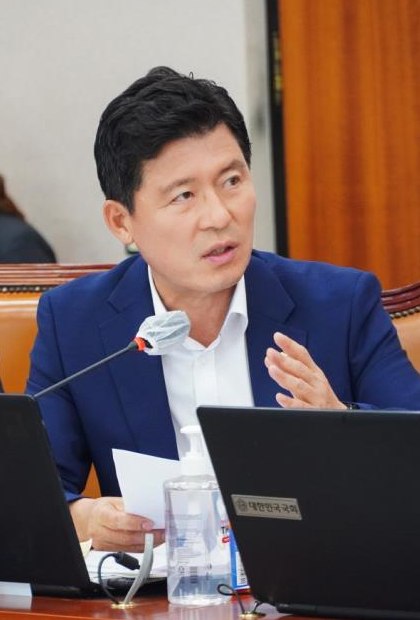
According to the 2026 government budget and fund operation plan submitted to Assemblyman Koo Jageun of the People Power Party on October 4, the budget and fund (purchase limit) for accounts receivable factoring under the Ministry of SMEs and Startups in the 2026 government proposal is set at 160 billion won, the same as the 2025 budget, indicating a freeze.
The budget and fund (purchase limit) for the accounts receivable factoring program under the Ministry of SMEs and Startups increased by a total of 104.6% from 78.2 billion won in 2022 (40 billion won for Korea Technology Finance Corporation and 38.2 billion won for Korea SMEs and Startups Agency) to 160 billion won in 2025 (100 billion won for Korea Technology Finance Corporation and 60 billion won for Korea SMEs and Startups Agency) after the inauguration of the Yoon Sukyeol administration. The aim was to support SMEs facing management difficulties due to challenges in securing funds, while minimizing the budget growth rate amid fiscal tightening.
However, even as the Lee Jaemyung administration set the budget for the Ministry of SMEs and Startups at 16.8 trillion won for 2025, a 10.6% increase from the previous year, the budget for accounts receivable factoring was frozen. Concerns have been raised that SMEs may struggle to secure liquidity amid the currently difficult domestic and international market conditions.
Demand for accounts receivable factoring is surging. In the case of the factoring program run by the Korea SMEs and Startups Agency, applications from 300 to 400 companies are received annually, with the budget being exhausted by September last year and by July this year. Despite the increasing demand, many SMEs are unable to access the factoring program due to insufficient budget.
Assemblyman Koo Jageun stated, "Despite the indiscriminate expansion of populist budgets, the Lee Jaemyung administration is neglecting core support programs for SMEs," and emphasized, "We will strongly urge the Lee Jaemyung administration, which is stifling business activities with anti-business policies, to come up with effective measures that reflect the voices from the field."
© The Asia Business Daily(www.asiae.co.kr). All rights reserved.
![Clutching a Stolen Dior Bag, Saying "I Hate Being Poor but Real"... The Grotesque Con of a "Human Knockoff" [Slate]](https://cwcontent.asiae.co.kr/asiaresize/183/2026021902243444107_1771435474.jpg)
















