Horse Chestnut Fruits Can Cause Abdominal Pain and Other Symptoms if Consumed
Ministry of Food and Drug Safety: "Check for the Presence of a Pointed Stem"
Brown fruits found in parks and mountain trails during autumn may not be chestnuts, but rather horse chestnut (Marronier) fruits. These fruits are toxic, and accidentally consuming them can pose health risks.
Recently, the Food and Drug Safety Ministry emphasized through its official YouTube channel and blog, "Do not confuse horse chestnut fruits with chestnuts." According to the ministry, the horse chestnut is the fruit of the Marronier tree, which is commonly used as a street or landscaping tree. The fruit is generally brown and, due to its round shape, closely resembles a chestnut. Even the inside of the fruit looks similar to a chestnut kernel.
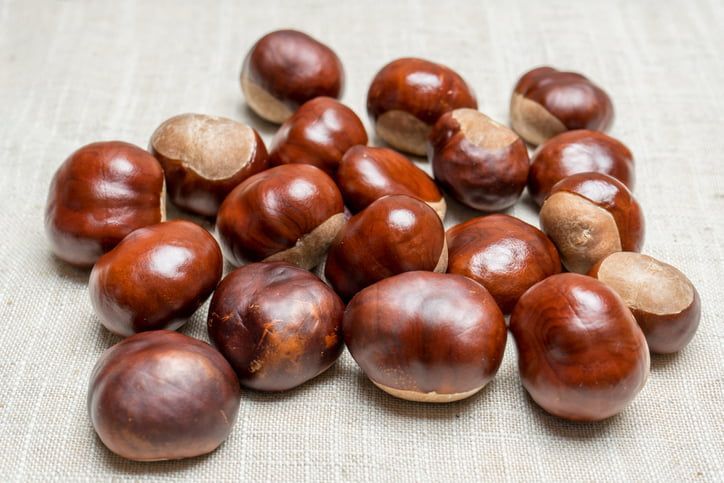
Although Marronier trees are commonly planted as street trees in parks and along roadsides nationwide, their fruits are strictly inedible. This is because horse chestnut fruits contain high amounts of saponins, glycosides, and tannins.
Consuming them raw can cause gastrointestinal issues or allergic reactions, such as fever, chills, vomiting, diarrhea, stomach cramps, difficulty breathing, and dizziness. The toxicity does not disappear even when the fruit is boiled or heated. There have been actual cases where people mistook horse chestnut fruits for chestnuts, consumed them, and had to undergo gastric lavage in the emergency room.
So, how can you tell chestnuts and horse chestnut fruits apart? The Food and Drug Safety Ministry explains that you can distinguish them by the appearance of their shells. Horse chestnut fruits have blunt shells with sparse spines, whereas chestnuts are enclosed in burrs with sharp, dense spines.
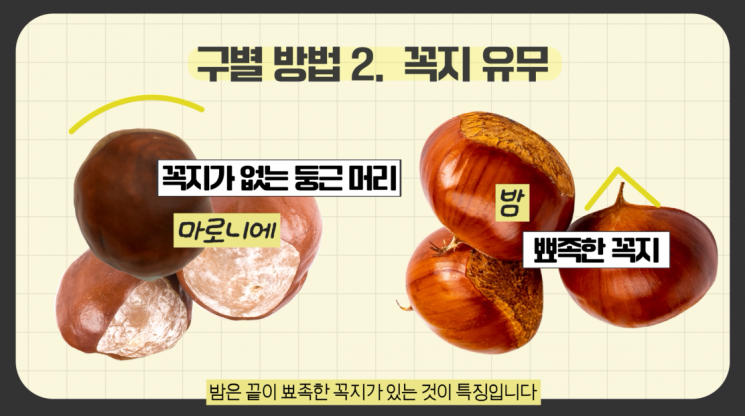 You can distinguish between horse chestnut fruits and chestnuts by the presence or absence of a stem. Food and Drug Safety Ministry Blog
You can also spot differences at the stem of the fruit. From a distance, horse chestnut fruits look like brown beads, but up close, they have no stem and appear glossy. In contrast, chestnuts have a pointed stem at the end of the fruit.
The Food and Drug Safety Ministry stated, "Horse chestnut fruits have not been approved as food ingredients. Their safety has not been verified," and urged, "If you find a fruit that looks like a chestnut on the street this autumn, make sure to check carefully to see if it is actually a horse chestnut fruit."
© The Asia Business Daily(www.asiae.co.kr). All rights reserved.
![User Who Sold Erroneously Deposited Bitcoins to Repay Debt and Fund Entertainment... What Did the Supreme Court Decide in 2021? [Legal Issue Check]](https://cwcontent.asiae.co.kr/asiaresize/183/2026020910431234020_1770601391.png)

















