32 Million Travelers Expected During the Holiday
Only 15 Minutes for Airport Security Screening
500 Additional Standby Vehicles Deployed for Departures from Seoul
"Traffic Congestion to Peak on the Weekend, October 4-5"
On October 3, the first day of the Chuseok holiday, major transportation hubs such as Incheon International Airport and the Express Bus Terminal were operating relatively smoothly without the severe congestion that had been anticipated.
According to Incheon International Airport Corporation, the number of passengers using Incheon Airport on this day is expected to reach 239,000, likely setting a new all-time daily record. The total number of travelers during this year’s Chuseok holiday is projected to be around 2.45 million, an 11.5% increase compared to last year. This surge is attributed to the formation of an extended ten-day holiday period, as National Foundation Day, Chuseok, and Hangul Day are consecutively lined up, leading to increased demand for overseas travel.
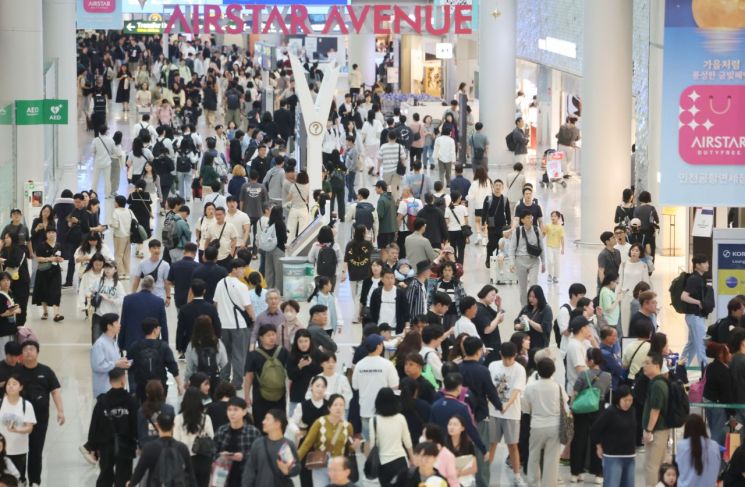 On the 3rd, the duty-free area of Terminal 1 at Incheon International Airport was bustling with travelers. Photo by Yonhap News
The security screening process is taking about 15 minutes, so there are no significant delays in departure procedures. Arriving three hours before a flight provides ample time. Initially, the security screening union had planned to refuse overtime work in solidarity with a strike at a subsidiary company, but concerns over congestion were eased after an agreement was reached with management the previous day. However, workers in environmental cleaning, traffic management, firefighting, and facility management at Incheon Airport’s subsidiary companies have been on an indefinite strike since October 1.
The airport has designated the holiday period as a special transportation management period, increasing both security screening equipment and personnel. Departure halls have been opened early, 1,300 temporary parking spaces have been secured, and late-night bus routes are being expanded.
Ground transportation is also relatively manageable. According to the Ministry of Land, Infrastructure and Transport, as of noon on October 3, the reservation rate for express buses departing from Seoul was 82%, which is lower than the typical rate of over 90% on the first day of the Chuseok holiday. Reservation rates for buses to Busan were 92%, to Daegu 87%, and to Gwangju 79%. The deployment of 500 additional standby vehicles is believed to have alleviated congestion.
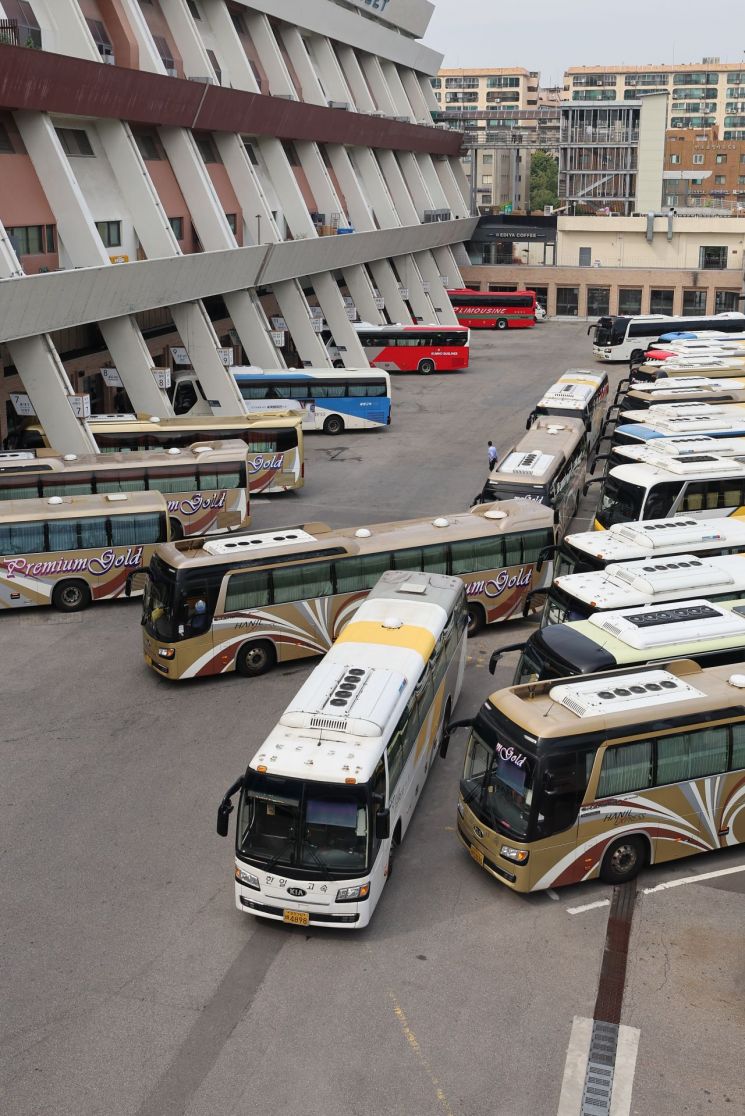 On the 2nd, buses were coming and going at the Express Bus Terminal in Seocho-gu, Seoul. Photo by Yonhap News
The longer holiday period has led to an increase in private car use and a dispersal of travelers returning to their hometowns. The Ministry of Land, Infrastructure and Transport forecasts that more than 32 million people will be traveling between October 2 and the 12th. In response, the government is implementing measures such as waiving expressway tolls, increasing public transportation services, and taking steps to ease congestion at major rest areas.
Traffic jams continued on various expressways nationwide due to the large number of vehicles heading home. However, with the extended holiday, the worst congestion is expected to peak over the weekend. Korea Expressway Corporation predicted, "During the early part of the holiday, traffic congestion will not be severe as travel demand is spread out, but on the 4th and 5th, congestion will be concentrated."
© The Asia Business Daily(www.asiae.co.kr). All rights reserved.


















