Online Survey by Korea Rural Economic Institute
Increase in Imported Fruits Such as Bananas and Oranges
More Than Half Plan to Visit Parents' or Relatives' Homes
A recent survey found that only 4 out of 10 households plan to set up an ancestral rite table for Chuseok this year.
According to a survey released on October 3 by the Korea Rural Economic Institute, only 40.4% of 1,000 fruit consumer panelists aged 20 or older, residing in 17 provinces and metropolitan cities nationwide, responded that they would prepare a Chuseok ancestral rite table. This represents a decrease of 34.0 percentage points compared to 74.4% in 2016. In just seven years, the figure has dropped by nearly half. The institute analyzed that this is the result of a combination of factors, including the simplification of holiday rituals, the rise of nuclear families, and changing values.
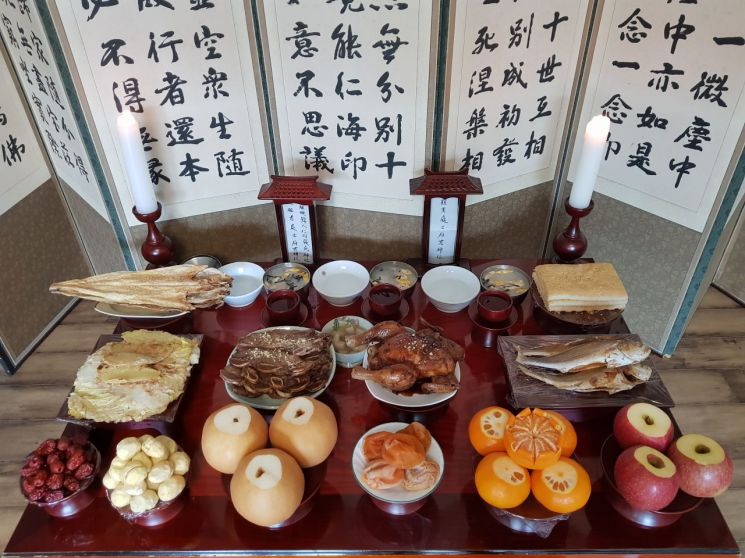
Regarding holiday plans, “visiting parents’ or relatives’ homes” was the most common response at 54.2%, followed by “resting or enjoying leisure at home” at 34.9%. “Domestic travel” accounted for 5.5%, and “overseas travel” for 2.7%. Alongside the increase in households not preparing an ancestral rite table, there is also a clear trend toward simplifying the ritual even when it is observed.
When it comes to preparing food for the ancestral rite table, 58.4% said they would simplify it in accordance with traditional customs, while only 21.0% said they would follow traditional customs strictly. Responses such as “mainly food that the family likes” (14.9%) and “mainly food that ancestors liked” (5.2%) were in the minority. Compared to the 2016 survey, “preparing according to traditional customs” dropped from 47.6% to 21.0%, and “mainly food ancestors liked” fell from 10.3% to 5.2%, both nearly halved. On the other hand, “simplifying in accordance with traditional customs” nearly doubled from 29.8% to 58.4%, and “mainly food the family likes” rose slightly from 12.4% to 14.9%.
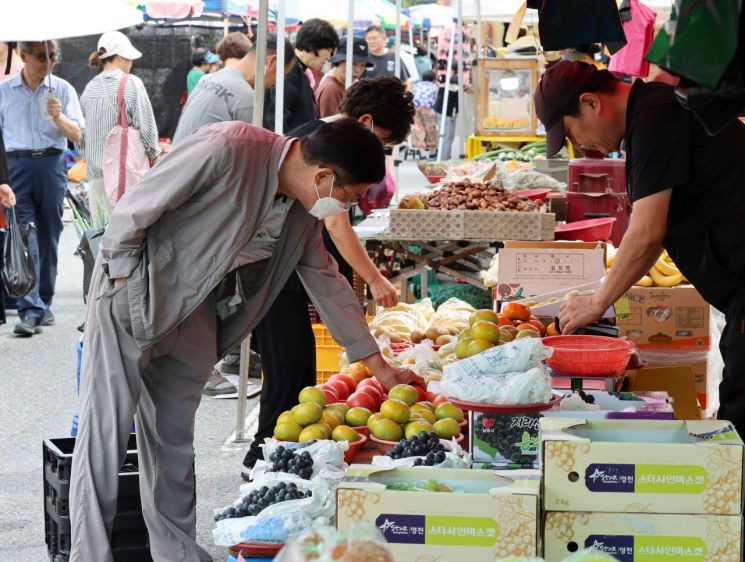
The selection of fruits for the ancestral rite table is also changing. Among domestic fruits, pears (28.9%) and apples (28.6%) were the most popular choices, followed by persimmons (17.4%) and grapes (13.2%). Meanwhile, the proportion of respondents using imported fruits rose to 34.9%, an increase of 11 percentage points from 2016. Among imported fruits, bananas were by far the most common at 49.5%, followed by oranges (22.0%), kiwis (9.8%), and pineapples (7.9%).
A representative from the institute commented, “As the burden of holiday rituals decreases, there is a trend toward a more practical, family-centered holiday culture.”
© The Asia Business Daily(www.asiae.co.kr). All rights reserved.


















