Replicating Tuna's Texture and Appearance with Konjac Potato and Other Ingredients
Affordable Price Point... Annual Production Target Set at 10 Tons
As global warming and a decline in the fishing population have led to a drop in tuna catches and a sharp rise in prices, a plant-based tuna developed in Japan is drawing attention as an alternative.
Recently, local media outlets such as Nihon Keizai Shimbun and Nikkei Asia reported that food company DM Mitsui Foods has launched a brand called "Osakana Kakumei" (Fish Revolution) and introduced plant-based tuna.
This plant-based tuna recreates the unique texture and appearance of tuna using ingredients such as konjac potato (the source of konjac), seaweed, and bamboo dietary fiber. It is also highly nutritious, containing 6 grams of dietary fiber per 100 grams. As of August 2024, the price is about 2,000 yen per kilogram (approximately 19,000 won), which is cheaper than the wholesale price of tuna at Tokyo's Toyosu Market, which was 3,262 yen per kilogram.
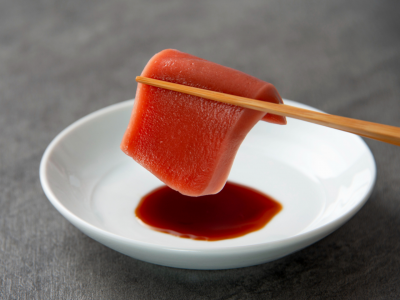
The company expects the main demand to come from pregnant women, the elderly, and nursing home residents who cannot eat raw fish. In Japan's medical and welfare facilities, serving raw fish is often restricted due to the risk of food poisoning, so there is a possibility that this product could become established as an alternative food.
Shin Kiyotaka, the head of development, stated, "There are surprisingly many people who love fish but cannot eat it due to health issues," adding, "We want to provide a safe and satisfying alternative for them." DM Mitsui Foods plans to begin sales mainly to hospitals and nursing facilities starting in 2026, with a goal of producing about 10 tons annually by 2028.
As climate change and indiscriminate fishing have pushed many marine species to the brink of extinction, the market for plant-based seafood made from alternative ingredients is rapidly expanding. In 2019, American company Ocean Hugger Foods also launched a plant-based tuna sashimi that mimics the texture and flavor of tuna using tomatoes, soy sauce, and sugar. This plant-based tuna is currently sold as tuna sushi at organic grocery chains and restaurants in the United States.
American startup Good Catch Foods is also selling "Fish-Free Tuna." Its main ingredient is a "plant-based protein blend" combining six types of legume extracts, including soy protein isolate, chickpea powder, lentil protein, and white bean powder.
© The Asia Business Daily(www.asiae.co.kr). All rights reserved.

















