This year, as the Chinese stock market has shown strong performance, interest in Chinese equities is rising once again. With China entering a long National Day holiday from October 1 to October 8, attention is focused on whether consumer spending during the holiday period will impact the stock market after the break.
The Shanghai Composite Index has risen by 19.01% compared to the beginning of the year. Starting the year in the 3,200 range, the Shanghai Composite Index has surpassed 3,800 and is now approaching the 4,000 mark.
Jeon Jongkyu, a researcher at Samsung Securities, explained, "The Chinese stock market has experienced a liquidity rally, with the Shanghai Composite Index breaking above 3,800 and the Hong Kong H-Index surpassing 9,500. The so-called 'China Rally' has been driven by three factors: the easing of uncertainty in the US-China dispute, abundant liquidity inflows, and expectations for government policy." He added that four rounds of high-level US-China negotiations have eased tensions, and historically low interest rates and a prolonged slump in the real estate market have led to ample funds flowing into equities. Additionally, expectations for structural reforms have served as a momentum for the stock market's rise.
Jung Jungyoung, a researcher at Korea Investment & Securities, stated, "The MSCI China Index has risen 37% this year, and except for April-when tensions over mutual tariffs between the US and China escalated to an extreme-eight out of nine months this year have seen gains. Since 2000, such a pattern has only occurred twice, in 2006 and 2017."
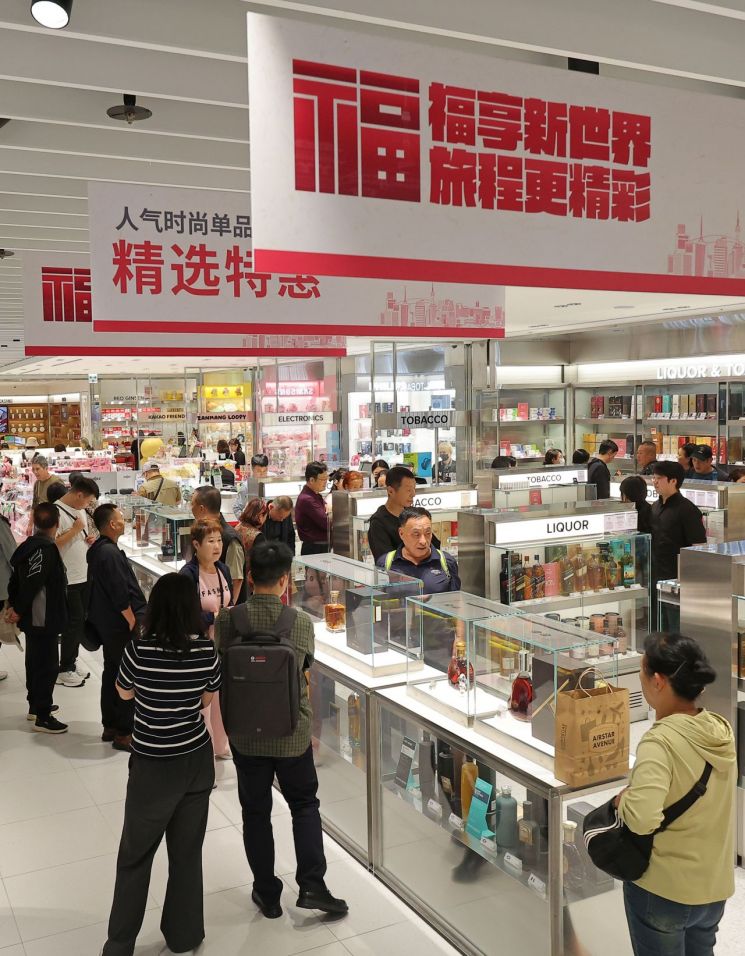
In this context, as the Chinese stock market enters the National Day holiday, whether consumer spending recovers during the break is expected to influence the continued strength of Chinese equities.
Researcher Jung noted, "The MSCI China Index and the China Consumer Sentiment Index have historically shown a strong correlation. As of July, the China Consumer Sentiment Index stood at 89 points, the highest level since March 2024 (89.4 points). Since last September, when the Chinese government began to actively signal its intention to support the stock market, the index has maintained a rebound from its lowest point."
Compared to the strong upward trend in the Chinese stock market this year, the recovery in consumer sentiment has been relatively weak, fueling a desire to confirm market fundamentals. In the short term, there is an expectation that improved consumer spending by Chinese citizens during the National Day holiday will be confirmed. Jung added, "Since the end of the zero-COVID policy in 2023, changes in the Consumer Sentiment Index have closely mirrored the year-on-year growth rate of per capita holiday spending in China. After declining year-on-year since April last year, the Consumer Sentiment Index has reversed course and risen for three consecutive months since May this year. There is a high possibility that per capita spending during this National Day holiday will rebound further." He went on to say, "This will likely be interpreted as an economic recovery factor explaining the recent rebound in the stock market."
© The Asia Business Daily(www.asiae.co.kr). All rights reserved.
!["The Woman Who Threw Herself into the Water Clutching a Stolen Dior Bag"...A Grotesque Success Story That Shakes the Korean Psyche [Slate]](https://cwcontent.asiae.co.kr/asiaresize/183/2026021902243444107_1771435474.jpg)
















