First Shutdown in Seven Years Raises Fears of Prolonged Stalemate
U.S. ADP Reports Private Sector Jobs Down by 32,000 in September, Largest Drop in Two and a Half Years
September Jobs Report Canceled for October 3... Will the Fed Decide Rates Amid Data Void?
On October 1 (local time), the three major U.S. stock indexes in New York showed a slight decline on the first day of the federal government shutdown (temporary suspension of government operations). Concerns that a prolonged shutdown could place a burden on the economy are dampening investor sentiment. In addition, disappointing September employment data is adding further downward pressure. The U.S. dollar also weakened, reflecting market unease.
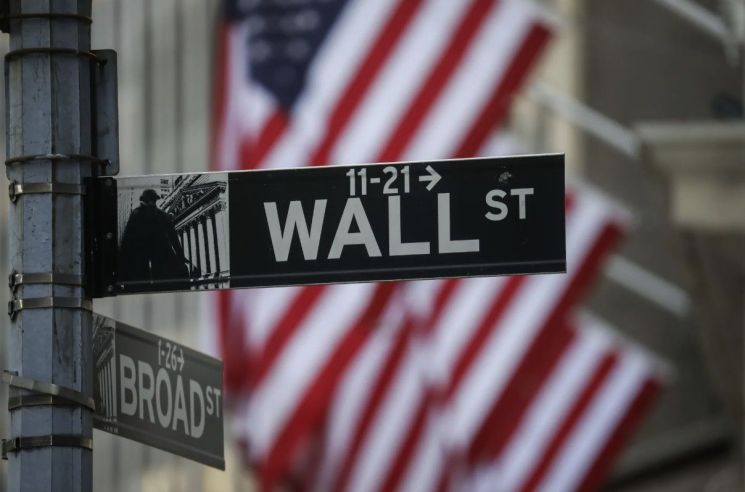
As of 10:51 a.m. on this day at the New York Stock Exchange, the Dow Jones Industrial Average, which focuses on blue-chip stocks, was down 13.35 points (0.03%) from the previous trading day at 46,384.54. The S&P 500 Index, which tracks large-cap stocks, was down 7.04 points (0.11%) at 6,681.42, while the Nasdaq Composite Index, which focuses on technology stocks, was down 12.34 points (0.05%) at 22,647.669.
The U.S. Congress failed to pass either the fiscal year 2026 budget bill or a stopgap measure by the end of the previous day, which was the last day of the 2025 fiscal year, due to a standoff between the two parties over the budget. As a result, federal government operations were suspended as of 12:01 a.m. on October 1. This is the first shutdown in seven years since December 2018, during the first term of President Donald Trump. In the Senate vote the previous day, the stopgap funding bill was rejected by a vote of 55 against and 45 in favor. The Democratic Party insisted that the extension of Obamacare subsidies must be included in the temporary budget, while the Republican Party regarded this as providing insurance benefits to undocumented immigrants and refused to agree. Without congressional approval, most government agencies will not receive funding, and a significant number of federal employees, except for essential personnel, will be placed on unpaid leave.
Although past shutdowns have generally not had a major impact on the stock market, this time, multiple risk factors such as slowing employment, inflation concerns, and high stock valuations are heightening caution. The Congressional Budget Office (CBO) estimated that 750,000 federal employees would be placed on unpaid leave due to this shutdown. Additionally, President Trump has fueled anxiety by signaling mass layoffs of federal employees during the shutdown.
The September employment data was also disappointing. According to ADP, a private labor market research firm, the number of new private sector jobs in September decreased by 32,000 compared to the previous month. This is the largest decline in two and a half years since March 2023 (when there was a decrease of 53,000), and it is significantly below market expectations (an increase of 45,000).
Due to the shutdown, the Bureau of Labor Statistics (BLS) under the Department of Labor has ceased operations, resulting in the cancellation of the September employment report scheduled for October 3. Since this report was considered a key variable for the Federal Reserve's interest rate decision in October, a prolonged shutdown would force the Fed to make monetary policy decisions without access to major indicators.
Jay Woods, Chief Market Strategist at Freedom Capital Markets, commented, "It appears that the market, having overcome the seasonal weakness typically seen in September, is now looking for an excuse to sell. Although this shutdown was anticipated, the lack of urgency and progress in resolving it is making investors uneasy. The background of this shutdown is very different from the record-long one in 2018."
Amid concerns about a prolonged shutdown, the dollar is weakening. The dollar index, which measures the value of the dollar against the currencies of six major countries, is down 0.27% from the previous day at 97.56.
U.S. Treasury yields are also falling. The yield on the benchmark 10-year Treasury note is down 4 basis points (1 bp = 0.01 percentage points) from the previous trading day at 4.1%, while the yield on the 2-year note, which is sensitive to monetary policy, is down 5 basis points from the previous day at 3.55%.
By sector, banking stocks are weak due to concerns about an economic slowdown. JPMorgan Chase is down 1.09%. Citigroup and Wells Fargo are down 2.18% and 1.83%, respectively. Nvidia is up 0.44%, while Palantir is up 1.09%.
© The Asia Business Daily(www.asiae.co.kr). All rights reserved.

















