The Ministry of Economy and Finance has reported that the effectiveness of the Livelihood Recovery Consumption Coupon was higher than that of the disaster relief funds distributed in 2020, with a significant impact on boosting sales. The ministry emphasized that approximately 20% of the distributed consumption coupons led directly to increased sales, and that sales in industries eligible for coupon use rose by nearly 5%. This statement comes in response to recent criticism that the coupon's impact had faded, following a reversal to negative growth in retail sales in August compared to the previous month.
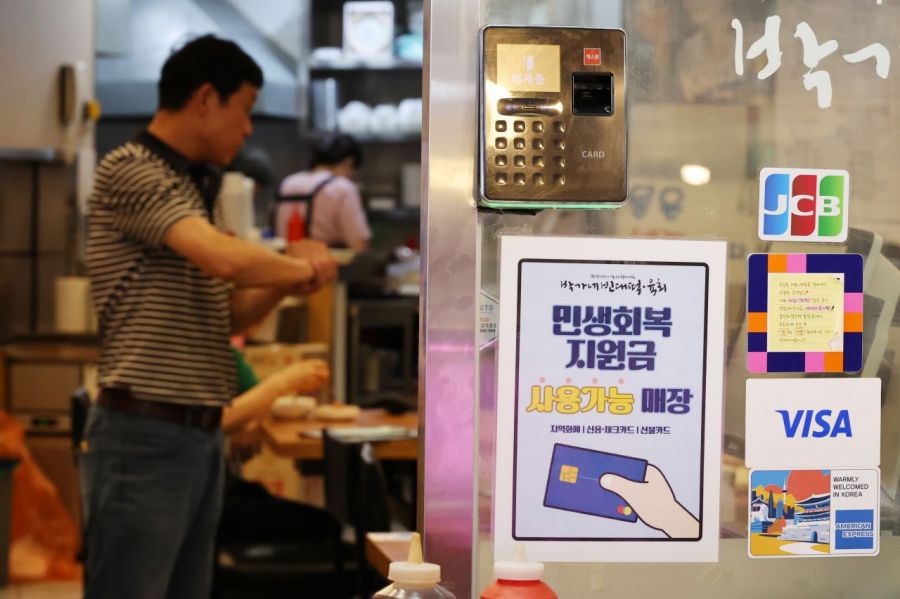
On October 1, the Ministry of Economy and Finance distributed a reference document on recent consumption trends and held a background briefing to announce the results of its analysis on the effectiveness of the Livelihood Recovery Consumption Coupon. The briefing was hastily arranged the afternoon after Statistics Korea released its August Industrial Activity Trends the previous day. Kim Jaehoon, Director General for Economic Policy at the ministry, explained, “We felt our explanation of the August trends may have been insufficient, so we wanted to provide a more detailed account of recent consumption patterns.” It is considered unusual for the government to hold another background briefing the day after the release of industrial activity data.
According to Statistics Korea, retail sales in August-which reflect household spending-fell by 2.4% from the previous month. In July, retail sales had increased by 2.7% month-on-month, marking the largest rise in 29 months, but then turned negative just one month later. As a result, sales of non-durable goods such as food and beverages (-3.9%) and durable goods such as home appliances (-1.6%) both declined. This led to a series of analyses suggesting that the consumption coupon, distributed since July, had only a short-term effect.
The Ministry of Economy and Finance cited the Korea Development Institute’s analysis of the Livelihood Recovery Consumption Coupon (over six weeks), which found that sales in industries eligible for coupon use increased by an average of 4.93% during the six weeks after coupon distribution (July 21-August 31), compared to the two weeks prior. In contrast, there was no significant change in sales for industries not eligible for coupon use. The newly generated sales amounted to approximately 2.1073 trillion won. The ministry stated, “During the same period, 42.5% of the 5 trillion won in coupons paid via credit and debit cards was converted into actual consumption.” This is higher than the typical marginal propensity to consume (around 20%) and exceeds the effect of the 2020 emergency disaster relief funds (26.2%-36.1%).
By industry, the effect was most pronounced in clothing, accessories, and beauty (12.1%), as well as restaurants and food and beverages (6.4%). After the third week, spending on accommodation, travel, and culture also improved. Unlike previous disaster relief funds during the COVID-19 period, which mainly boosted non-face-to-face consumption, the recent coupon directly stimulated demand for face-to-face services.
The ministry stressed that the decline in retail sales in August was due to the delayed Chuseok holiday, which postponed the usual holiday spending effect. With Chuseok falling in early October this year, the demand for gifts-which typically begins in August-was pushed back to September. Looking at statistics from 2010 to 2024, when Chuseok occurred after the fourth week of September, retail sales in August and September increased by an average of 0.1% and 1.2%, respectively. A ministry official explained, “Typically, consumption such as gift purchases increases about three weeks before Chuseok, but this year, with Chuseok in October for the first time in five years, holiday demand shifted to September.”
© The Asia Business Daily(www.asiae.co.kr). All rights reserved.

















