Concentration of Ministry of Culture, Sports and Tourism Subsidies in Specific Regions Intensifies
Min Hyungbae: "Urgent Need for National-Level Measures for Balanced Cultural Development"
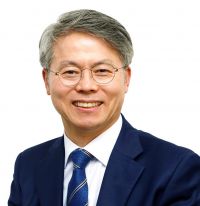 Min Hyungbae, member of the Democratic Party of Korea.
As the concentration of government subsidies in the fields of culture, arts, sports, and tourism toward specific regions continues to intensify, it has been revealed that grants to the Gwangju region have decreased each year over the past three years, raising concerns about the revitalization of local culture and arts.
According to an analysis by Min Hyungbae, a member of the Democratic Party of Korea (representing Gwangsan-eul, Gwangju), of data submitted by the Ministry of Culture, Sports and Tourism titled "Status of National Subsidy Grants to 17 Metropolitan Governments Over the Past Three Years," the amount of grants to the Gwangju region dropped from 83.1 billion won in 2022 to 60.9 billion won in 2023, and further to 34.1 billion won in 2024. This represents a decrease of approximately 59% in just three years. As of last year, the level of support ranked sixth from the bottom among the 17 cities and provinces, reflecting a poor performance.
The distribution of government subsidies showed a pronounced tendency toward concentration in certain regions. During the same period, Gyeonggi Province received the largest amount of grants from the Ministry of Culture, Sports and Tourism, totaling 335.6 billion won (12.8% of the national total). This was followed by Jeonbuk (222.3 billion won, 8.5%), Gangwon (204.2 billion won, 7.8%), Chungnam (198.9 billion won, 7.6%), and Gyeongbuk (196.2 billion won, 7.5%), all ranking at the top.
In contrast, Sejong City ranked at the bottom with only 22.3 billion won (0.9%), while Jeju (38.1 billion won, 1.5%), Ulsan (51.6 billion won, 2.0%), and Daejeon (60.3 billion won, 2.3%) remained in the lower ranks for three consecutive years. The gap between Gyeonggi Province, which received the most grants, and Sejong City, which received the least, reached as much as 14 times. This has led to calls for a comprehensive review of the distribution of government subsidies.
Min Hyungbae emphasized, "Government subsidies for culture, arts, sports, and tourism should be allocated based on policy needs rather than population or existing infrastructure, but significant disparities between regions are evident. Urgent corrective measures and fundamental solutions at the national level are needed to achieve balanced cultural development."
© The Asia Business Daily(www.asiae.co.kr). All rights reserved.
![Clutching a Stolen Dior Bag, Saying "I Hate Being Poor but Real"... The Grotesque Con of a "Human Knockoff" [Slate]](https://cwcontent.asiae.co.kr/asiaresize/183/2026021902243444107_1771435474.jpg)















