Even Consuming Processed Meat Once a Week Raises Breast Cancer Risk by 57%
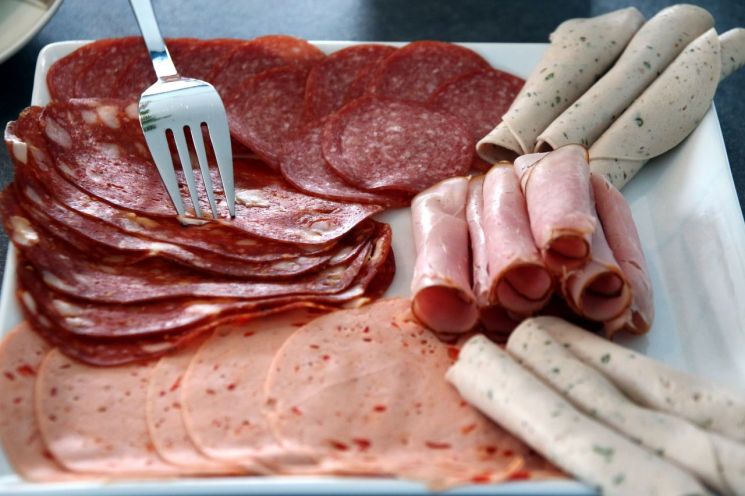
A domestic study has found that women who frequently consume processed meat have a significantly higher risk of developing breast cancer. In contrast, the study also revealed the intriguing finding that beef consumption may lower the risk of breast cancer.
Breast cancer, the most common cancer among women in Korea, sees nearly 30,000 new diagnoses each year. Experts cite Westernized dietary habits, alcohol consumption, smoking, lack of exercise, obesity, and genetic factors as causes of breast cancer.
Recently, a research team led by Professors Kang Daehee and Lee Hyobin from the Department of Preventive Medicine at Seoul National University, Professor Han Wonsik from the Department of Breast Surgery, and Professor Lee Jungeun from the Department of Food and Nutrition analyzed the correlation between processed meat consumption and breast cancer incidence using the urban-based cohort study (HEXA study).
This study, published in the latest issue of the international journal Clinical Nutrition, targeted 71,264 women aged 40 to 69 between 2004 and 2013. After tracking the participants for ten years, 713 women (1%) were newly diagnosed with breast cancer. The results showed that women who consumed processed meats such as ham, sausage, and bacon at least once a week had a 57% higher risk of developing breast cancer compared to those who did not consume processed meat. This trend was particularly pronounced among women under the age of 50.
The research team explained that nitrates and nitrites used in the processing of processed meat can be converted into carcinogenic nitroso compounds (NOCs) in the body, which may cause genetic damage and mutations in breast tissue. They also added that heterocyclic amines (HCAs) and polycyclic aromatic hydrocarbons (PAHs), which are produced during high-temperature cooking, can have harmful effects on breast tissue.
Beef consumption observed to potentially lower breast cancer risk
The study also observed that beef consumption may actually lower the risk of breast cancer. Women who ate beef at least twice a month had an 18% lower incidence rate compared to those who did not consume beef at all. This result contrasts with Western studies, which have identified red meat as a risk factor for breast cancer. The research team analyzed that Korean women consume less beef than their Western counterparts, and that essential amino acids in beef may have had positive effects on hormone regulation, inflammation suppression, and metabolic processes.
Professor Kang Daehee stated, "While we cannot definitively conclude that processed meat causes breast cancer, it is significant that we have established scientific evidence that processed meat can increase the risk of breast cancer among Korean women." He advised, "To prevent breast cancer, it is important to reduce processed meat consumption and maintain a balanced diet focused on vegetables and fruits."
Professor Han Wonsik added that it is crucial to manage lifestyle habits through maintaining a healthy weight, exercising regularly, limiting alcohol consumption, and undergoing regular checkups.
© The Asia Business Daily(www.asiae.co.kr). All rights reserved.
![From Hostess to Organ Seller to High Society... The Grotesque Scam of a "Human Counterfeit" Shaking the Korean Psyche [Slate]](https://cwcontent.asiae.co.kr/asiaresize/183/2026021902243444107_1771435474.jpg)
















