Backlash Intensifies After Shift to Grid-Style Feed
2012 Notice Resurfaces With Every Update
As users have unleashed a wave of criticism over the major overhaul of KakaoTalk, a past announcement in which Kakao expressed a negative stance on advertisements has resurfaced online. On September 23, Kakao announced the update and changed the "Friends" tab in its messenger, KakaoTalk, from the previous list format to a grid-style feed similar to Instagram.
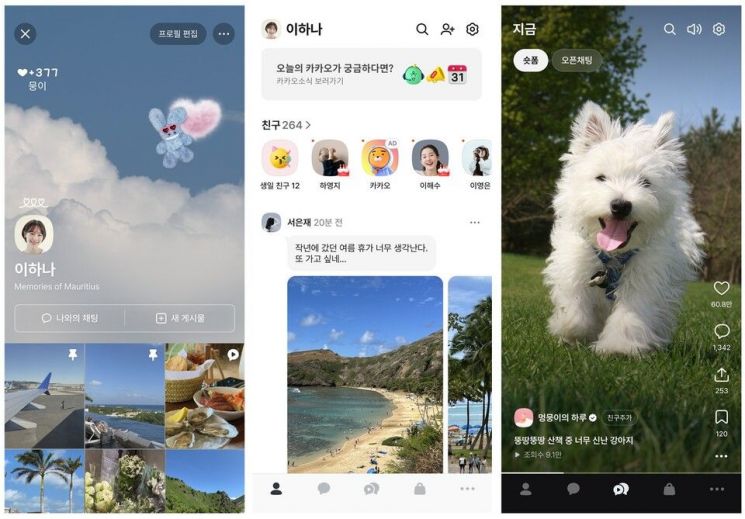
In this new format, advertisements now appear in the same size as friends' posts, leading users to complain of fatigue. Instead of the friends list appearing first, updates to friends' profiles and advertisements are now displayed in excessively large formats. KakaoTalk users have responded by saying, "It was already annoying to see ads pop up in the middle of chat rooms, but now we have to see them in such a huge format," and "The feed is plastered with ads, making it exhausting."
Above all, as criticism has mounted that the update was made for advertising purposes, users have brought back an announcement Kakao made in May 2012. At that time, Kakao denied the possibility of introducing ads, stating, "KakaoTalk is not a poor service that adds advertisements due to lack of revenue." However, since 2019, Kakao has actively introduced advertising, and criticism has continued ever since.
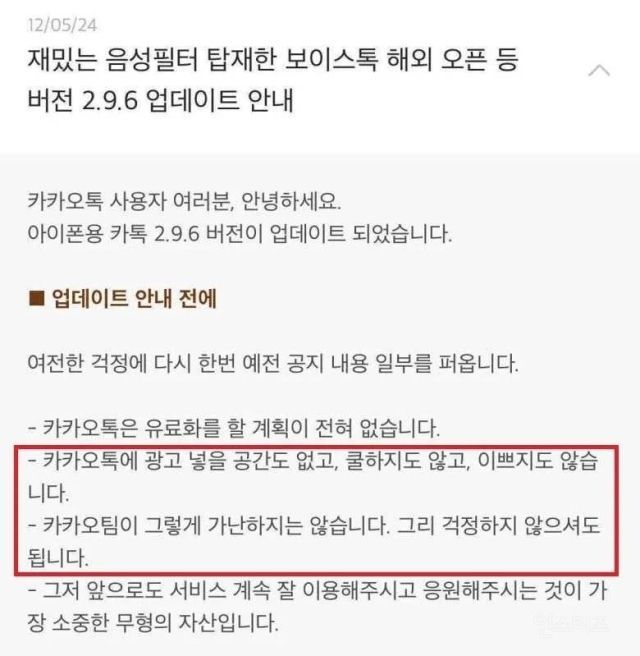 As KakaoTalk's major overhaul faced criticism for being an update aimed at advertisements, an announcement made by Kakao in May 2012 resurfaced in online communities. At that time, Kakao denied the possibility of introducing ads, stating, "KakaoTalk is not a poor service that adds advertisements due to lack of revenue." Online communities
At the time, Kakao stated, "There is no space for ads in KakaoTalk, nor is it cool or visually appealing." The company also announced, "The Kakao team is not that poor." This drew a clear line against paid services and revealed a negative stance on advertising. Since Kakao first introduced ads in 2019, this post has repeatedly resurfaced online whenever the company expanded its advertising. On social networking services and online communities, users have commented, "Maybe they've become poor," and "This is why you should be careful with official announcements."
Posts on 'How to Turn Off Automatic Updates' Flood Online Communities
In particular, the biggest complaint users have about the latest KakaoTalk update is that it is unrelated to strengthening the messenger’s core functionality. Additionally, the new photo- and video-centered layout has raised concerns about excessive exposure of personal information. On platforms such as X (formerly Twitter) and other online communities, users have criticized, "There is more exposure of personal information, and too many ads make it frustrating," and "I don't understand why a messenger application would do this." In particular, office workers who use KakaoTalk for work have voiced strong dissatisfaction, saying that unwanted personal information could be exposed to work contacts, which is a significant burden.
 Hong Min-taek, Chief Product Officer (CPO) of Kakao, is giving a presentation at the 'if Kakao' conference held on the 23rd at Kakao AI Campus in Yongin, Gyeonggi Province. Photo by Yonhap News Agency
As a result, some users are sharing ways to avoid the update altogether. For Samsung Galaxy users, searching for KakaoTalk in the Google Play Store and disabling "auto-update" is one method. For iPhone users, going into the App Store through the settings menu and turning off the "automatic downloads" function is another. However, these methods are only temporary solutions, and the possibility of a forced update in the future cannot be ruled out. In some online communities, there is a growing emphasis on setting profile visibility instead.
With the new feed feature, selecting "Show posts only to friends" will restrict the visibility of posts, and enabling "Only me can see profile updates" will prevent these updates from appearing in friends' feeds. Whether this change by Kakao will become an attempt to shake the identity of a "messenger app" or serve as a starting point for expanding into a new social network will depend on future user reactions and the company's response.
© The Asia Business Daily(www.asiae.co.kr). All rights reserved.














