Restaurants and Cafes on Daehak-ro See Surge in App Installation and Recharge Requests
Number of Affiliated Stores Grows from 13,025 to 21,798
Merchants Report "30% Real Discount" and Frustration Over Settlement Delays
"In the past, the application process wasn't complicated, but now everyone is doing it."
This is according to Mr. Kim (49), who has been running a restaurant for several years on Daehak-ro, near the back gate of Chonnam National University in Buk-gu, Gwangju. He explained, "Customers now ask first if we accept Onnuri gift certificates. As more people use them, we've had to follow suit."
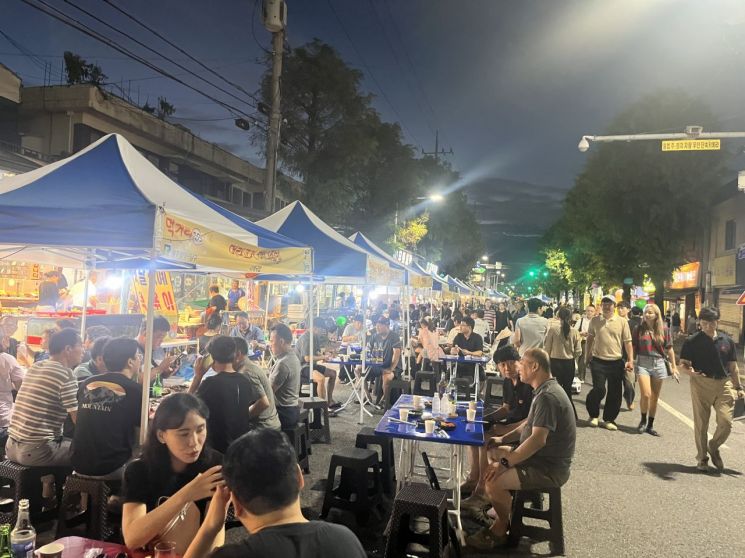 On the evening of the 7th, Toyoyashi Market on Gunbun-ro in Nam-gu, Gwangju, was bustling after a long time. The owner of a sashimi restaurant said, "I realized once again that Gwangju is not lacking people," and the owner of a gukbap restaurant said, "The market was lively as expected. The energy has been revived." Photo by Song Bohyun
The Onnuri gift certificate is a local-only currency introduced by the government in 2009 to revitalize traditional markets and neighborhood businesses. It cannot be used at large supermarkets or department stores, and is only accepted at registered traditional markets and small business stores. There are three types: paper, card, and mobile. The paper version is sold at a 5% discount, while the card and mobile versions are available at a 10% discount. When combined with government and local government rebates and paybacks, the actual benefits felt by consumers increase even further.
The owner of a nearby cafe has also noticed these changes. "Customers who used to only pay with the mutual growth card now often ask if we accept Onnuri payments. Many also request help installing the app and charging their balance," he said.
Consumers are responding similarly. Lee (22), a university student, said, "I just end up using it because of the discount." Park (34), an office worker, said, "At first, I ignored it because it seemed bothersome, but once I tried it, I realized how much I could save, so I started using it naturally."
Merchants are increasingly feeling the effects as well. Yang Chungho, president of the Buk-gu Neighborhood Store Association, said, "With the 10% Onnuri discount, 10% payback, and additional rebates for special disaster areas, the real benefit at the site is about 30%." He even asked reporters if they had tried it themselves, recommended installing the app, and explained how to use it.
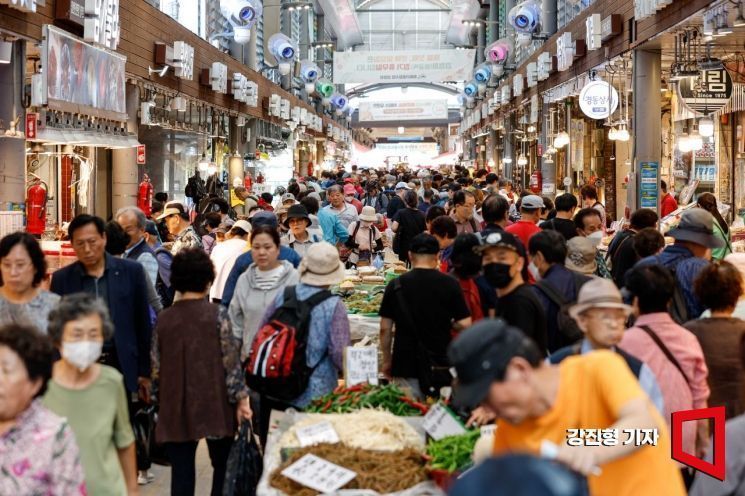
The adoption rate has also accelerated noticeably. Merchants say, "It used to take over a month, but now it only takes a week. District office staff come directly to help." Perhaps as a result, as of September 10, there were 480 neighborhood-type shopping districts across Gwangju, nearly half of the 1,083 nationwide. There are 156 in Buk-gu, 119 in Seo-gu, 87 in Gwangsan-gu, 82 in Nam-gu, and 36 in Dong-gu-more than the entire Seoul metropolitan area (312). The number of Onnuri-affiliated stores increased by 67%, from 13,025 in June to 21,798 in September.
Amid this trend, local governments are also ramping up their efforts. The Gwangju city government will raise the Gwangju Mutual Growth Card discount rate from 7% to 13% by the end of the year and add a 5% cashback for affiliated stores in special disaster areas. Dong-gu is issuing the "Donggurang Pay" with an 18% discount, while Nam-gu is launching the "Namgu Companion Card." Buk-gu plans to release "Bukkeumoney" in November, offering an 18% discount by combining government subsidies and special disaster area funds. Seo-gu does not have its own currency, but in June designated its entire district as a neighborhood-type shopping area.
However, some elderly merchants still only accept paper gift certificates, saying that the app is too difficult for them. There are also complaints about delayed settlements or system errors. A merchant at Yangdong Market said, "We have more customers now, but the settlement process is slow, which is frustrating. I'm still afraid of using the app."
Watching the reporter install the Onnuri app, Chairman Yang said calmly, "These are tough times, but even when it's hard, we can't just give up. Both local governments and merchants have to move together. That's the only way we can survive."
© The Asia Business Daily(www.asiae.co.kr). All rights reserved.













