Seoul Real Estate Forum Breakfast Seminar
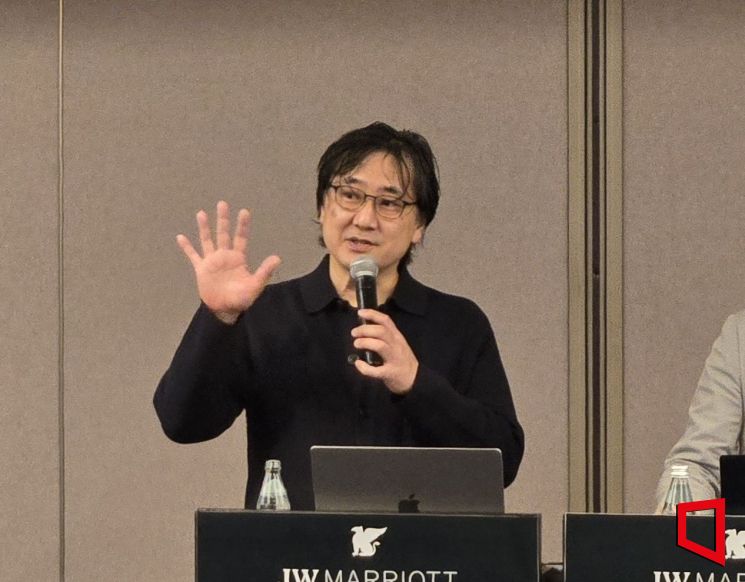 Phil Kim, CEO of the American urban architecture design firm Jerde, is giving a presentation on the theme "City and Place, One Programming Language" at the 70th Seoul Real Estate Forum breakfast seminar held on the 25th at the JW Marriott Hotel in Seocho-gu, Seoul. Photo by Choi Seoyoon
As demand in Seoul's commercial real estate market declines due to the expansion of online shopping and the spread of remote work, there is a growing consensus that what is needed in the future is not massive buildings, but architecture that can survive for a long time by adapting its use over time.
Phil Kim, CEO of Jerde, stated at the 70th Seoul Real Estate Forum breakfast seminar held on the 25th at the JW Marriott Hotel in Seocho-gu, Seoul, that the future of commercial real estate depends not on quantitative expansion, but on flexibility and uniqueness.
Jerde is a global architecture and design firm that has designed landmarks such as the Bellagio Hotel in Las Vegas and Roppongi Hills in Tokyo. In Korea, the company has designed complex projects such as Mecenatpolis in Hapjeong-dong and D-Cube City in Sindorim. In the residential sector, Jerde has collaborated with major construction companies such as Daewoo Engineering & Construction, Hyundai Engineering & Construction, GS Engineering & Construction, and Lotte Engineering & Construction, including the exterior design of Daewoo Engineering & Construction's Hannam Summit. To date, the company has completed more than 60 projects in Korea alone, including over 20 redevelopment projects.
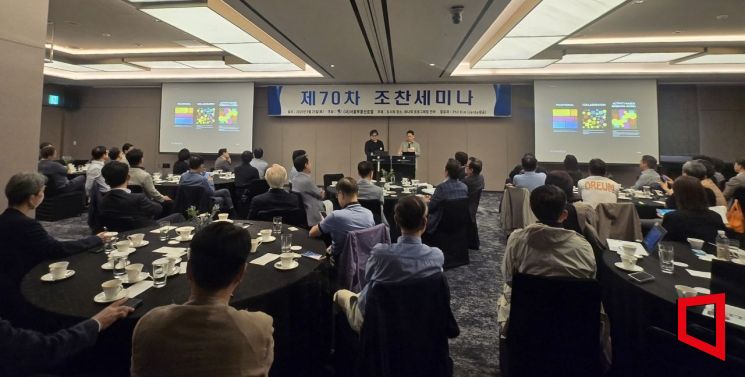
Kim pointed out that office and retail space has decreased since the COVID-19 pandemic, and further contraction is inevitable. He said, "If someone told me they wanted to build a commercial facility with a floor area of 1 million square meters, I would try to stop them," adding, "Architecture focused on scale no longer works."
He emphasized that "to attract people, experience elements such as entertainment, dining, and community have become more important." He explained, "By increasing ceiling heights from the traditional 5-6 meters to 12 meters and adding mezzanine floors, a space can be used for retail and later converted into a performance hall or exhibition space as needed. This kind of flexibility is the future of architecture." According to Kim, a city's competitiveness comes not from the size of its buildings, but from its ability to attract people.
Kim cited Langham Place, a high-rise mixed-use shopping mall in Mong Kok, Hong Kong, as an example. The building features a high-speed escalator that takes visitors from the ground floor to the top (15th) floor in four minutes, with the circulation designed so that visitors spiral down as they descend. He noted, "The Bellagio Hotel fountain show in Las Vegas also lasts four minutes per show. That is about as long as people can maintain their attention," adding, "Architecture, too, must provide new experiences before people get bored." In fact, Langham Place has become a landmark that attracts more than 35 million visitors annually. It is considered a successful example of high-density development, combining a hotel, office, and commercial facilities on a small site.
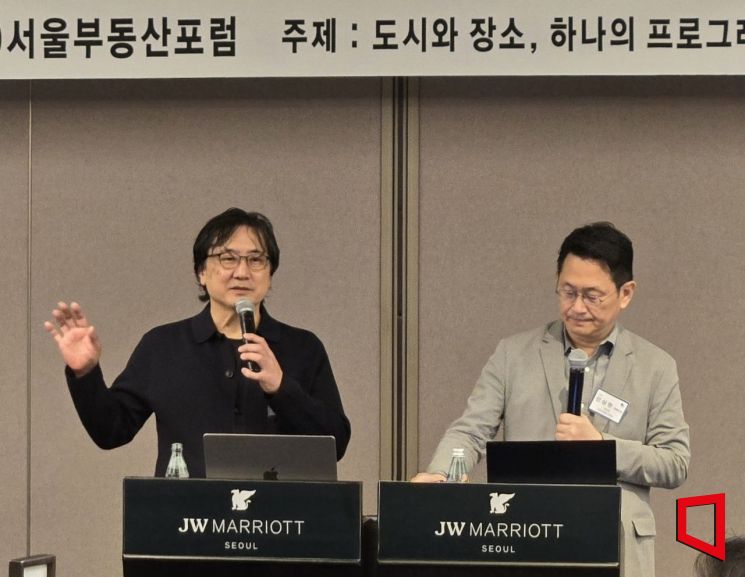 Photo by Seo-yoon Choi
 Phil Kim, CEO of Jude, (left) and Sanghyun Ahn, CEO of the Korea Office, are presenting on the topic "City and Place, One Programming Language" at the Seoul Real Estate Forum breakfast seminar on the 25th. On this day, Kim gave the presentation in English, and Ahn provided simultaneous interpretation in Korean.
He stated that the key theme for future commercial real estate is "adaptation." Jerde converted an old school in Singapore into a hotel popular among young people, and in Bangkok, the company designed "The Commons," a community mall centered around terraced spaces where residents naturally gather for performances and events. He also mentioned Tsutaya Books in Ginza, Tokyo, as another example. "Selling books alone is not profitable, but by adopting the concept of selling culture and hosting events and exhibitions, additional value is created," he said. "This approach will become the new retail model."
He also mentioned Seongsu-dong in Korea. "In the past, we used to travel abroad to learn from good examples, but now overseas clients and architects come to Korea to learn from places like Seongsu," he said. He continued, "Seongsu is a place where rapid change has continuously brought about new things from the past to the present. It is a positive example of how communities and commercial districts can be integrated." Kim concluded, "In the past, department stores were just department stores and offices were just offices, but now the boundaries have disappeared. A city is not simply the sum of its buildings, but a platform that is constantly being updated."
© The Asia Business Daily(www.asiae.co.kr). All rights reserved.














