Shutdown Could Cut Quarterly GDP by 0.1 Percentage Points
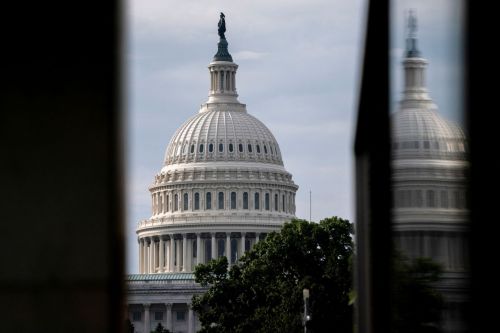
The New York Times (NYT) reported on September 24 (local time) that concerns are mounting over a possible federal government shutdown starting October 1, as the U.S. Congress failed to pass a short-term spending bill (continuing resolution, CR). This situation has put the U.S. economy to the test.
Typically, when a government shutdown is imminent, both parties negotiate to resolve the issue. However, President Donald Trump refused to meet with opposition leaders the previous day. The NYT noted that as of this date, there appeared to be no dialogue between the Republican and Democratic parties, increasing the likelihood that Washington could soon face a prolonged closure.
Mark Zandi, Chief Economist at Moody's Analytics, stated, "The economy is quite vulnerable," adding, "During periods of greater resilience, even a prolonged shutdown would not derail the economy. However, under current economic conditions, it is highly likely that such a shutdown could be the factor that brings us down."
If an agreement is not reached by midnight on September 30, the U.S. federal government will enter a shutdown. Past shutdowns have resulted in the closure of national parks and museums, the suspension of some federal food safety inspections, and halted services for small businesses, making it impossible to obtain government loans or permits. While a shutdown does not directly impact Social Security or Medicare, related services such as issuing new welfare cards become unavailable.
A lack of funding may also disrupt the federal Women, Infants, and Children (WIC) program, which provides food assistance to low-income families. A White House official told the NYT that due to budget shortages, this program may not be able to accept new applicants starting October 1.
Millions of federal employees, including military personnel, will not receive their paychecks. If Congress reaches an agreement, they can receive back pay, but until then, they must manage without a stable income.
Generally, each time the federal government shuts down, the gross domestic product (GDP) for the relevant quarter is reduced by about 0.1 percentage points. The longer the shutdown lasts, the greater the impact. During President Trump's first term, the federal government was shut down for five weeks until January 2019. Wells Fargo analyzed that GDP growth fell by 0.1 percentage points in the fourth quarter of 2018 and by 0.3 percentage points in the first quarter of 2019.
Most government shutdowns are resolved within a few days and do not significantly affect the economy. However, given President Trump's recent refusal to meet with Democratic leaders, this situation could lead to prolonged turmoil.
President Trump's tariff policies have imposed high tariffs on exports from countries around the world, resulting in higher prices for imported goods. Immigration restrictions and large-scale deportations have also stagnated the labor market, with only 22,000 new jobs created in August. Jerome Powell, Chair of the U.S. Federal Reserve, described the economic situation as "challenging" on September 24.
Gregory Daco, Chief Economist at EY-Parthenon, commented, "Not all government shutdowns are the same, and the size of the shock can vary depending on the resilience of the economy." He added, "Currently, there are both tailwinds and headwinds at play, but it seems the economy is losing momentum."
Michael R. Strain, a conservative economist at the American Enterprise Institute (AEI), warned that prolonged political gridlock in Washington could put pressure on financial markets. He said, "The longer the shutdown lasts, the more basic questions arise about the government's ability to function." He continued, "Markets can be fairly tolerant of a short-term shutdown, but if it drags on, concerns about the stability of the U.S. government will grow."
However, the NYT noted that the exact scale of the economic damage caused by the shutdown may not be known for some time, as the U.S. Bureau of Labor Statistics (BLS), which compiles economic indicators, could also be forced to suspend operations due to the shutdown.
© The Asia Business Daily(www.asiae.co.kr). All rights reserved.

![Clutching a Stolen Dior Bag, Saying "I Hate Being Poor but Real"... The Grotesque Con of a "Human Knockoff" [Slate]](https://cwcontent.asiae.co.kr/asiaresize/183/2026021902243444107_1771435474.jpg)















