Serious Damage Including Corrosion of Parked Vehicles' Paintwork
Damage Has Continued for 2 to 3 Years
In a residential alley in Jeju, repeated incidents of "bird droppings attacks" on parked vehicles have been occurring due to an elderly woman feeding pigeons. The casual act of throwing food to pigeons has led to a series of property damages, including vehicle corrosion.
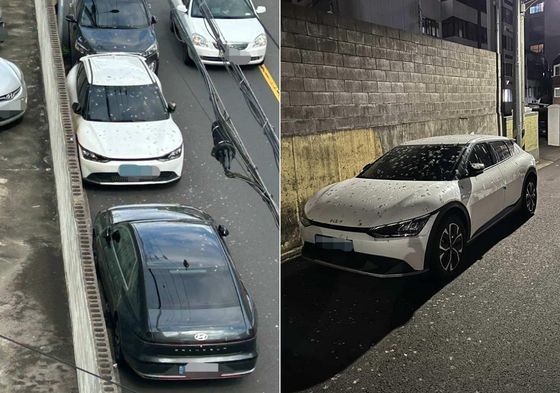
On the 23rd, an internet user, identified as Mr. A, posted on an online community, saying, "Many car owners are suffering from bird droppings because of an elderly woman who feeds pigeons in the alley." The photos he shared showed parked cars covered in bird droppings. The hoods, windows, and side mirrors of the affected vehicles were plastered with droppings, causing shock among viewers.
Mr. A stated, "Even if you park your car in the alley for just two days, it ends up like this, as shown in the photos. We've been asking the elderly woman to stop feeding the pigeons for the past two to three years, but it hasn't worked." He added, "Residents never park their cars near her house, but people who park there by chance keep getting hit with bird droppings without knowing the reason." Other internet users sympathized with the residents' plight and criticized the elderly woman in the comments. They said things like, "Feeding pigeons is illegal," and "Residents should collect evidence of the damages and at least claim car wash expenses."
Can Vehicle Owners Receive Legal Compensation for Damages?
Amidst this, can someone be held legally responsible simply for feeding pigeons? First, an administrative fine of up to 1 million won can be imposed. This is because feeding pigeons may be considered illegal disposal of household waste under the Waste Management Act. However, since there is no specific ordinance prohibiting feeding in Jeju Special Self-Governing Province, no additional sanctions can be imposed.
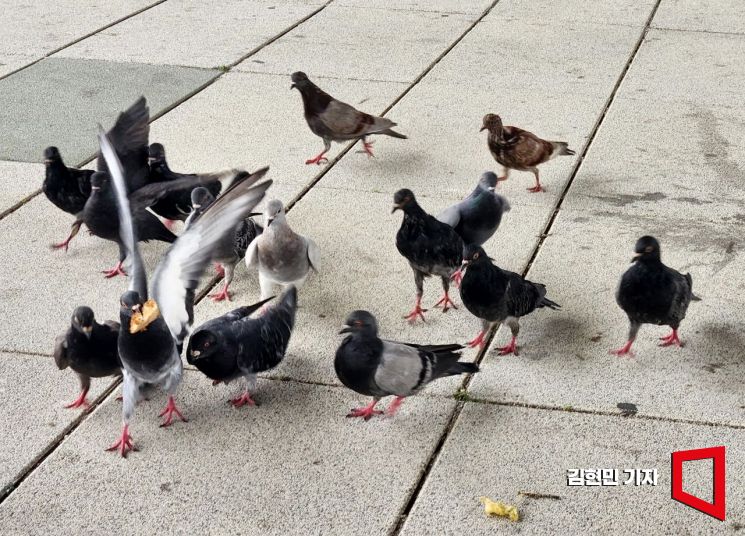 As the pigeon population increased, causing hygiene issues and the spread of diseases, the Ministry of Environment designated pigeons as protected wild animals in 2009. The photo is not related to the specific content of the article. Photo by Kim Hyunmin
Car owners who have suffered from bird droppings can file a claim for damages against the elderly woman based on unlawful conduct. Article 750 of the Civil Act of the Republic of Korea stipulates that a person who causes damage to another through intentional or negligent illegal acts is liable for compensation. Therefore, if the affected car owners can prove a causal relationship between the woman's act of feeding pigeons and the damage to their vehicles, they can claim compensation for those damages. The compensation may include: ▲ simple car wash costs (10,000 to 20,000 won), ▲ partial repair costs for paint damage (100,000 to 500,000 won), ▲ full repainting costs for the vehicle (over 1 million won), and even compensation for emotional distress. However, to do so, they must clearly prove the causal link between the woman's feeding and the damages. For this reason, it is important for victims to collect evidence such as ▲ videos or photos of the feeding, ▲ photos of vehicles covered in bird droppings, ▲ CCTV footage, and ▲ testimonies from neighbors.
Meanwhile, as the pigeon population increased, causing hygiene issues and the spread of diseases, the Ministry of Environment designated pigeons as harmful wild animals in 2009. In July, the Seoul Metropolitan Government also designated a total of 38 locations, including Gwanghwamun Square and Hangang Park, as "no-feeding zones for harmful wild animals." If someone is caught feeding pigeons in these restricted areas, they can be fined up to 1 million won. However, while Jeju Special Self-Governing Province has an ordinance regarding compensation and support for damages caused by wild animals, there are no specific provisions related to feeding bans.
© The Asia Business Daily(www.asiae.co.kr). All rights reserved.













